| The pandemic economy is weird. Shelves are empty, right before the holiday season. Wages are up, but so are prices — on almost anything you want to buy. The stock market is doing pretty well, actually. The economy is adding jobs. But ports are backlogged. "For hire" signs are plentiful. And no one knows when things are going to straighten out, or even how to straighten it out. "This is friction upon reentry," economist Diane Swonk told me a few weeks ago. "We are opening up a global economy all at once, and we're still in a pandemic. You're going to get problems." But this is a politics newsletter, not an economics one. So what does all this weirdness in the American economy mean for the party that's in charge right now — Democrats and President Biden? Here are a few dynamics worth watching. How pessimistic are Americans about the economy? 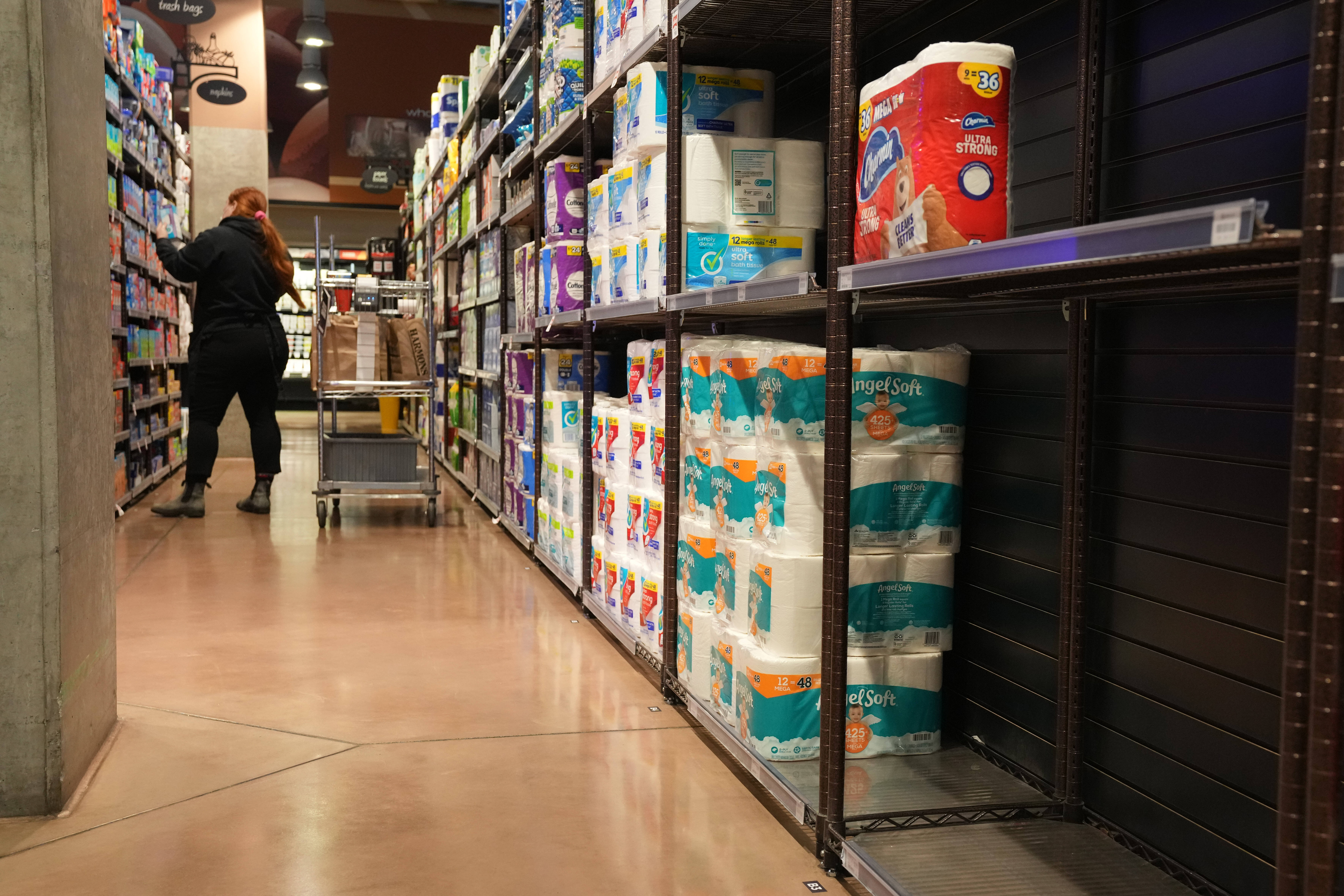 Empty shelves in Salt Lake City recently. (George Frey/Bloomberg) | How Americans feel about the economy roughly translates to how they feel about their politics. Right now, that's not good news for Biden. A Washington Post/ABC News poll from October found that a plurality of Americans — 29 percent — say the economy is their top priority. And more say they feel like China is eclipsing the U.S. economically. How do Democrats address this? 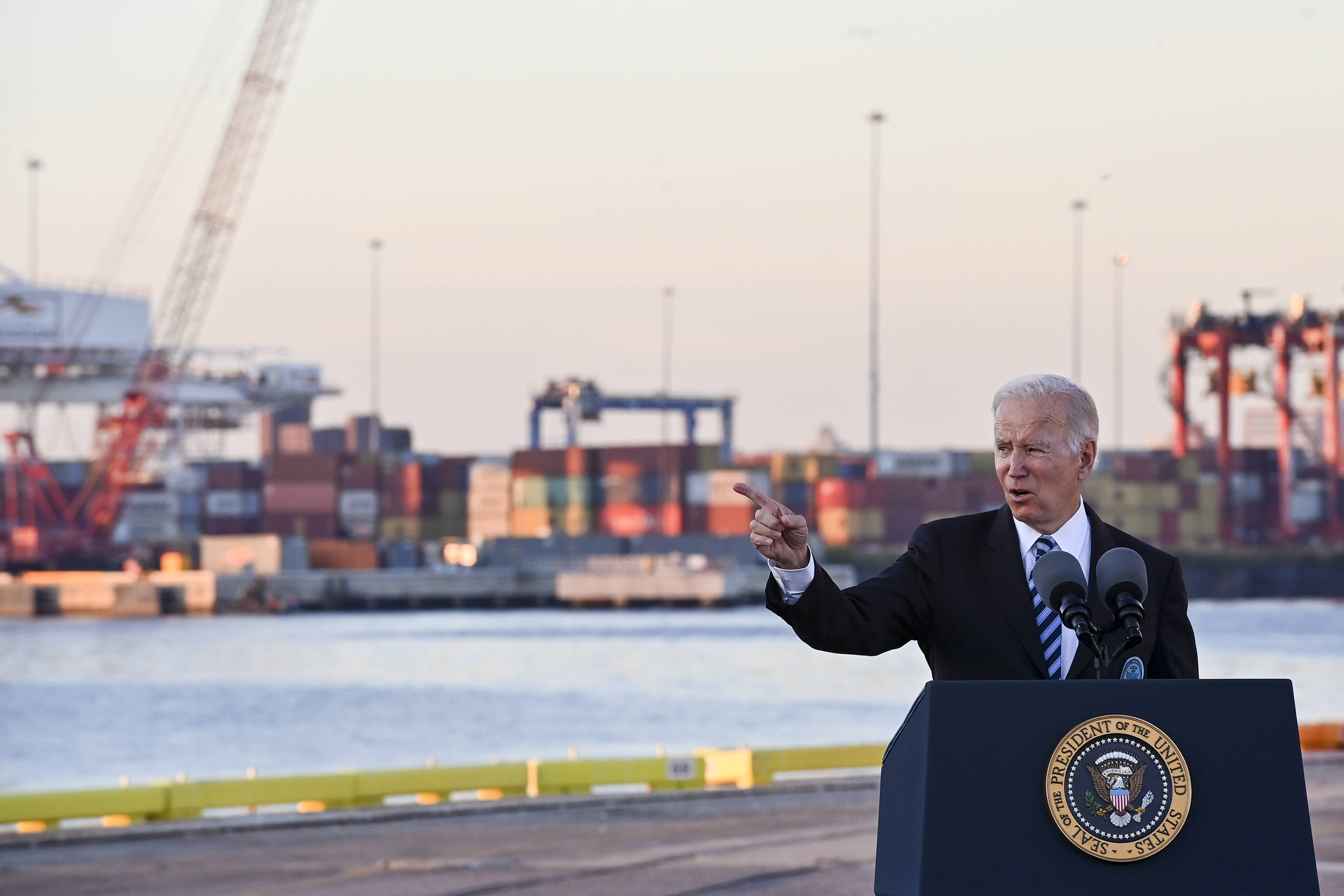 President Biden speaks about the infrastructure bill in Baltimore on Wednesday. (Ricky Carioti/The Washington Post) | Clearly, politicians have a personal incentive to make the economy stronger. The country has had some whiplash on that front. In the Trump era, when Republicans were in charge, they lowered taxes for the wealthy and corporations, believing it would trickle down to average Americans. Whether it did or not, Americans didn't reward Republicans for it. They lost the House the next year, and the Senate and presidency after that. Now that Democrats are in charge, they're going the opposite route: taxing the rich and corporations to pay for expanded social safety net programs. So far, the polling is on their side. The infrastructure bill Congress just passed is generally popular. And a new Monmouth University poll asked people whether they support spending "multitrillion dollars" for expanded "access to health care and child care, and provide paid leave and college tuition support." Sixty-two percent said they do. "People want us to get things done," Biden said after Democrats' painful losses in Virginia and New Jersey this month. Yet legislation can be popular in theory but poorly executed. Or poorly messaged. This is a potential political pitfall that Democrats I talk to are keenly aware of. "You have to pass mainstream economic measures," Jim Kessler, with the centrist think tank Third Way, told me earlier this month. "And then focus on jobs, growth and the economy and middle class tax cuts. And sell those things." How well do Republicans message the economic struggles? If Democrats are slightly weak at messaging, Republicans are relatively strong at it. Trump in particular is great at hammering relentlessly on an attack. He doesn't have social media, but missives he emails to reporters are starting to mention inflation a lot more. Biden only has limited levers to improve the pandemic economy. But inflation becoming a problem again for the first time in years is really bad timing for Democrats right as they're attempting to pass trillions in spending. Republicans I talk to are rubbing their hands together at the possibility of combining the two — a big expansion of government with this inflation — into a potentially potent attack. "Families are seeing their costs go through the roof, their lives haven't gone back to normal, and things aren't getting any better," said Calvin Moore, a spokesman for the Congressional Leadership Fund, a PAC aimed at winning the House back for Republicans. "And on top of that, Democrats are still barreling down on more of the big spending that caused rising prices to begin with." Why does this pandemic economy hold so much uncertainty for Americans? 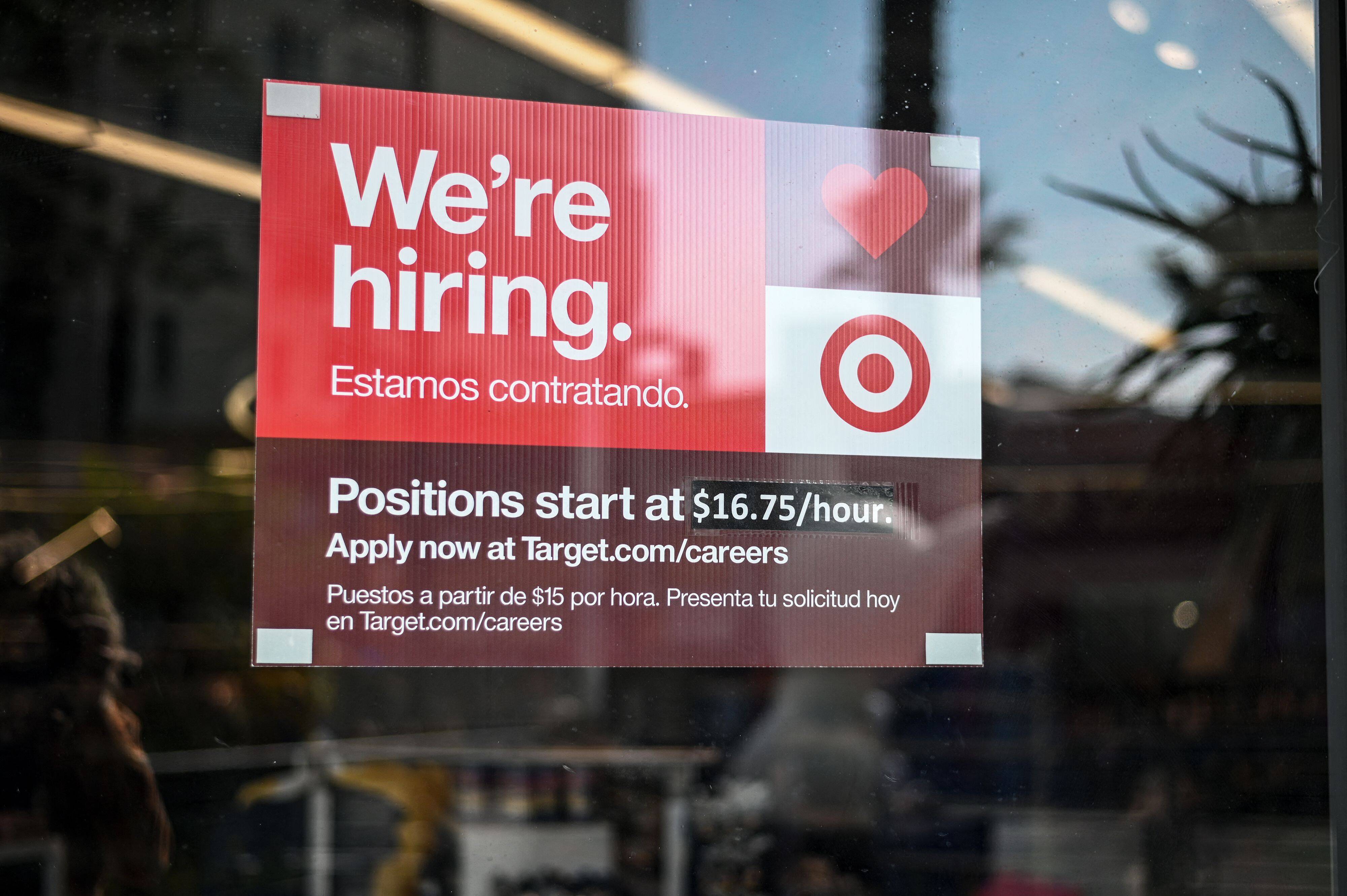 A "For Hire" sign in Hollywood. (Robyn Beck/AFP via Getty Images) | It's not all bad (after all, there are plenty of jobs to be had!), but Americans are pessimistic. I talked to The Post's economics correspondent Heather Long about why. Here's what she said: "The pandemic economy is spooking people because prices are up across the board, many stores and restaurants are short-staffed, and items from couches to Thanksgiving pies are hard to come by in a lot of places thanks to supply chain hiccups. In many ways, it feels like Americans are paying more and getting less. And no one really knows whether it will be three months or 12 months or more until a lot of these problems in the economy get sorted out." What questions do you have about the politics of this economy? Ask me anytime here. | 




 Email
Email