| It's Election Day in Virginia and New Jersey — the two states that hold their governor's races in the off years. And it could be a good day for Republicans, potentially portending an even better year for the party next year. Virginia's race in particular is uniquely situated to be instructive about how next year's battle for Congress is shaping up. Polls there suggest a Republican might win the governor's mansion in Virginia for the first time since 2009. So, while we should be careful not to over-extrapolate, here are some questions about the national mood in politics these races can help answer. Can a Republican candidate court both independents and "stop-the-steal" voters? 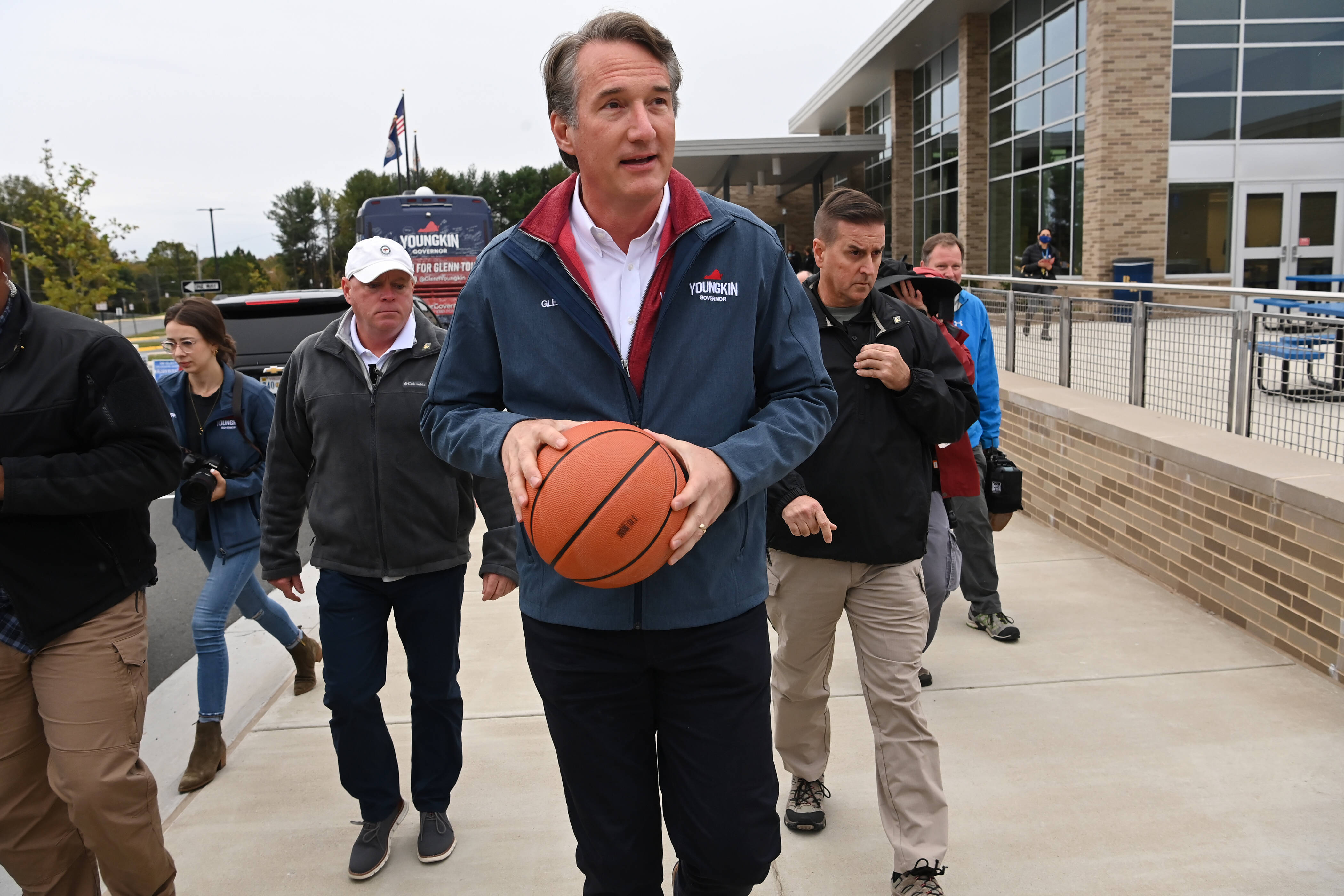 Republican gubernatorial nominee Glenn Youngkin campaigns on Election Day. (Matt McClain/The Washington Post) | That's explicitly what Glenn Youngkin, the GOP gubernatorial nominee in Virginia, is trying to do. And if he's successful, he could be a model for the rest of the Republican Party to follow. But it requires some very tricky maneuvering. During the primary, Youngkin refused to say that Biden legitimately won the presidential election. And he elevated vague calls for "election integrity," playing into Trump's baseless claims of election fraud. After the primary, Youngkin quietly acknowledged that Biden had won and then spent millions on ads introducing himself to a broader swath of voters as a friendly, basketball-coaching dad and businessman, reports The Post's Laura Vozzella. He tries not to mention Trump by name. Will Democrats struggle to win without Trump to run against? With Trump in office, Virginia Democrats swept almost all competitive state House races — surprising even themselves. So it's natural that Democrats are trying to act as though Trump is on the ballot again. They argue that the Republican Party is too radicalized for suburban voters. Their Virginia gubernatorial candidate, Terry McAuliffe, derides Youngkin as "Trump in khakis." They're thrilled that Trump held a telephone rally for Youngkin on Monday night. 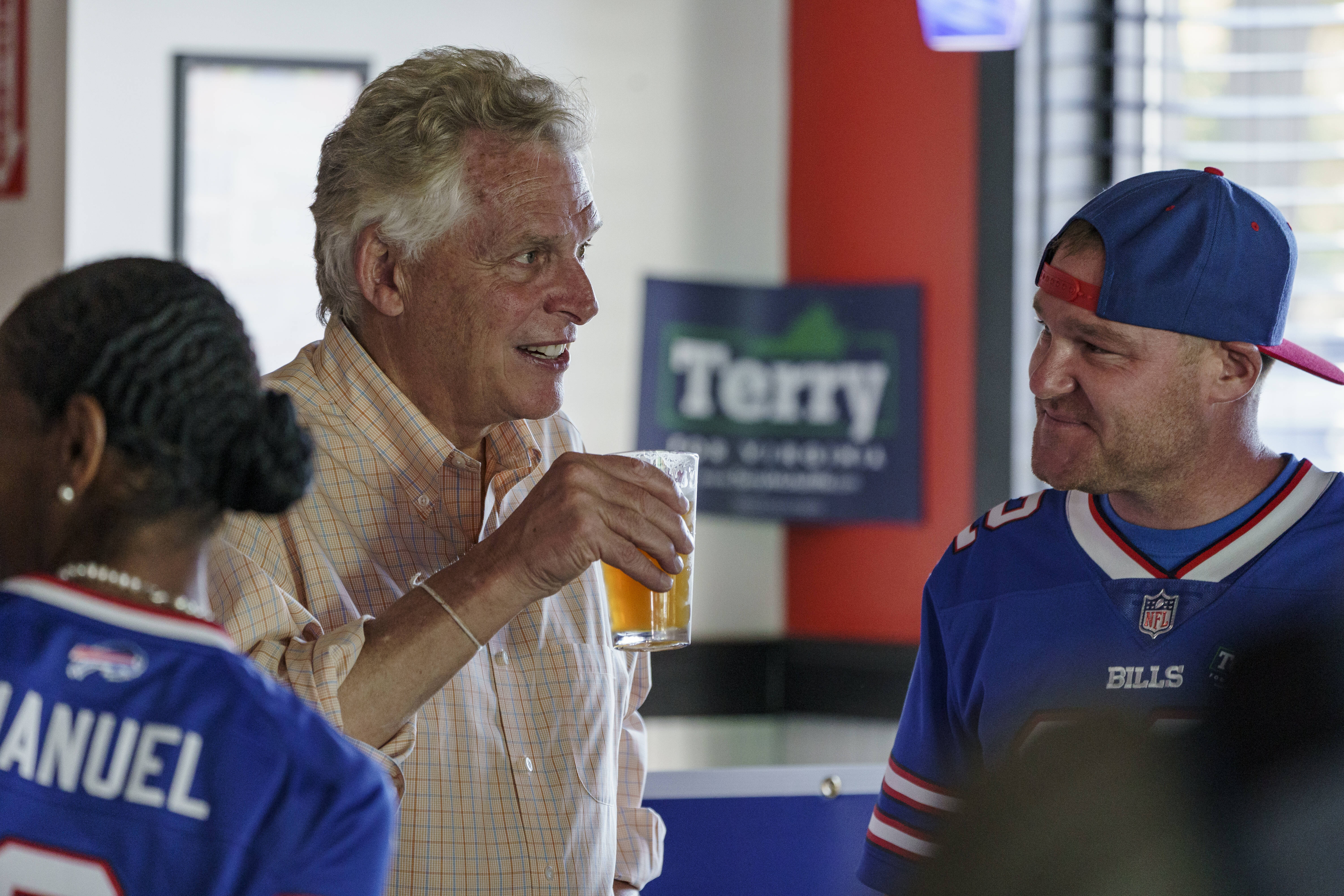 Terry McAuliffe, Democratic gubernatorial candidate for Virginia, campaigns in October. (Carlos Bernate for The Washington Post) | Democrat enthusiasm is noticeably lower across the board this year. Which raises the question: What attacks do Democrats use against Republicans if not Trump Trump Trump? "When Trump is not in the Oval Office," said Jessica Taylor, a political analyst for the nonpartisan Cook Political Report, "does he have that same fear factor?" Why are races tighter than expected in Virginia and New Jersey? Even if Democrats keep the governor's mansions in Virginia and New Jersey, Republicans will probably be able to say they made a good run at them. Republican operatives I talk to feel optimistic about taking back control of the House of Representatives and maybe even the Senate next year. So why are Democrats struggling? So far it appears to have something to do with President Biden and the economy. There is a global supply chain mess that is causing shortages on grocery shelves and inflation. Gas prices are high. So are groceries. People are mad at their leaders for it, rather than feeling like their lives are better now that Democrats are in charge. A good example of this is in New Jersey. Gov. Phil Murphy (D) is running for reelection today. While he is leading in polling against his Republican opponent, Jack Ciattarelli, he acknowledges that his popularity has taken a hit since people celebrated how he handled the pandemic last year. In an interview with The Post's David Weigel, Murphy blamed slower economic growth because of the pandemic and supply chain issues. In Virginia, education has become a big issue, with a Washington Post poll showing it is now voters' top concern. That's for a variety of reasons: Parents are upset with how schools have handled pandemic restrictions and Youngkin has focused on race and racism being taught in schools. It's put Democrats on the defensive. Biden was asked Tuesday whether he thinks these elections are referendums on his presidency so far. It won't surprise you that he said no. "We're going to win," he said. Why a new prescription drug deal is a big deal for Democrats Democrats have finally brokered a deal amongst themselves on lowering the prices of some prescription drugs in the United States, it was announced this afternoon. What does that mean? I turned to 5-Minute Fix editor Paige Winfield Cunningham — former author of The Health 202 newsletter — to explain. Here's what she writes. Lowering drug costs was one of Democrats' top 2020 campaign promises. It's a major deal any time lawmakers manage to buck the pharmaceutical industry. Plus, the agreement fills in one more puzzle piece Democrats need to pass their social spending bill. What is the deal? The government will be able to — for the first time ever — negotiate directly with drug companies to demand lower prices for certain high-cost drugs covered by Medicare. Until now, the government was prohibited from direct negotiations with drugmakers, meaning it has had few tools to rein in rising costs in the United States. Starting in 2023, the government can negotiate prices on the 10 most expensive drugs. That's scaled back from Democrats' original plan, which would have guaranteed negotiations for at least 50 drugs. Lawmakers have discussed gradually adding more drugs to the list. This deal also brings Democrats' broader social spending package one step closer. It will allow Democrats to claim they are saving money for the government, money that can be used to expand the government safety net. | 




 Email
Email 


