| Over the weekend, Democrats (and 13 Republicans) did something big: They passed a major investment in the nation's roads, bridges, pipes and broadband. It took months of wrangling, but now President Biden can check two things off his campaign wish list: this infrastructure bill, and demonstrating to the nation he can work with Republicans to get stuff done. But where does that leave the rest of Democrats' agenda? With no clear resolution. They still want to pass a much bigger investment in expanding the federal social safety net and lowering carbon emissions — all things progressives are especially rooting for. But getting infrastructure done doesn't make that any easier. In fact, it arguably makes things harder. Now liberal Democrats don't have a bill to use for leverage to convince moderate Senate Democrats such as Sen. Joe Manchin (D-W.Va.) to get on board. One boring-but-important hurdle for Democrats' social spending bill: A CBO score What is the CBO? The Congressional Budget Office is Congress's official, nonpartisan scorekeeper for the economic impact of legislation. Why it's suddenly important: A number of centrist Democrats in the House say they want to see a CBO score before they vote on the $1.75 trillion plan. And Senate Democrats are procedurally required to have a score on their bill before they can vote on it. Why it's a hurdle: A score could take weeks, and Democrats might not like what the CBO has to say. Democratic leaders have insisted their bill is paid for. But when Republicans were trying to pass their tax reform bill, they insisted something similar, only to have the CBO say it would add more than a trillion to the national deficit. Republicans also got bad news during their Obamacare replacement effort, with CBO saying a version of their bill would leave 22 million more people uninsured. Can Democrats just ignore the score? Sure. It's not legally binding or anything. Some liberal Democrats argue Congress should vote without the CBO weighing in. "Seriously, I think it's more likely I will get calls from constituents asking what the CBO is rather than asking for a CBO score," Rep. Mark Pocan (D-Wis.) tweeted. "Let's go." But it's part of Congress's job to know how much of a fiscal impact this bill is going to have on American taxpayers. What's in the infrastructure bill vs. the social spending legislation? 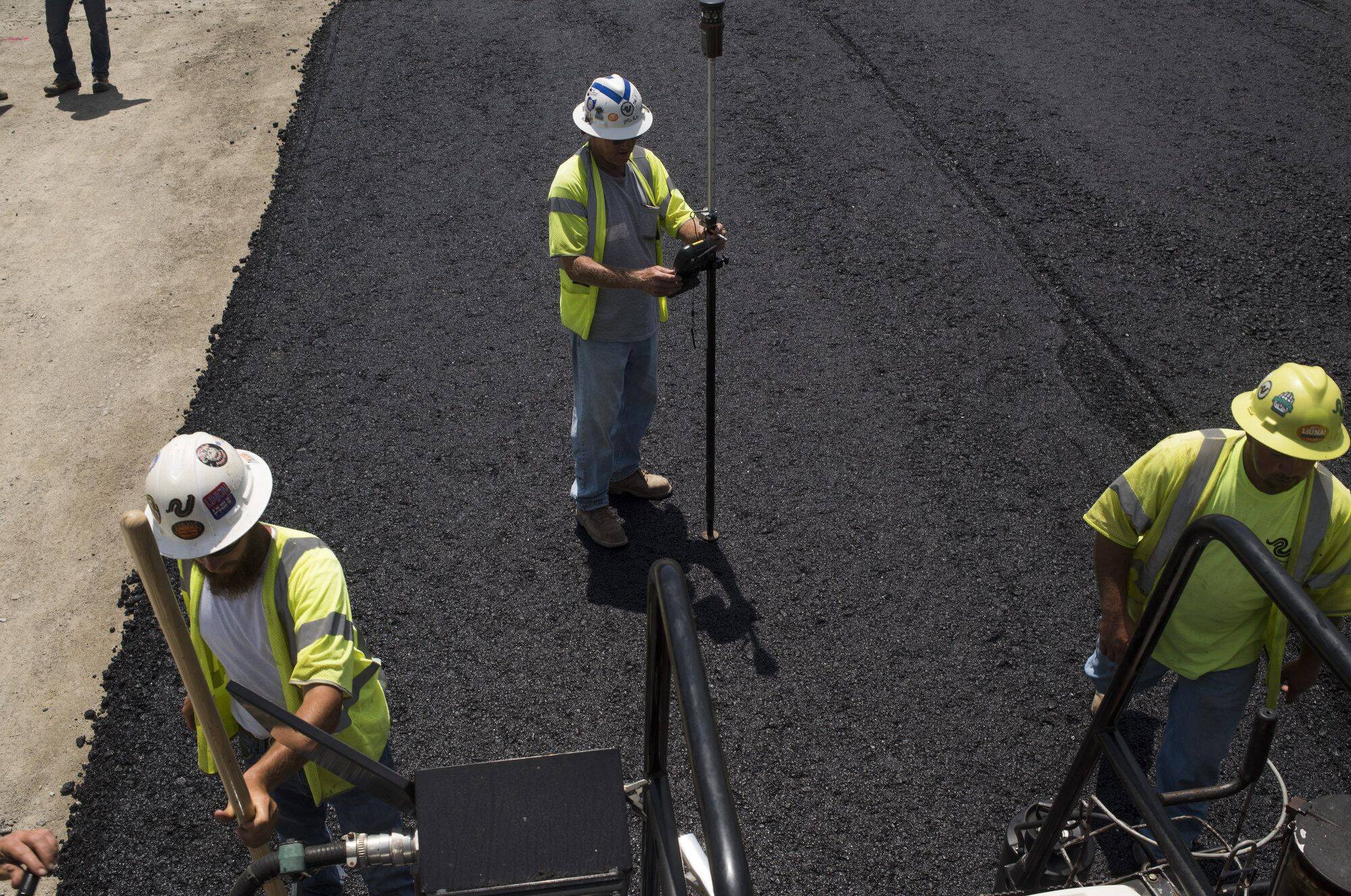 More roads across the United States could soon be repaved. (Ty Wright/Bloomberg) | Good question. Here are the main differences. Infrastructure: It's divided into two main investments, transportation and utilities. On the transportation side, Congress allocated hundreds of billions to fix aging roads, bridges, public transit, airports, railroads and those crowded ports we've been hearing so much about. On the utilities side, there are billions to improve broadband and pipes. There's much more detail here. The money could take a while to filter down from the federal government to state capitols to communities that need it, like a largely Black neighborhood in Jackson, Miss., where people's lawns are literally getting flooded with sewage, reports The Post's Griff Witte. 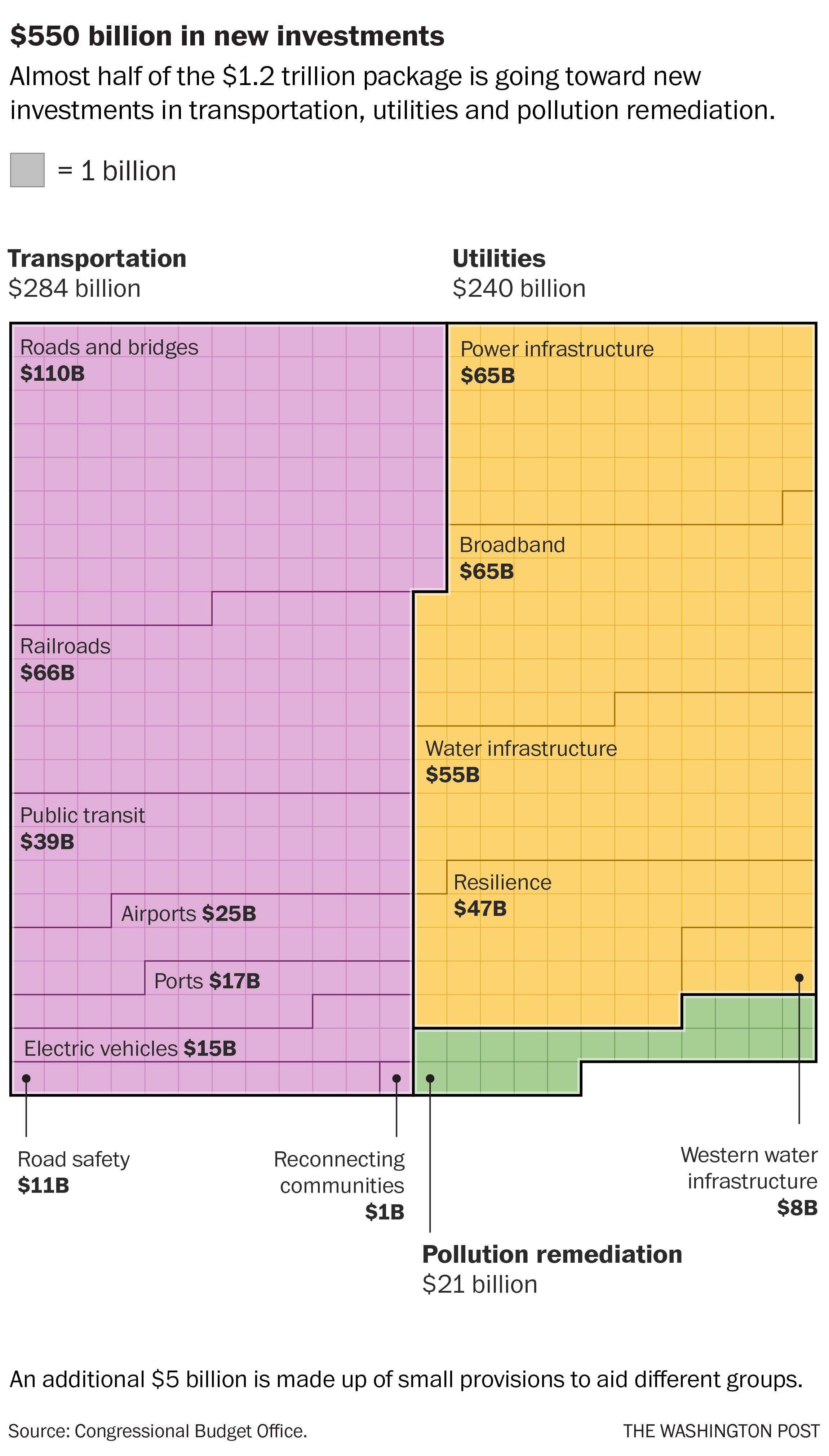 | Social spending/climate change bill: Democrats have sometimes talked about this bill as "human infrastructure." It is much more expansive than the traditional infrastructure bill, so it's harder to summarize in a paragraph. But it would give millions of Americans more money for child care, access to universal prekindergarten and options for lower drug prices, and lawmakers are still debating whether it includes paid family leave. The idea is to redistribute some wealth by taxing millionaires and corporations to try to help poor and middle class Americans. Both bills have: money to combat climate change. The infrastructure package invests in electric school buses and electric car charging stations and fighting coastal flooding. The social safety net bill goes much further by using a variety of tax incentives to push America away from fossil fuels. But the social spending bill has one big difference: Instead of funding these programs for a decade, it would only fund them for a few years to try to make the bill cheaper at the outset. Deciding whether to continue the programs is a problem for another Congress. "Biden would essentially be leaving his legacy in the hands of a future Congress," writes The Post's Heather Long. An eyebrow-raising quote in the news: "Obviously" 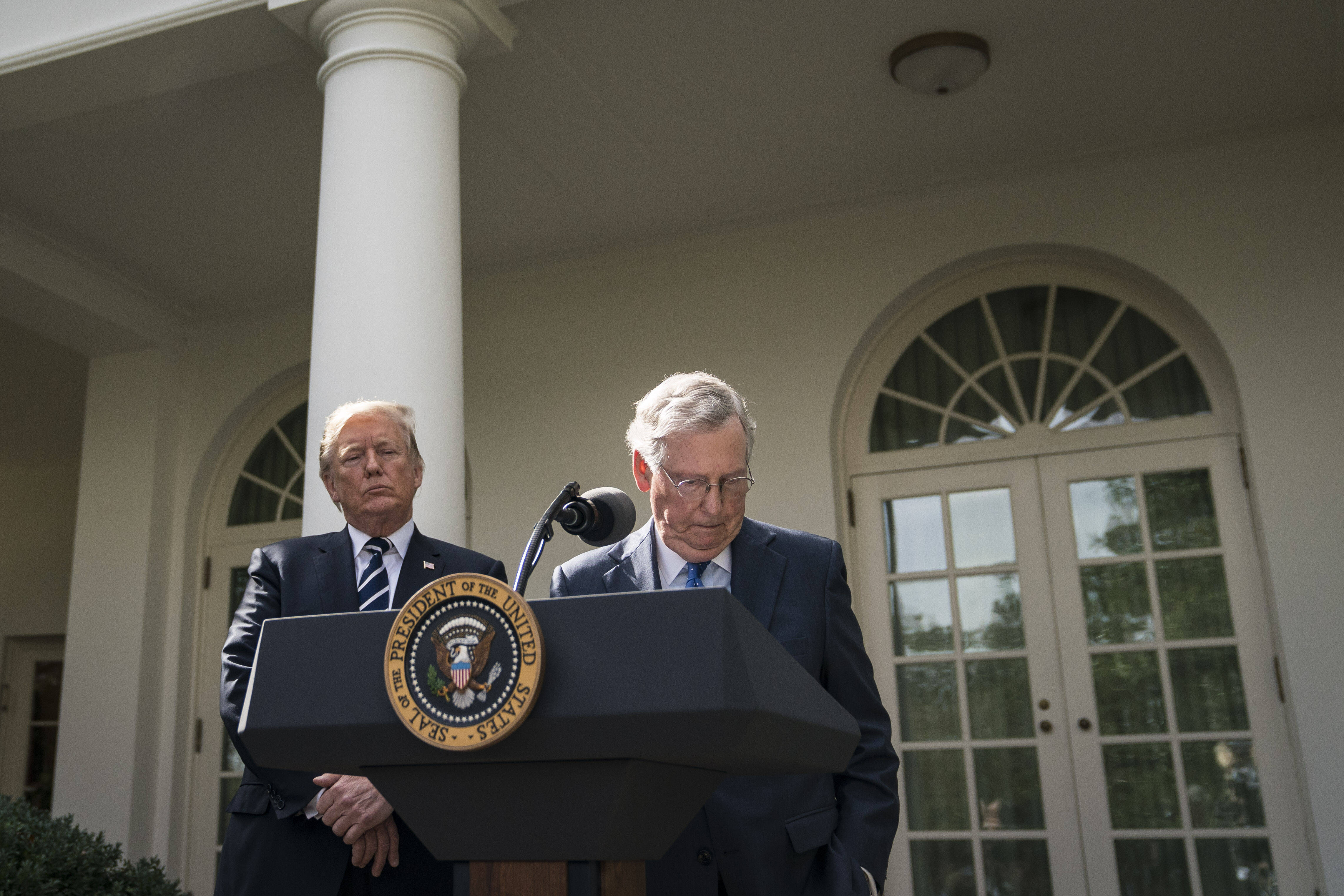 Mitch McConnell is all in for Trump 2024. (Jabin Botsford/The Washington Post) | That's Senate Minority Leader Mitch McConnell (R-Ky.), telling The Post's Michael Kranish that he would obviously vote for Trump to be president again in 2024. "How could he square that pledge with saying Trump had caused an insurrection?" Kranish said he asked McConnell. McConnell replied that it was " 'pretty simple,' because he would follow his party's wishes." To anyone who knows McConnell, this answer makes total sense. He is a pragmatic politician, to the point of forsaking principles and ideology. His almost singular goal is to get back to being majority leader, and to do that, Republicans need to win back the Senate next year (which is possible). Republicans have a good shot, McConnell has apparently decided, if the Republican Party remains the Party of Trump. | 




 Email
Email