| Lula and Bolsonaro on the road, Biden mulls Olympic boycott, Canada's House of Commons returns and CNN launches in Portugal. London / Zürich / Toronto /
Los Angeles / Hong Kong / Tokyo  SPONSORED BY | | Breaking news The US stood divided once again this weekend over the not-guilty verdict in the trial of Kyle Rittenhouse. For more on the case and its aftermath, tune in to today's edition of The Globalist on Monocle 24.
| | Opinion / Christopher Cermak Holding your nerve Those of us in the UK are living in a strange bubble. While much of Europe is mulling new restrictions and my home country, Austria, begins a 20-day lockdown today, life in London continues pretty much as normal. There are few masks, vaccination remains largely optional (but there's a high uptake) and no restrictions on movement. Still the mood remains tense: an uptick in coronavirus cases and hospitalisations is liable to make any society nervous. Do we have it right? Or should we be following Europe into lockdown? In March last year the answer seemed obvious: the UK had reacted far too slowly to the first wave of infections. But this time I'm not so sure. It's notable that even someone like Chris Smith, British virologist and Monocle's always-sensible health and science correspondent, told me that the UK needs to hold its nerve and not be drawn into another round of restrictions. Countries should be focusing more on consequences than the overall number of cases because the consequences of getting coronavirus for most of those who are vaccinated remain minor. For another thing, Smith says, fixating purely on coronavirus at this stage ignores the many other respiratory infections and diseases that have built up as we prioritise the pandemic.  Perhaps more importantly, with vaccines readily available, we have essentially reached a phase where the virus is endemic. "We are going to have to get used to living like this," Smith told me. That means figuring out a strategy for the long haul and not the short-term. It also suggests that there should be a laser-like focus on raising the number of vaccinations rather than locking down entire societies. Given that, it is striking that Austria experimented with a lockdown for the unvaccinated for less than five days before announcing a lockdown for everyone. Protesters, such as those in the Netherlands this weekend, can't have it both ways – if you don't accept the vaccine then you can't complain about the lockdowns that ensue. Ultimately, this is about fairness. There are those in Austria who will continue to protest vaccine requirements (pictured), who argue that they should have a choice and not be coerced into doing something they don't want to do. But surely the same principle applies to the rest of us, who otherwise have no choice but to be forced back into our homes.
| | Newsletter / JOIN THE CLUB Spread the word If you like The Monocle Minute and Monocle Weekend Editions, then please pass it on to your nearest and dearest so they can sign up too. If you believe in the power of good journalism, make it something you subscribe to. Sharing is caring.
| | Elections / Brazil Popular front Former Brazilian president Luiz Inácio Lula da Silva received a series of warm welcomes on a 10-day European tour, which wrapped up in Spain over the weekend and included meetings with Emmanuel Macron (pictured, on right, with Lula) and Germany's chancellor-in-waiting Olaf Scholz. His reception stood in stark contrast to that of Brazilian incumbent Jair Bolsonaro, who was met with little fanfare during his appearance at the G20 summit in Rome last month and received far less media attention than his predecessor for his own tour of the Middle East last week. But Lula's European popularity won't necessarily have an effect on Brazil's presidential elections next year.  "While it's a very powerful contrast, I'm not sure that Brazilians will vote based on that," Chrisopher Sabatini, senior fellow for Latin America at Chatham House, tells The Monocle Minute. "At home, Lula's star has been somewhat tarnished in recent years. And Bolsonaro's close supporters mostly care about projecting national interests, so I can't imagine him being ashamed of this."
| | This is Athens  MONOCLE MONOCLE | | Sport / USA & China Cold shoulder Fresh from a meeting with Xi Jinping last week, Joe Biden has said that he's considering a diplomatic boycott of the 2022 Winter Olympics in China. The move would mean that no US officials would attend February's showpiece in Beijing but a further question involves the participants: will it have an effect on those who have trained for the event? "This is about the US government showing its dissatisfaction with the Chinese leadership without punishing those hard-working athletes," John Taylor, former Olympic commentator and international rugby player, tells The Monocle Minute. He says that whether athletes themselves decide to go is likely to be a more personal question. "I didn't play rugby against South Africa in the 1970s because apartheid was totally incompatible with my personal beliefs," he says. "The US government's considerations about the Winter Olympics should allow athletes to arrive at their own decisions."  John Taylor was an Olympic commentator for the broadcaster ITV between 1980 and 1992. You can hear his full take on sport and politics on this recent episode of 'The Foreign Desk'.
| | Sponsored by This is Athens | | Politics / Canada Back to work The House of Commons in Canada (pictured) is meeting for the first time today since September's federal election, which saw Justin Trudeau's Liberal Party re-elected with a minority government. At the top of the to-do list for legislators is providing support for individuals and businesses that have been affected by the pandemic, as well as paid sick leave. Without a governing majority, the Liberals will have to rely on opposition parties to get legislation through parliament; Trudeau and Conservative leader Erin O'Toole are expected to clash on issues including vaccine mandates for federal employees and trade relations with the US.  O'Toole has also criticised the slow return of parliament, saying that it "shouldn't take Trudeau two months to get back to work". But O'Toole has his own problems convincing lawmakers to return, since a new rule that all members of parliament must be vaccinated is being disputed by conservatives, an undisclosed number of whom have yet to receive the jab.
| | Media / Portugal This just in Today marks the launch of CNN Portugal, a 24-hour news channel that hopes to become one of the country's most important sources of information. A partnership between Warner Media and Portugal's Media Capital, its foundation is also a sign of the health of the wider media landscape. "Portugal is a vibrant market right now," Nuno Santos (pictured), director of CNN Portugal, tells Monocle 24. "The news channels are strong here." One of the reasons for that strength is the country's growing connection with other Lusophone nations in Latin America and Africa. "We have a unique position to use that connection between the north and south [hemispheres]," says Santos. This is the second Portuguese-language outpost for CNN after Brazil and comes amid a time of major upheaval in Portugal, with snap elections set for January. "We will have three incredibly busy months ahead," says Santos. We wish them boa sorte.  To hear the full interview with Santos, tune in to the latest episode of 'The Stack' or hear an excerpt on today's episode of 'The Globalist' on Monocle 24.
| | M24 / The Foreign Desk Albin Kurti: prankster to politician Andrew Mueller is joined by Albin Kurti, the prime minister of Kosovo, for an in-depth conversation. They discuss the unusual challenges the country faces, its tumultuous relationship with Serbia and how a prankster became a politician.  | | Monocle Films / Friedrichshafen Inside the airship industry Airships, once tipped to be the future of flight, are now largely used as costly billboards that drift across cities or over major sporting events. We travelled to Friedrichshafen in Germany to take a peek inside one of the world's few commercial operations and explore this niche area of aviation. Read more on the story in the November issue of Monocle magazine. 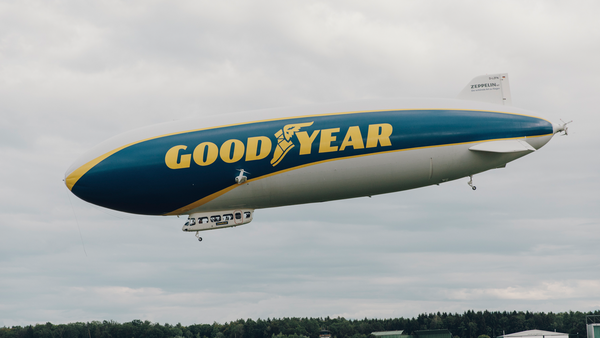 | | newsletter / join us Welcome to our world Has this been forwarded to you by a friend? Sign up to The Monocle Minute and Monocle Weekend Editions to receive your own bulletin of weekday news and weekend treats. Image credits: Getty Images, Ricardo Stuckert/Instituto Lula, Alamy, Armanda Claro, Shutterstock To stop receiving all Monocle newsletters, please click here This email is from Monocle whose registered office is at Midori House, 1 Dorset Street, London, W1U 4EG. You have received this email because you have previously provided us with your email address and subscribed to Monocle bulletins.
© 2021 Monocle. Stay up to date in your downtime with Monocle's new weekly newsletter. | | | |


