OpenAI just gave us a preview of how the AI bubble will pop
OpenAI just gave us a preview of how the AI bubble will pop
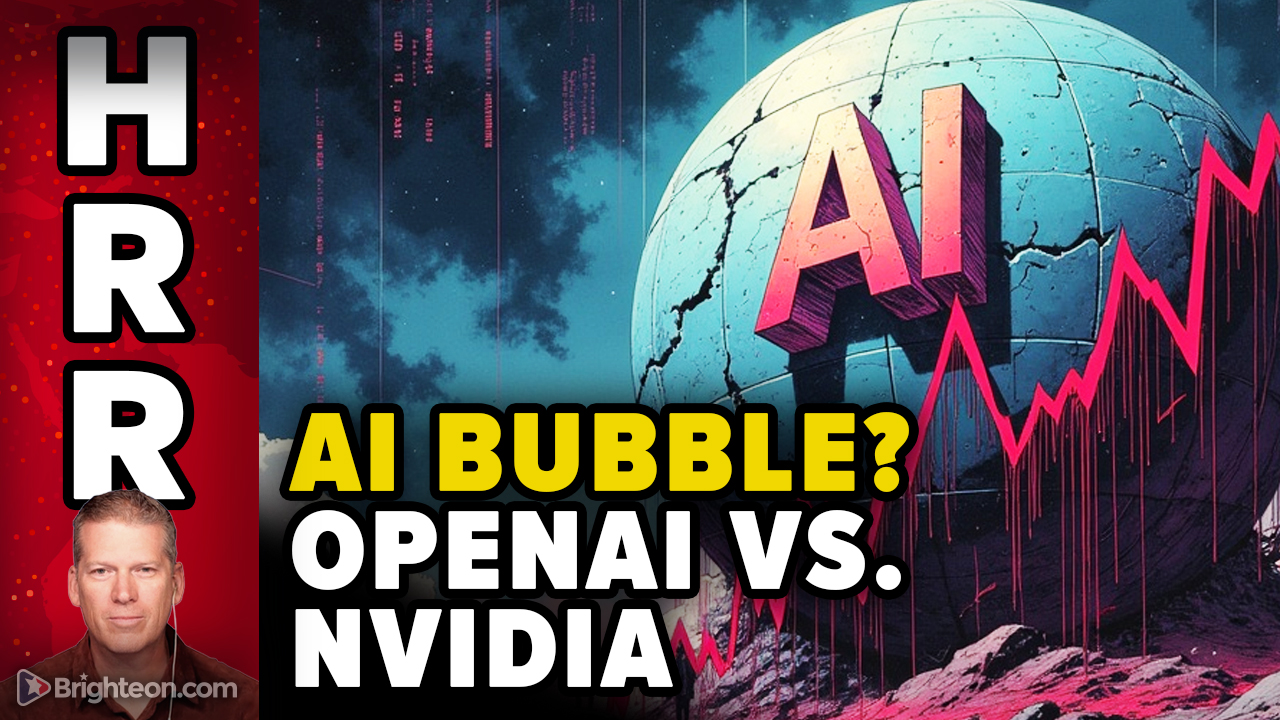
The artificial intelligence gold rush, which has dominated global financial markets for the past few years, faced its most significant reality check on April 28, 2026. For years, OpenAI has been the North Star of the tech sector, a private entity whose soaring valuation and rapid growth justified hundreds of billions of dollars in capital expenditure by public giants like Microsoft, Nvidia, and Oracle. However, a series of internal reports and market movements have now pulled back the curtain on the fragility of this ecosystem. When the company at the very center of the AI revolution stumbles, the shockwaves are felt not just in Silicon Valley, but in every index fund and retirement portfolio tied to the tech buildout. This moment serves as a stark warning: the transition from speculative hype to fundamental financial performance is finally here, and for many companies, the math simply does not add up.
The AI bubble is predicted to pop when the massive capital expenditures on hardware and data centers fail to deliver a proportional return on investment (ROI). Recent reports indicate that OpenAI missed its internal goal of reaching one billion weekly active users by late 2025 and fell short of monthly revenue targets in early 2026. This has triggered a sell-off in "AI infrastructure" stocks like Nvidia, Oracle, and SoftBank, as investors begin to fear that the circular flow of investment—where AI labs buy chips from the companies that invest in them—cannot be sustained without massive, direct consumer and enterprise profitability.
The OpenAI Target Miss: A Reality Check for Wall Street
For the better part of three years, the narrative surrounding OpenAI was one of unstoppable momentum. However, a recent report by the Wall Street Journal has exposed the first cracks in the facade. The company reportedly missed several key internal metrics that were used to justify its astronomical private valuation. Most notably, the goal of reaching one billion weekly active users proved elusive. While ChatGPT remains a household name, the rate of growth has slowed significantly as the market reaches a point of saturation and competition intensifies.
Beyond user numbers, the revenue miss is perhaps more concerning for the broader market. Finance chief Sarah Friar has reportedly been cautioning colleagues about the company's ability to fund its massive "compute" commitments. OpenAI's business model relies on spending billions to train and run models, with the hope that enterprise subscriptions and API usage will eventually cover the costs. If the revenue growth cannot keep pace with the rising costs of H100 and B200 GPUs, the entire financial structure of the lead lab in the world becomes precarious. This isn't just a problem for Sam Altman; it is a problem for everyone whose growth story is tethered to OpenAI's success.
The Ripple Effect: Why Nvidia and Oracle are Vulnerable
When OpenAI wobbles, the "infrastructure trade" falls. This was demonstrated clearly when Oracle’s stock dropped more than 4% following the news. Oracle’s modern growth story is built almost entirely on its $300 billion, five-year cloud agreement with OpenAI. If OpenAI cannot sustain its growth, Oracle’s massive investment in data centers risks becoming a series of expensive, underutilized warehouses. The market is now realizing that these contracts are only as good as the solvency and growth of the startups signing them.
Nvidia, the poster child of the AI boom, also felt the sting, dropping 3.3% in a single session. While Nvidia’s technology is undisputed, its valuation assumes that the demand for chips will continue to grow at an exponential rate. If the major labs begin to scale back their orders because they cannot monetize the resulting intelligence, Nvidia’s forward P/E ratio starts to look increasingly disconnected from reality. The sell-off also hit Broadcom, AMD, and Arm Holdings, proving that the market no longer views AI as a "sure thing" regardless of individual company performance.
Circular Investment: The Looming Valuation Trap
One of the most criticized aspects of the current AI boom is the "circular flow" of capital. Critics point to the fact that Nvidia has invested billions back into OpenAI, while Microsoft has poured over $13 billion into the startup. In return, OpenAI spends that money on Microsoft’s Azure cloud services and Nvidia’s chips. This creates a feedback loop where valuations are inflated by internal spending rather than external revenue from third-party customers.
This structure is reminiscent of the "vendor finance" schemes that characterized the lead-up to the 2000 dot-com crash. In that era, telecommunications companies would lend money to startups so they could buy their equipment, artificially boosting the sales numbers of the parent company. When the startups eventually failed to find a real audience, the whole house of cards collapsed. If OpenAI is struggling to meet revenue targets despite having the most recognizable brand in the space, it suggests that the "real" demand for high-cost AI services may be lower than the "artificial" demand created by these investment partnerships.
| Metric or Sector | Recent Performance & Outlook |
|---|---|
| OpenAI User Growth | Missed 1 billion weekly active user target by end of 2025 |
| Nvidia (NVDA) Stock | Fell 3.3% following reports of OpenAI revenue struggles |
| SoftBank Exposure | Experienced worst single-day drop in 6 months (down 11%) |
| Global AI Capex | Projected $660 billion by top four hyperscalers in 2026 |
The Productivity Paradox and the ROI Crisis
Economists have begun to point toward a "productivity paradox" in the AI sector. Despite the massive infusion of capital and the ubiquity of LLMs in corporate talk, broad economic data has yet to show a significant spike in national productivity. A study by the National Bureau of Economic Research found that 90% of firms reported no measurable impact of AI on their output or workplace efficiency as of early 2026.
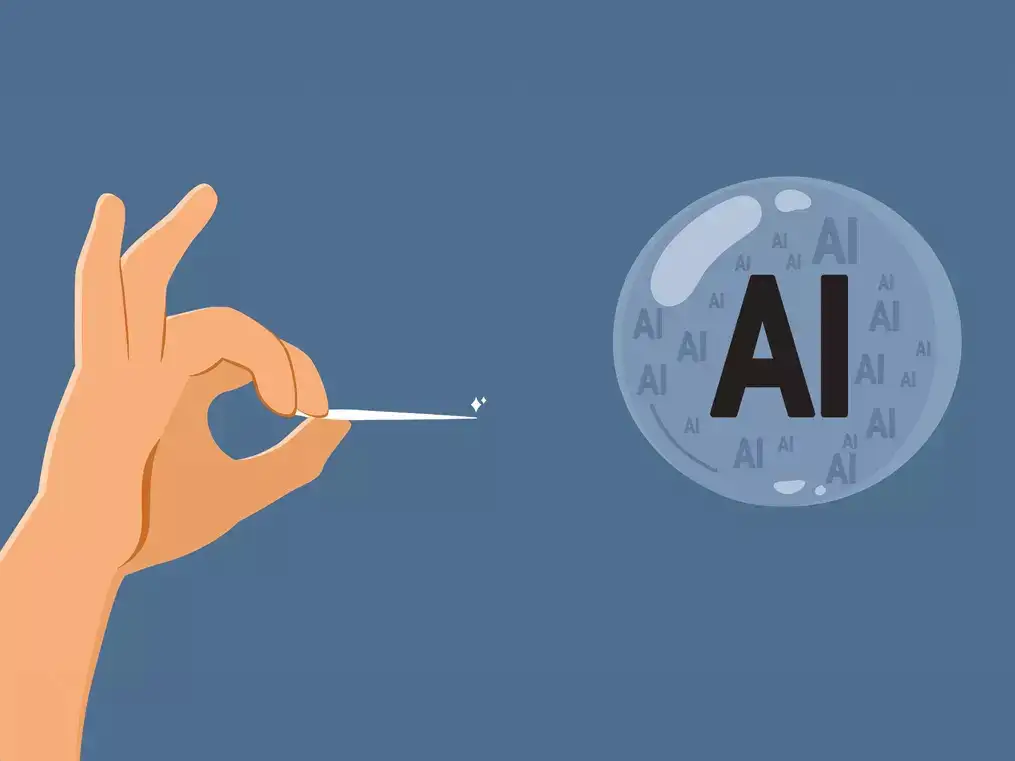
This lack of ROI is the "pin" that threatens to pop the bubble. Investors have been willing to tolerate massive losses in exchange for the promise of a future where AI handles all white-collar work. However, if the actual implementation of AI is unreliable—as many enterprise users report—then the willingness of CEOs to keep pouring millions into "seats" and "tokens" will evaporate. The "News Trending Update" for the corporate world is simple: if it doesn't save money or make money this year, the budget is getting cut.
Competitive Pressures: Anthropic, Gemini, and the Open Source Surge
OpenAI is no longer the only game in town, and its loss of market share is a key driver of its revenue miss. Data from Invezz shows that ChatGPT’s share of generative AI web traffic dropped from over 86% to roughly 64% in a year. Google’s Gemini has climbed to 21.5%, and Anthropic’s Claude has become the preferred tool for developers and enterprise coding tasks. This fragmentation is a nightmare for OpenAI’s valuation, which was predicated on a winner-take-all monopoly.
Furthermore, the rise of powerful open-source models like Meta’s Llama has commoditized the "intelligence" that OpenAI was trying to sell at a premium. Why should a company pay millions for a closed-source API when they can run a comparable model on their own infrastructure for a fraction of the cost? This "fragile pricing" model means that even if demand for AI stays high, the margins for the companies providing the models will continue to be squeezed, making it nearly impossible to pay back the billions in debt used to build the data centers.
The SoftBank Factor: A 10% Stake at Risk
Perhaps no company is more exposed to an OpenAI downturn than Masayoshi Son’s SoftBank. Holding a stake of roughly 11% to 13% in OpenAI, SoftBank saw its stock price plunge 11% in Tokyo following the news. This was SoftBank's worst day in half a year. The concern is that SoftBank has used its shares in other companies, like Arm, as collateral for margin loans to fund its AI ambitions.
If the valuation of OpenAI is marked down in the private markets, it could trigger a liquidity crisis for SoftBank, forcing them to sell off other assets and putting further downward pressure on the tech sector. This interconnectedness is a hallmark of a financial bubble. When the "cleanest, easiest bet" on Wall Street starts to look messy, the investors who are the most leveraged are the first to be forced out, often accelerating the decline for everyone else.
The Compute Commitment Problem
A hidden danger in OpenAI's financial documents is the concept of "compute commitments." These are essentially "take-or-pay" contracts where OpenAI has agreed to pay billions to cloud providers like Microsoft and Oracle for server time, regardless of whether they actually have enough customers to use it. In a growth phase, these contracts are seen as securing vital resources. In a slowdown, they become a lead weight around the company’s neck.
OpenAI is reportedly burning $15 million per day just on its video generation tool, Sora, which has faced delays and skepticism regarding its commercial viability. With projected operating losses of $74 billion in 2028 alone, the company is in a race against time to find a "killer app" that justifies this level of spending. If the next generation of models—GPT-5 or its equivalent—does not represent a quantum leap in utility, the justification for these compute commitments will vanish overnight.
The Future of Your 401(k) in an AI-Heavy Market
For the average investor, the OpenAI news is a signal to check their exposure. Because the "Magnificent Seven" and other AI-related stocks make up such a massive percentage of the S&P 500 and Nasdaq, a pop in the AI bubble would lead to a broad market correction. JP Morgan estimates that the top four tech spenders are on track to spend $660 billion on AI capex in 2026. This is more than the GDP of most countries.
If this spending is revealed to be unproductive, the resulting write-downs would be historic. The "soundtrack has changed" for the market. While AI as a technology is certainly here to stay, the era of buying any stock with "AI" in the mission statement without looking at the balance sheet is over. Investors are now demanding to see real revenue from real customers that isn't just another tech company's investment capital in disguise.
Conclusion
The recent struggles at OpenAI are not just a minor speed bump for a single startup; they are a preview of the structural issues facing the entire AI sector. The combination of slowing user growth, missed revenue targets, and unsustainable infrastructure costs suggests that the "AI bubble" is moving from the expansion phase to the critical testing phase. Whether this results in a sudden "pop" or a long, painful "deflate" depends on whether these companies can finally move beyond the hype and deliver a clear return on investment. For now, the market's reaction to OpenAI's missed targets serves as a sobering reminder that even the most revolutionary technology must eventually answer to the laws of economics.
Frequently Asked Questions
The drop was triggered by reports that OpenAI missed its internal revenue and user growth targets. Since many public companies like Oracle and Nvidia have valuations tied to OpenAI’s growth, investors sold off these stocks in fear of a broader sector slowdown.
There is no official confirmation of bankruptcy, but financial reports indicate massive operating losses—potentially $74 billion by 2028—and internal concerns about funding the multi-billion dollar "compute" costs required to keep the service running.
Both involve massive speculation on a transformative technology. However, some analysts argue AI companies have more real revenue than 1990s startups, while others point to "circular investments" as a sign that the current revenue numbers are artificially inflated.
The productivity paradox refers to the observation that despite billions of dollars of investment in AI, there has not yet been a corresponding significant increase in broad economic productivity or corporate efficiency data.
Stocks with high exposure to AI infrastructure and "vendor financing" relationships are most at risk. This includes companies like Nvidia, Oracle, SoftBank, and various AI-focused cloud service providers whose growth is tied to the spending of AI startups.
OpenAI just gave us a preview of how the AI bubble will pop
OpenAI just gave us a preview of how the AI bubble will pop Wallpapers
Collection of openai just gave us a preview of how the ai bubble will pop wallpapers for your desktop and mobile devices.
Detailed Openai Just Gave Us A Preview Of How The Ai Bubble Will Pop Abstract Nature
Transform your screen with this vivid openai just gave us a preview of how the ai bubble will pop artwork, a true masterpiece of digital design.

Amazing Openai Just Gave Us A Preview Of How The Ai Bubble Will Pop Wallpaper Photography
Experience the crisp clarity of this stunning openai just gave us a preview of how the ai bubble will pop image, available in high resolution for all your screens.

Amazing Openai Just Gave Us A Preview Of How The Ai Bubble Will Pop Moment in HD
Transform your screen with this vivid openai just gave us a preview of how the ai bubble will pop artwork, a true masterpiece of digital design.

Vibrant Openai Just Gave Us A Preview Of How The Ai Bubble Will Pop Moment Nature
Experience the crisp clarity of this stunning openai just gave us a preview of how the ai bubble will pop image, available in high resolution for all your screens.

Serene Openai Just Gave Us A Preview Of How The Ai Bubble Will Pop Landscape Nature
Explore this high-quality openai just gave us a preview of how the ai bubble will pop image, perfect for enhancing your desktop or mobile wallpaper.

Vivid Openai Just Gave Us A Preview Of How The Ai Bubble Will Pop Artwork for Mobile
Transform your screen with this vivid openai just gave us a preview of how the ai bubble will pop artwork, a true masterpiece of digital design.

Mesmerizing Openai Just Gave Us A Preview Of How The Ai Bubble Will Pop Landscape for Desktop
Experience the crisp clarity of this stunning openai just gave us a preview of how the ai bubble will pop image, available in high resolution for all your screens.

Spectacular Openai Just Gave Us A Preview Of How The Ai Bubble Will Pop Abstract in 4K
Find inspiration with this unique openai just gave us a preview of how the ai bubble will pop illustration, crafted to provide a fresh look for your background.

Vibrant Openai Just Gave Us A Preview Of How The Ai Bubble Will Pop Wallpaper for Your Screen
Explore this high-quality openai just gave us a preview of how the ai bubble will pop image, perfect for enhancing your desktop or mobile wallpaper.
High-Quality Openai Just Gave Us A Preview Of How The Ai Bubble Will Pop Design for Mobile
Explore this high-quality openai just gave us a preview of how the ai bubble will pop image, perfect for enhancing your desktop or mobile wallpaper.

Vivid Openai Just Gave Us A Preview Of How The Ai Bubble Will Pop Abstract Concept
Experience the crisp clarity of this stunning openai just gave us a preview of how the ai bubble will pop image, available in high resolution for all your screens.
Captivating Openai Just Gave Us A Preview Of How The Ai Bubble Will Pop Abstract in 4K
Find inspiration with this unique openai just gave us a preview of how the ai bubble will pop illustration, crafted to provide a fresh look for your background.
Dynamic Openai Just Gave Us A Preview Of How The Ai Bubble Will Pop Background Digital Art
A captivating openai just gave us a preview of how the ai bubble will pop scene that brings tranquility and beauty to any device.

Vivid Openai Just Gave Us A Preview Of How The Ai Bubble Will Pop Scene Collection
Transform your screen with this vivid openai just gave us a preview of how the ai bubble will pop artwork, a true masterpiece of digital design.
Exquisite Openai Just Gave Us A Preview Of How The Ai Bubble Will Pop Image Collection
Find inspiration with this unique openai just gave us a preview of how the ai bubble will pop illustration, crafted to provide a fresh look for your background.
Artistic Openai Just Gave Us A Preview Of How The Ai Bubble Will Pop Landscape Collection
Find inspiration with this unique openai just gave us a preview of how the ai bubble will pop illustration, crafted to provide a fresh look for your background.

Crisp Openai Just Gave Us A Preview Of How The Ai Bubble Will Pop Landscape Collection
This gorgeous openai just gave us a preview of how the ai bubble will pop photo offers a breathtaking view, making it a perfect choice for your next wallpaper.

Vivid Openai Just Gave Us A Preview Of How The Ai Bubble Will Pop View for Desktop
Discover an amazing openai just gave us a preview of how the ai bubble will pop background image, ideal for personalizing your devices with vibrant colors and intricate designs.
Gorgeous Openai Just Gave Us A Preview Of How The Ai Bubble Will Pop Capture in HD
Find inspiration with this unique openai just gave us a preview of how the ai bubble will pop illustration, crafted to provide a fresh look for your background.

High-Quality Openai Just Gave Us A Preview Of How The Ai Bubble Will Pop Background for Mobile
Discover an amazing openai just gave us a preview of how the ai bubble will pop background image, ideal for personalizing your devices with vibrant colors and intricate designs.
Download these openai just gave us a preview of how the ai bubble will pop wallpapers for free and use them on your desktop or mobile devices.