Owen Doyle: What parent would let their child play rugby after seeing the carnage at Thomond?
Owen Doyle: What parent would let their child play rugby after seeing the carnage at Thomond?
The landscape of modern rugby has reached a precarious crossroads where the intensity of the professional game is beginning to overshadow the sport's core values of safety and sportsmanship. Recent events at Thomond Park have sparked a firestorm of debate, led by former IRFU referees boss Owen Doyle, who has raised a haunting question about the future of the sport. As the physical toll on players reaches unprecedented levels, the "carnage" witnessed during high-stakes interprovincial clashes has left spectators, pundits, and parents alike questioning the sustainability of such a brutal collision culture. Doyle’s provocative stance serves as a wake-up call for World Rugby, highlighting a systemic failure in officiating and law interpretation that may be putting the next generation of players at risk.
Owen Doyle’s question—"What parent would let their child play rugby after seeing the carnage at Thomond?"—summarizes the growing concern over player welfare in professional rugby. Following a series of high-impact matches at Munster's home ground, characterized by a staggering injury list including serious concussions and season-ending fractures, the former refereeing chief has criticized the "chumminess" of modern officiating and the failure of current law trials to protect players. This debate highlights the tension between rugby's status as a high-octane entertainment product and the fundamental necessity of ensuring the physical safety of its participants at all levels.
The Incident at Thomond Park: A Turning Point for Rugby Safety?
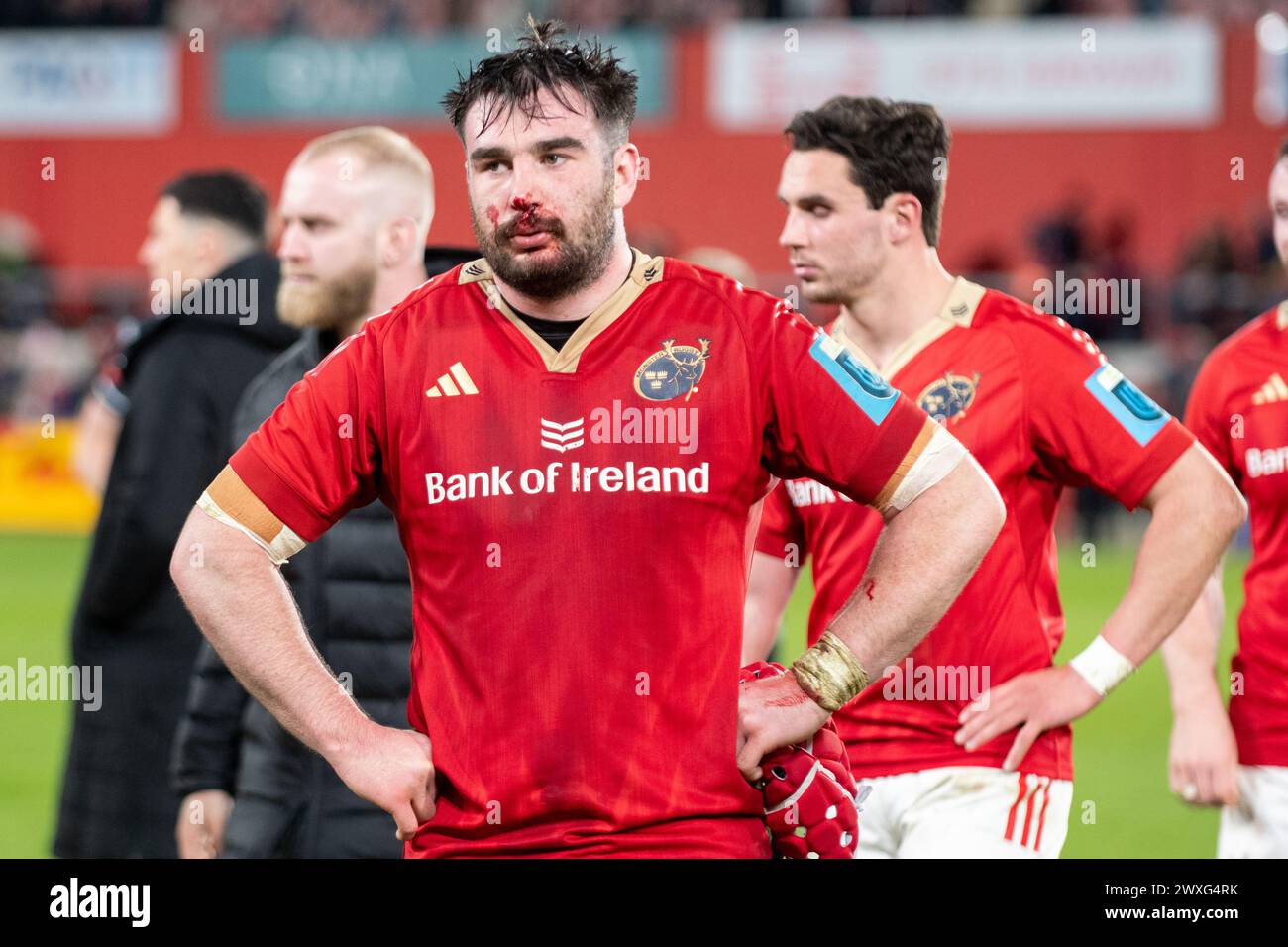
Thomond Park has long been the fortress of Irish rugby, known for its atmosphere and the "hell-for-leather" style of play it inspires. However, the recent clash between Munster and Ulster, as well as previous encounters with Leinster, have shifted the narrative from tactical brilliance to medical survival. During these matches, the sheer volume of "collateral damage" was enough to shock even the most seasoned observers. When a single fixture results in half a dozen top-tier athletes being removed for head injuries, bicep tears, and leg fractures, the sport moves beyond a contest of skill into a battle of attrition.
Critics like Doyle argue that the current trajectory of the game is unsustainable. The "carnage" is not merely a result of bad luck but a consequence of the modern professional body being pushed beyond its biological limits. As players become bigger, faster, and stronger, the force of impact in the tackle and breakdown areas has increased exponentially. When this physical evolution is met with lax officiating or experimental law changes that favor attacking momentum over player safety, the result is the kind of medical crisis seen in Limerick.
Owen Doyle’s Scathing Critique of Modern Refereeing
Owen Doyle has not been shy about pointing the finger at the officials tasked with managing this chaos. One of his primary grievances is the "faux friendliness" or "chumminess" displayed by modern referees like Andrew Brace. Doyle contends that referees being on first-name terms with players undermines their authority and prevents them from taking a hard line on dissent and dangerous play. In his view, a referee is not there to be a player's friend; they are there to be the ultimate arbiter of the law.
The critique extends to the TMO (Television Match Official) system as well. Doyle has described some recent officiating decisions as the "poorest seen in 40 years," particularly when young or inexperienced referees lose control of marquee fixtures. By allowing mistakes to prey on their minds or failing to sanction clear offenses at the breakdown, officials are inadvertently creating a more dangerous environment. For Doyle, strong refereeing means immediate and consistent sanctions, not continuous, meaningless warnings that players eventually ignore.
The Toll of Professionalism: Examining the "Carnage"
The injury list following the Munster vs. Ulster match reads like a hospital intake report. Key players such as Jack Crowley, Tom Farrell, Jean Kleyn, Calvin Nash, and Tadhg Beirne all suffered significant setbacks. However, the most alarming case remains that of Oli Jager. Having just returned from a three-month layoff due to head injuries, Jager was once again removed with a concussion. This repetitive trauma has led to fears that his career may be in jeopardy, highlighting the "sickening" reality of head impacts in the modern game.
This "carnage" is not limited to one team. Ulster also traveled to Thomond with a decimated squad, forced to field an "Academy-heavy" side because their senior players were already in the treatment room. When teams are forced to play "B" sides in major derbies because the "A" side is physically broken, the integrity of the competition is compromised. More importantly, the risk to younger, less experienced academy players being thrown into such a ferocious environment is a major welfare concern.
Concussions and Career-Ending Risks: The Case of Oli Jager
The issue of concussion is the single most significant threat to the future of rugby union. The case of Oli Jager serves as a tragic case study. The frequency with which players are returning to play only to be sidelined again by the same injury suggests that current protocols may not be sufficient for the long-term health of the brain. Doyle’s comments reflect a broader anxiety that the sport is failing to address the cumulative effect of "sub-concussive" hits that occur in every scrum and breakdown.
For parents watching at home, seeing a professional athlete like Jager struggle with repeated head trauma is a powerful deterrent. If the best-protected players with the best medical care in the world are suffering this level of damage, what hope is there for an amateur or a schoolchild? The "carnage at Thomond" is a visual representation of the risks that are now intrinsically linked to the sport, making the "choice" to play rugby a much heavier decision than it was twenty years ago.
Table: Common Rugby Injuries and Their Impact
| Injury Type | Impact on Career/Play |
|---|---|
| Concussion | High risk of long-term neurological damage; requires strict return-to-play protocols. |
| ACL/Ligament Rupture | Usually season-ending; requires surgery and 6-9 months of rehabilitation. |
| Dislocated Shoulder | Common in tackle phase; often leads to recurring instability without surgery. |
| Slipped Disc | Serious spinal risk; common in front-row players due to scrum pressure. |
Law Trials and Their Unintended Consequences
World Rugby frequently introduces law trials aimed at making the game more expansive and "ball-in-play" focused. However, Doyle argues that many of these trials have backfired. One specific example is the trial of not calling crooked lineout throws if the lineout is uncontested. Doyle labels this an "abject failure," claiming it has encouraged illegal mauling and eliminated the lineout as a genuine contest for possession.
The unintended consequence of these "speed-up" trials is often an increase in the number of collisions. By keeping the ball in play longer, the players—who are already fatigued—are forced into more tackles and rucks. Fatigue is a primary driver of poor technique, and poor technique is a primary driver of injury. When the officials "usurp the written word" to keep the game moving, they may be sacrificing player safety on the altar of entertainment value.
Player Welfare vs. Entertainment Value
There is an undeniable tension between rugby as a sport and rugby as a commercial product. Broadcasters and sponsors want high-scoring, fast-paced games with minimal interruptions. This leads to pressure on referees to "let the game flow," even when technical offenses are occurring. Doyle’s critique of the "chumminess" in the English Premiership and its spread to Ireland suggests that the culture of the game is being reshaped to suit television audiences.
However, the cost of this "entertainment" is paid in the bodies of the players. The "carnage at Thomond" was a spectacle, but at what cost? When fans leave the stadium feeling "disillusioned" by the sight of an "Ulster B" team or "worrying" about the casualty list, the entertainment value evaporates. The sport risks alienating its core base if it becomes associated more with the infirmary than with the trophy cabinet.
The Future of Schoolboy and Grassroots Rugby
The most profound impact of the "Thomond carnage" debate is felt at the grassroots level. Schoolboy rugby is the lifeblood of the Irish system, but it is also where the incidence of head and face injuries is highest. Doyle warns that if the "vile, sickening, and dangerous play" seen at the professional level is not addressed, the pool of future players and officials will shrink. "Intelligent, knowledgeable people will have no interest in the role," he warns regarding refereeing, and the same can be said for participation.
Parents are the ultimate gatekeepers of the sport. If the prevailing image of rugby is one of career-ending concussions and "bomb squads" of massive forwards causing havoc, they will steer their children toward safer alternatives like soccer or Gaelic games. The cultural shift required must start at the top; if World Rugby does not prioritize safety over "ball-in-play" stats, the grassroots foundations will continue to erode.
Cultural Shifts and Governance Failures in the IRFU
Beyond the pitch, the governance of the game has also come under fire. The controversy surrounding Munster’s recruitment of Roger Randle, amid historic allegations, highlights a "bizarre failure of governance" and a lack of due diligence. This suggests a disconnect between the administration of the game and the values it claims to uphold. When the leadership is perceived to be failing in its moral and safety obligations, it trickles down to every aspect of the sport.
Doyle’s call for an "urgent revision" by World Rugby is a demand for a return to the "written word" of the law. He advocates for a game that is a fair contest for possession, where the referee is an authority figure rather than a "chum," and where the safety of the player is the absolute priority. Without this cultural reset, the "carnage" seen at Thomond Park will become the new, tragic norm for rugby union.
Conclusion
The "carnage at Thomond" is more than just a headline; it is a symptom of a sport struggling to balance its professional ambitions with its ethical obligations to the players. Owen Doyle’s scathing assessment of modern refereeing and the physical toll of current law interpretations provides a necessary, albeit uncomfortable, mirror for the rugby community. If the sport is to survive and thrive, it must address the "faux friendliness" that prevents tough officiating, rescind failed law trials, and place player welfare at the center of every decision. Ultimately, the answer to Doyle’s question depends on whether World Rugby can prove that the values of respect and integrity still matter more than the scoreboard or the television ratings.
Frequently Asked Questions
Who is Owen Doyle and why is his opinion significant?
Owen Doyle is a former Test-level referee and the former IRFU referees boss. His decades of experience at the highest levels of officiating give him a unique and authoritative perspective on the current state of rugby laws and player safety.
What specifically happened at Thomond Park to cause this debate?
A series of matches, notably Munster vs. Ulster and Munster vs. Leinster, resulted in an unusually high number of serious injuries. This "carnage" included multiple concussions (such as Oli Jager’s) and various fractures, leading to concerns about the physical limits of professional players.
What does Doyle mean by "chumminess" in refereeing?
Doyle refers to the modern trend of referees being on first-name terms with players and engaging in "faux friendliness." He argues this undermines the referee's authority and prevents them from properly sanctioning dissent and dangerous play.
Are rugby law trials making the game more dangerous?
According to Doyle, yes. He argues that trials like the uncontested crooked lineout rule encourage illegal mauling and remove the contest for possession, while other "speed-up" rules increase fatigue and collision frequency, leading to more injuries.
How can rugby be made safer for children?
Experts suggest a focus on proper tackling technique, strict adherence to concussion protocols, and ensuring that matches are not "mismatched" in terms of player size and experience. Doyle emphasizes that strong, authoritative refereeing is key to maintaining a safe environment.
Owen Doyle: What parent would let their child play rugby after seeing the carnage at Thomond?
Owen Doyle: What parent would let their child play rugby after seeing the carnage at Thomond? Wallpapers
Collection of owen doyle: what parent would let their child play rugby after seeing the carnage at thomond? wallpapers for your desktop and mobile devices.

Beautiful Owen Doyle: What Parent Would Let Their Child Play Rugby After Seeing The Carnage At Thomond? Picture Concept
Explore this high-quality owen doyle: what parent would let their child play rugby after seeing the carnage at thomond? image, perfect for enhancing your desktop or mobile wallpaper.

Artistic Owen Doyle: What Parent Would Let Their Child Play Rugby After Seeing The Carnage At Thomond? Picture Nature
This gorgeous owen doyle: what parent would let their child play rugby after seeing the carnage at thomond? photo offers a breathtaking view, making it a perfect choice for your next wallpaper.
:quality(70)/cloudfront-eu-central-1.images.arcpublishing.com/irishtimes/C5U4XIUJSXMBLV35ATCLB3MPQA.jpg "Captivating Owen Doyle: What Parent Would Let Their Child Play Rugby After Seeing The Carnage At Thomond? Abstract for Desktop")
Captivating Owen Doyle: What Parent Would Let Their Child Play Rugby After Seeing The Carnage At Thomond? Abstract for Desktop
This gorgeous owen doyle: what parent would let their child play rugby after seeing the carnage at thomond? photo offers a breathtaking view, making it a perfect choice for your next wallpaper.
:quality(70)/cloudfront-eu-central-1.images.arcpublishing.com/irishtimes/7BKX7B34YVB43EMXDX7FXNFCTU.jpg "Artistic Owen Doyle: What Parent Would Let Their Child Play Rugby After Seeing The Carnage At Thomond? Moment for Desktop")
Artistic Owen Doyle: What Parent Would Let Their Child Play Rugby After Seeing The Carnage At Thomond? Moment for Desktop
A captivating owen doyle: what parent would let their child play rugby after seeing the carnage at thomond? scene that brings tranquility and beauty to any device.
Vivid Owen Doyle: What Parent Would Let Their Child Play Rugby After Seeing The Carnage At Thomond? View Illustration
Experience the crisp clarity of this stunning owen doyle: what parent would let their child play rugby after seeing the carnage at thomond? image, available in high resolution for all your screens.
:quality(70)/cloudfront-eu-central-1.images.arcpublishing.com/irishtimes/5BAB5SB5OXPBUDMDRNNTPJ7PLM.jpg "High-Quality Owen Doyle: What Parent Would Let Their Child Play Rugby After Seeing The Carnage At Thomond? Image in 4K")
High-Quality Owen Doyle: What Parent Would Let Their Child Play Rugby After Seeing The Carnage At Thomond? Image in 4K
Experience the crisp clarity of this stunning owen doyle: what parent would let their child play rugby after seeing the carnage at thomond? image, available in high resolution for all your screens.
:quality(70)/cloudfront-eu-central-1.images.arcpublishing.com/irishtimes/KZ3C23YLQTZRDIQQTYVNGA7XZY.jpg "Stunning Owen Doyle: What Parent Would Let Their Child Play Rugby After Seeing The Carnage At Thomond? Scene Illustration")
Stunning Owen Doyle: What Parent Would Let Their Child Play Rugby After Seeing The Carnage At Thomond? Scene Illustration
This gorgeous owen doyle: what parent would let their child play rugby after seeing the carnage at thomond? photo offers a breathtaking view, making it a perfect choice for your next wallpaper.
Exquisite Owen Doyle: What Parent Would Let Their Child Play Rugby After Seeing The Carnage At Thomond? Background Collection
This gorgeous owen doyle: what parent would let their child play rugby after seeing the carnage at thomond? photo offers a breathtaking view, making it a perfect choice for your next wallpaper.
:quality(70)/cloudfront-eu-central-1.images.arcpublishing.com/irishtimes/RBEPQBBJ3JHHZAMBD5JNHG7KRI.jpg "Vivid Owen Doyle: What Parent Would Let Their Child Play Rugby After Seeing The Carnage At Thomond? Landscape Illustration")
Vivid Owen Doyle: What Parent Would Let Their Child Play Rugby After Seeing The Carnage At Thomond? Landscape Illustration
Experience the crisp clarity of this stunning owen doyle: what parent would let their child play rugby after seeing the carnage at thomond? image, available in high resolution for all your screens.
:quality(70):focal(1815x425:1825x435)/cloudfront-eu-central-1.images.arcpublishing.com/irishtimes/SGDYCOGTGTC2YW6H3WQINXXBJ4.jpg "Vivid Owen Doyle: What Parent Would Let Their Child Play Rugby After Seeing The Carnage At Thomond? Image in 4K")
Vivid Owen Doyle: What Parent Would Let Their Child Play Rugby After Seeing The Carnage At Thomond? Image in 4K
Explore this high-quality owen doyle: what parent would let their child play rugby after seeing the carnage at thomond? image, perfect for enhancing your desktop or mobile wallpaper.
:quality(70)/cloudfront-eu-central-1.images.arcpublishing.com/irishtimes/JYNYUN6ERGN4K3Z5UPZEFNG53U.jpg "Stunning Owen Doyle: What Parent Would Let Their Child Play Rugby After Seeing The Carnage At Thomond? Background Nature")
Stunning Owen Doyle: What Parent Would Let Their Child Play Rugby After Seeing The Carnage At Thomond? Background Nature
This gorgeous owen doyle: what parent would let their child play rugby after seeing the carnage at thomond? photo offers a breathtaking view, making it a perfect choice for your next wallpaper.
:quality(70)/cloudfront-eu-central-1.images.arcpublishing.com/irishtimes/NOXQDBMX2RTLLBLDBTPCOYGJXY.jpg "Vivid Owen Doyle: What Parent Would Let Their Child Play Rugby After Seeing The Carnage At Thomond? Moment in 4K")
Vivid Owen Doyle: What Parent Would Let Their Child Play Rugby After Seeing The Carnage At Thomond? Moment in 4K
Transform your screen with this vivid owen doyle: what parent would let their child play rugby after seeing the carnage at thomond? artwork, a true masterpiece of digital design.

Dynamic Owen Doyle: What Parent Would Let Their Child Play Rugby After Seeing The Carnage At Thomond? Scene in HD
Immerse yourself in the stunning details of this beautiful owen doyle: what parent would let their child play rugby after seeing the carnage at thomond? wallpaper, designed for a captivating visual experience.

High-Quality Owen Doyle: What Parent Would Let Their Child Play Rugby After Seeing The Carnage At Thomond? Artwork in HD
Explore this high-quality owen doyle: what parent would let their child play rugby after seeing the carnage at thomond? image, perfect for enhancing your desktop or mobile wallpaper.

Crisp Owen Doyle: What Parent Would Let Their Child Play Rugby After Seeing The Carnage At Thomond? Abstract for Your Screen
Immerse yourself in the stunning details of this beautiful owen doyle: what parent would let their child play rugby after seeing the carnage at thomond? wallpaper, designed for a captivating visual experience.

Exquisite Owen Doyle: What Parent Would Let Their Child Play Rugby After Seeing The Carnage At Thomond? View Digital Art
Immerse yourself in the stunning details of this beautiful owen doyle: what parent would let their child play rugby after seeing the carnage at thomond? wallpaper, designed for a captivating visual experience.

High-Quality Owen Doyle: What Parent Would Let Their Child Play Rugby After Seeing The Carnage At Thomond? Background Concept
Experience the crisp clarity of this stunning owen doyle: what parent would let their child play rugby after seeing the carnage at thomond? image, available in high resolution for all your screens.

Vivid Owen Doyle: What Parent Would Let Their Child Play Rugby After Seeing The Carnage At Thomond? Capture Collection
Explore this high-quality owen doyle: what parent would let their child play rugby after seeing the carnage at thomond? image, perfect for enhancing your desktop or mobile wallpaper.

Mesmerizing Owen Doyle: What Parent Would Let Their Child Play Rugby After Seeing The Carnage At Thomond? Capture Nature
Transform your screen with this vivid owen doyle: what parent would let their child play rugby after seeing the carnage at thomond? artwork, a true masterpiece of digital design.
Mesmerizing Owen Doyle: What Parent Would Let Their Child Play Rugby After Seeing The Carnage At Thomond? Abstract for Desktop
Experience the crisp clarity of this stunning owen doyle: what parent would let their child play rugby after seeing the carnage at thomond? image, available in high resolution for all your screens.
Download these owen doyle: what parent would let their child play rugby after seeing the carnage at thomond? wallpapers for free and use them on your desktop or mobile devices.