The evolutionary history and unique genetic diversity of Indigenous Americans
The evolutionary history and unique genetic diversity of Indigenous Americans
The story of human migration into the Americas is one of the most compelling chapters in our global history, marking the final major continental expansion of our species. Recent breakthroughs in genomic research have fundamentally reshaped our understanding of this journey, revealing a narrative far more complex than a simple walk across a land bridge. From the icy refuges of Beringia to the dense rainforests of the Amazon and the high peaks of the Andes, the genetic legacy of Indigenous Americans is a testament to resilience, rapid adaptation, and a deep-rooted history that spans tens of thousands of years. As scientists unlock the secrets hidden within ancient DNA, they are finding evidence of multiple migration waves, unexpected ancestral connections, and a wealth of genetic diversity that was previously uncharacterized by Western science.
The evolutionary history and unique genetic diversity of Indigenous Americans are characterized by a primary descent from a founding population that diverged from East Asian lineages approximately 36,000 years ago. This ancestral group, after admixing with Ancient North Eurasians, spent thousands of years in isolation—likely in the Beringian refugium—before rapidly expanding across North and South America around 15,000 years ago. Recent studies have identified at least three distinct dispersal events into South America and an enigmatic genetic signal known as Population Y, which links some Amazonian groups to Australasian populations, suggesting a far more dynamic settlement process than previously modeled.
The Deep Ancestry: Divergence from East Asia and the Beringian Standstill
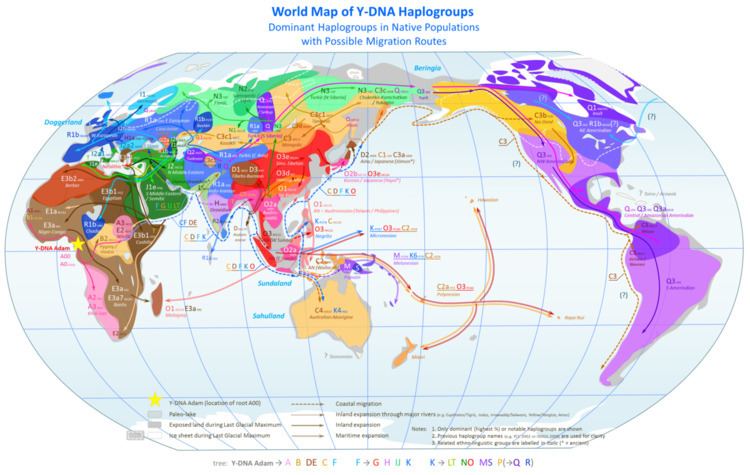
To understand the unique genetic makeup of Indigenous Americans, we must look back over 30,000 years to the late Pleistocene. Genetic evidence indicates that the ancestors of Indigenous Americans began to split from ancestral East Asian populations around 36,000 years ago. This divergence was not an immediate move into the New World but rather the beginning of a long period of isolation. During this time, these "Ancestral Native Americans" also intermixed with a group known as Ancient North Eurasians, a Paleolithic Siberian population. This dual ancestry is a hallmark of nearly all Indigenous American genomes today.
A critical phase in this history is the "Beringian Standstill" hypothesis. As the Last Glacial Maximum (LGM) gripped the planet between 26,000 and 18,000 years ago, massive ice sheets made much of northern Eurasia and North America uninhabitable. It is believed that the ancestral population found refuge in Beringia—a vast land bridge that once connected Siberia and Alaska. This region, twice the size of Texas, provided a stable environment where the population remained isolated for several millennia. This isolation allowed for the development of unique genetic markers, including specific mitochondrial and Y-chromosomal lineages found nowhere else in the world.
The Great Expansion: Rapid Peopling of Two Continents
As the ice began to retreat approximately 15,000 to 17,000 years ago, the path into the Americas finally opened. Current genetic data suggests that once these early pioneers moved south of the continental ice sheets, they expanded with incredible speed. Within just a few thousand years, human populations had reached the southern tip of South America, as evidenced by archaeological sites like Monte Verde in Chile, dated to at least 14,500 years ago.
This expansion was not just a single, uniform wave. Geneticists have identified a primary split between Northern and Southern Native American branches roughly 16,000 years ago. Interestingly, the "Anzick-1" remains—a Clovis-associated infant from Montana dating to 12,600 years ago—show a closer genetic affinity to Indigenous populations in Central and South America than to many present-day Northern groups. This suggests that the early "First American" lineage spread rapidly southward, establishing the foundation for the vast majority of Indigenous populations in the Southern Hemisphere.
The Mystery of Population Y and Australasian Affinities
One of the most startling discoveries in recent years is the presence of an unexpected genetic signal in certain Amazonian tribes, such as the Suruí and Karitiana. Researchers have identified a small but significant portion of their genome—around 2%—that shares a closer affinity with indigenous populations in Australia, New Guinea, and the Andaman Islands than with any other present-day group. This mysterious ancestral source has been named "Population Y" (after the Tupi word Ypykuéra, meaning "ancestor").
This finding challenges the "single wave" model of American settlement. It suggests that a distinct group, carrying ancestry related to Australasians, contributed to the genetic landscape of South America. Because this signal is found in ancient remains dating back over 10,000 years, it is not the result of recent contact. Scientists are still debating how this lineage arrived—whether through a separate coastal migration or as part of a more complex admixture event that occurred before the crossing into the Americas. What is clear is that the "First Americans" were likely more genetically diverse than we ever imagined.
Adaptation to Diverse Environments: From High Altitudes to Tropical Forests
As Indigenous populations settled into the diverse landscapes of the Americas, natural selection began to shape their genomes. The environmental pressures of the high-altitude Andes, the humid Amazon basin, and the arid plains of North America required distinct biological adaptations. Genomic studies have identified specific signals of selection in genes related to metabolism, immunity, and physical development.
| Environmental Challenge | Genetic Adaptation Observed |
|---|---|
| High-Altitude Hypoxia (Andes) | Modifications in oxygen transport and cardiovascular efficiency. |
| Pathogen Exposure (Rainforests) | Selection in HLA and immune response genes for disease resistance. |
| Dietary Changes (Agriculture) | Adaptations in metabolic pathways for processing starch and fats. |
| Extreme Cold (Arctic/Sub-Arctic) | Variants associated with adipose tissue distribution and thermogenesis. |
In the Andes, for example, populations developed unique physiological responses to low oxygen levels that differ from those seen in Tibetan or Ethiopian highlanders, showcasing the power of convergent evolution. Similarly, groups in the Amazon show genetic signatures related to the detoxification of plant secondary metabolites and resistance to tropical parasites. These adaptations highlight the deep-time connection between Indigenous peoples and their traditional territories.
The Impact of European Contact and the Genetic Bottleneck
The arrival of Europeans in 1492 initiated a catastrophic demographic collapse among Indigenous populations. It is estimated that up to 90% of the Indigenous population perished due to introduced diseases, warfare, and forced labor. From a genetic perspective, this resulted in a massive "bottleneck," where a significant portion of the pre-Columbian genetic diversity was lost forever.
Despite this tragedy, genomic research has shown remarkable genetic continuity in many regions. In parts of the Andes and the Amazon, researchers have found a direct genetic link between ancient remains and present-day communities spanning over 9,000 years. Furthermore, modern Indigenous genomes often carry "ghost" lineages—signals of ancient groups that no longer exist as distinct populations but whose legacy persists within the DNA of their descendants. Understanding this continuity is vital for both historical reconstruction and modern health research, as many Indigenous groups remain underrepresented in medical genomic databases.
The Three Waves of Dispersal into South America
Recent studies involving the largest genomic datasets of Indigenous Americans to date have refined the timeline of South American settlement. Rather than a single pulse, researchers now identify at least three major dispersal events. The first occurred over 15,000 years ago, establishing the initial "First American" presence. A second wave, roughly 9,000 years ago, saw a partial replacement of earlier lineages in some regions, coinciding with major shifts in archaeological records.
Most recently, evidence of a third wave has emerged, occurring approximately 1,300 years ago. This migration appears to have moved from Mesoamerica into South America and the Caribbean. The genetic signatures of this late movement are still visible in present-day populations and provide a missing link in our understanding of how large-scale social and political changes in Central America influenced the southern continent. This "News Trending Update" in the field of genetics underscores the fact that the Americas were a hub of constant movement and interaction long before the colonial era.
Archaic Introgression: The Legacy of Neanderthals and Denisovans
Like all non-African populations, Indigenous Americans carry traces of DNA from archaic humans. Roughly 1% to 3% of their genome is derived from Neanderthals and Denisovans. However, the specific patterns of this "archaic introgression" in Indigenous Americans are unique. Some of these inherited variants have been pinpointed as targets of natural selection, meaning they provided a survival advantage in the New World.
Interestingly, some studies have found a correlation between Australasian-like signals (Population Y) and specific archaic variants. This suggests that the complex history of admixture in Asia—where different groups encountered various archaic hominids—was carried over into the Americas. These ancient fragments of DNA now play roles in modern biological functions, including skin pigmentation, fat storage, and the regulation of the immune system, further contributing to the unique genetic diversity of the continent.
Technological Advances and the Future of Paleogenomics
The field of paleogenomics—the study of ancient DNA—is moving at a breakneck pace. New techniques allow scientists to sequence high-coverage genomes from even tiny fragments of bone or teeth that are thousands of years old. This technological revolution is finally allowing for a more inclusive history of the Americas, one that incorporates the genetic data of the people who lived there for millennia.
However, this research also brings ethical responsibilities. There is a growing movement toward collaborative research models where Indigenous communities are partners in the scientific process rather than just subjects of study. By combining genetic data with traditional knowledge, oral histories, and archaeology, we can move toward a more holistic and respectful understanding of the evolutionary history and unique genetic diversity of Indigenous Americans. The future of this field lies in bridging the gap between the laboratory and the community.
Frequently Asked Questions (FAQ)
1. Where did the ancestors of Indigenous Americans originally come from?
Genetic evidence shows that Indigenous Americans primarily descend from a founding population that lived in East Asia. Around 36,000 years ago, they began to diverge from other East Asian groups and eventually intermixed with Ancient North Eurasians in Siberia before moving into the Americas.
2. What is the "Beringian Standstill"?
The Beringian Standstill is a hypothesis that the ancestors of Indigenous Americans were isolated in Beringia (the land bridge between Siberia and Alaska) for several thousand years during the Last Glacial Maximum. This isolation allowed them to develop unique genetic markers before they expanded into North and South America.
3. How do we explain the genetic link between some Amazonians and Australians?
This link is known as the "Population Y" signal. Researchers found that some Amazonian groups share a small amount of DNA with Australasian populations (like those in Australia and New Guinea). This suggests an ancient, previously unknown wave of migration or a complex admixture event that occurred before or during the initial settlement of the Americas.
4. Did Indigenous Americans adapt genetically to their environments?
Yes. Studies have found evidence of natural selection in genes related to high-altitude living (in the Andes), disease resistance (in the Amazon), and metabolic processes. These adaptations occurred over thousands of years as populations settled into different ecological niches.
5. How did European colonization affect the genetic diversity of Indigenous Americans?
European contact caused a massive demographic collapse, leading to a genetic bottleneck where many unique lineages were lost. However, many present-day Indigenous groups still show strong genetic continuity with ancient populations from their regions, spanning thousands of years.
Conclusion
The evolutionary history and unique genetic diversity of Indigenous Americans reveal a saga of incredible human adaptability and complex migration. From the initial divergence in East Asia to the multi-wave settlement of South America, the genomic record provides a detailed map of a journey that spanned continents and ice ages. While much has been learned through the study of ancient DNA, the story is far from complete. The discovery of the Population Y signal and the ongoing identification of localized adaptations remind us that the history of the First Americans is one of the most dynamic and intricate in human existence. As science continues to evolve, it must do so in a way that respects and includes the very people whose ancestors' stories are being told, ensuring that the genetic legacy of the Americas is understood in all its richness and dignity.
The evolutionary history and unique genetic diversity of Indigenous Americans
The evolutionary history and unique genetic diversity of Indigenous Americans Wallpapers
Collection of the evolutionary history and unique genetic diversity of indigenous americans wallpapers for your desktop and mobile devices.
Amazing The Evolutionary History And Unique Genetic Diversity Of Indigenous Americans View for Mobile
Discover an amazing the evolutionary history and unique genetic diversity of indigenous americans background image, ideal for personalizing your devices with vibrant colors and intricate designs.

Vivid The Evolutionary History And Unique Genetic Diversity Of Indigenous Americans Artwork Digital Art
Explore this high-quality the evolutionary history and unique genetic diversity of indigenous americans image, perfect for enhancing your desktop or mobile wallpaper.

Vibrant The Evolutionary History And Unique Genetic Diversity Of Indigenous Americans Design for Mobile
Explore this high-quality the evolutionary history and unique genetic diversity of indigenous americans image, perfect for enhancing your desktop or mobile wallpaper.
Mesmerizing The Evolutionary History And Unique Genetic Diversity Of Indigenous Americans Picture Art
Discover an amazing the evolutionary history and unique genetic diversity of indigenous americans background image, ideal for personalizing your devices with vibrant colors and intricate designs.
Dynamic The Evolutionary History And Unique Genetic Diversity Of Indigenous Americans Picture Collection
A captivating the evolutionary history and unique genetic diversity of indigenous americans scene that brings tranquility and beauty to any device.

Breathtaking The Evolutionary History And Unique Genetic Diversity Of Indigenous Americans Moment for Mobile
Explore this high-quality the evolutionary history and unique genetic diversity of indigenous americans image, perfect for enhancing your desktop or mobile wallpaper.

Crisp The Evolutionary History And Unique Genetic Diversity Of Indigenous Americans Background Collection
This gorgeous the evolutionary history and unique genetic diversity of indigenous americans photo offers a breathtaking view, making it a perfect choice for your next wallpaper.

Amazing The Evolutionary History And Unique Genetic Diversity Of Indigenous Americans Image for Desktop
Discover an amazing the evolutionary history and unique genetic diversity of indigenous americans background image, ideal for personalizing your devices with vibrant colors and intricate designs.

Artistic The Evolutionary History And Unique Genetic Diversity Of Indigenous Americans Landscape Digital Art
Find inspiration with this unique the evolutionary history and unique genetic diversity of indigenous americans illustration, crafted to provide a fresh look for your background.

Dynamic The Evolutionary History And Unique Genetic Diversity Of Indigenous Americans Moment for Your Screen
Immerse yourself in the stunning details of this beautiful the evolutionary history and unique genetic diversity of indigenous americans wallpaper, designed for a captivating visual experience.
Dynamic The Evolutionary History And Unique Genetic Diversity Of Indigenous Americans Design Photography
This gorgeous the evolutionary history and unique genetic diversity of indigenous americans photo offers a breathtaking view, making it a perfect choice for your next wallpaper.

Artistic The Evolutionary History And Unique Genetic Diversity Of Indigenous Americans Capture Collection
This gorgeous the evolutionary history and unique genetic diversity of indigenous americans photo offers a breathtaking view, making it a perfect choice for your next wallpaper.

Detailed The Evolutionary History And Unique Genetic Diversity Of Indigenous Americans Abstract for Desktop
Discover an amazing the evolutionary history and unique genetic diversity of indigenous americans background image, ideal for personalizing your devices with vibrant colors and intricate designs.
Crisp The Evolutionary History And Unique Genetic Diversity Of Indigenous Americans Image Photography
Find inspiration with this unique the evolutionary history and unique genetic diversity of indigenous americans illustration, crafted to provide a fresh look for your background.

Breathtaking The Evolutionary History And Unique Genetic Diversity Of Indigenous Americans Scene in 4K
Transform your screen with this vivid the evolutionary history and unique genetic diversity of indigenous americans artwork, a true masterpiece of digital design.
Breathtaking The Evolutionary History And Unique Genetic Diversity Of Indigenous Americans Capture for Your Screen
Experience the crisp clarity of this stunning the evolutionary history and unique genetic diversity of indigenous americans image, available in high resolution for all your screens.

Vibrant The Evolutionary History And Unique Genetic Diversity Of Indigenous Americans Abstract in 4K
Discover an amazing the evolutionary history and unique genetic diversity of indigenous americans background image, ideal for personalizing your devices with vibrant colors and intricate designs.

Breathtaking The Evolutionary History And Unique Genetic Diversity Of Indigenous Americans Image Illustration
Transform your screen with this vivid the evolutionary history and unique genetic diversity of indigenous americans artwork, a true masterpiece of digital design.
Crisp The Evolutionary History And Unique Genetic Diversity Of Indigenous Americans Artwork in HD
A captivating the evolutionary history and unique genetic diversity of indigenous americans scene that brings tranquility and beauty to any device.

Mesmerizing The Evolutionary History And Unique Genetic Diversity Of Indigenous Americans View Nature
Discover an amazing the evolutionary history and unique genetic diversity of indigenous americans background image, ideal for personalizing your devices with vibrant colors and intricate designs.
Download these the evolutionary history and unique genetic diversity of indigenous americans wallpapers for free and use them on your desktop or mobile devices.