Why Do Earth's Colors Appear Muted in New Photos from Artemis II?
Why Do Earth's Colors Appear Muted in New Photos from Artemis II?
As humanity prepares to return to the lunar vicinity with NASA's Artemis II mission, the world is captivated by the first glimpses of our home planet from deep space. However, a common observation among enthusiasts and skeptics alike is that the Earth appears somewhat "muted" or less vibrant compared to the iconic, saturated images from the Apollo era or Low Earth Orbit (LEO) satellites. This phenomenon is not a result of a "dying" planet or poor camera quality, but rather a complex interplay of physics, optics, sensor technology, and the harsh environment of deep space. In this deep dive, we explore the scientific reasons behind the aesthetic of modern lunar-bound photography and why the "pale blue dot" looks the way it does through the lenses of the Orion spacecraft.
The Physics of Distance and Atmospheric Scattering
One of the primary reasons Earth’s colors appear muted in Artemis II photography is the sheer distance from which the images are captured. Unlike the International Space Station (ISS), which orbits at a mere 400 kilometers, the Orion capsule travels hundreds of thousands of kilometers away. At this distance, the entirety of Earth’s atmosphere—the troposphere, stratosphere, and beyond—acts as a thick, translucent veil.
This leads to a phenomenon known as Rayleigh scattering. While this is the same process that makes the sky blue, when viewed from deep space, the scattered blue light can overlap with the reflected colors of the continents and oceans. This creates a "haze" effect that reduces the overall contrast. From a distance, the vibrant greens of the Amazon or the deep blues of the Atlantic are filtered through layers of nitrogen and oxygen, which reflect a significant amount of light back at the camera, washing out the underlying saturation.
The Role of Albedo and Dynamic Range
Earth is an incredibly bright object against the absolute blackness of space. The planet’s albedo—the measure of how much sunlight it reflects—is quite high, thanks to clouds and ice caps. For a camera sensor to capture the Earth without "blowing out" the whites (overexposure), it must reduce the exposure time or narrow the aperture. When a camera is calibrated to preserve the detail in the bright clouds, the darker features like forests and deep oceans inevitably lose their perceived "punch," resulting in a flatter, more muted appearance.
Advanced Sensor Technology: Realism vs. Artistry
Many of the most famous images of Earth, such as the "Blue Marble" from Apollo 17, were shot on 70mm Hasselblad film. Film has a specific chemical response to light that naturally enhances certain color profiles, often producing high-contrast, saturated images that look "heroic." Modern digital sensors used on Artemis II, however, are designed for scientific accuracy rather than aesthetic appeal.
The cameras on the Orion spacecraft are high-definition digital sensors optimized for Optical Navigation (OpNav) and engineering monitoring. These sensors are built to capture the widest possible Dynamic Range. In the world of professional photography, "flat" or "muted" images are often preferred as "raw" data because they contain more information in the highlights and shadows. While these images might look less exciting to the casual observer, they are more scientifically "true" to what the sensor actually detects without artificial software enhancement.
| Feature/Aspect | Description |
|---|---|
| Atmospheric Haze | Light scattering through the atmosphere reduces color saturation from long distances. |
| Camera Calibration | Sensors are tuned for technical data and navigation rather than social media aesthetics. |
| Window Interference | Orion's multi-pane polycarbonate/glass windows can introduce slight color shifts. |
| Dynamic Range | High contrast between the bright Earth and dark space leads to more "conservative" exposure settings. |
| Post-Processing | NASA often releases raw or minimally processed frames to maintain scientific integrity. |
Shooting Through the Glass: The Orion Window Challenge
It is important to remember that most photos taken from Artemis II are captured through the spacecraft's windows. These are not ordinary windows; they are sophisticated, multi-layered structures designed to withstand the extreme temperatures of re-entry and the vacuum of space. The windows in the Orion capsule consist of several layers of acrylic and glass with specialized coatings.
These coatings are essential for thermal protection and radiation shielding, but they can act as a subtle filter. Much like wearing slightly tinted sunglasses, these layers can shift the color balance or reduce the transmission of certain light frequencies. When light passes through these multiple panes, a small percentage of its intensity and color purity is lost, contributing to that "muted" look that differs from photos taken by external cameras or satellites with unobstructed views.
External Cameras and Cosmic Radiation
Artemis II also utilizes external cameras mounted on the solar array wings. While these don't have the window interference, they are subject to cosmic radiation. High-energy particles in deep space can degrade digital sensors over time or cause "noise" in the images. To combat this, the sensors often have protective filters or are built with ruggedized materials that might not have the same color sensitivity as a high-end commercial DSLR used on Earth. The priority for NASA is durability and functionality in a radiation-hardened environment, not color grading for a cinema screen.
Comparison: Apollo Era vs. Artemis Era
When we look back at the Apollo images, we are looking at a curated selection of photos that were often color-corrected and high-contrast. Furthermore, the Apollo missions used Kodak Ektachrome film, which is famous for its "punchy" blues and whites. In contrast, the Artemis II mission provides a continuous stream of digital data.
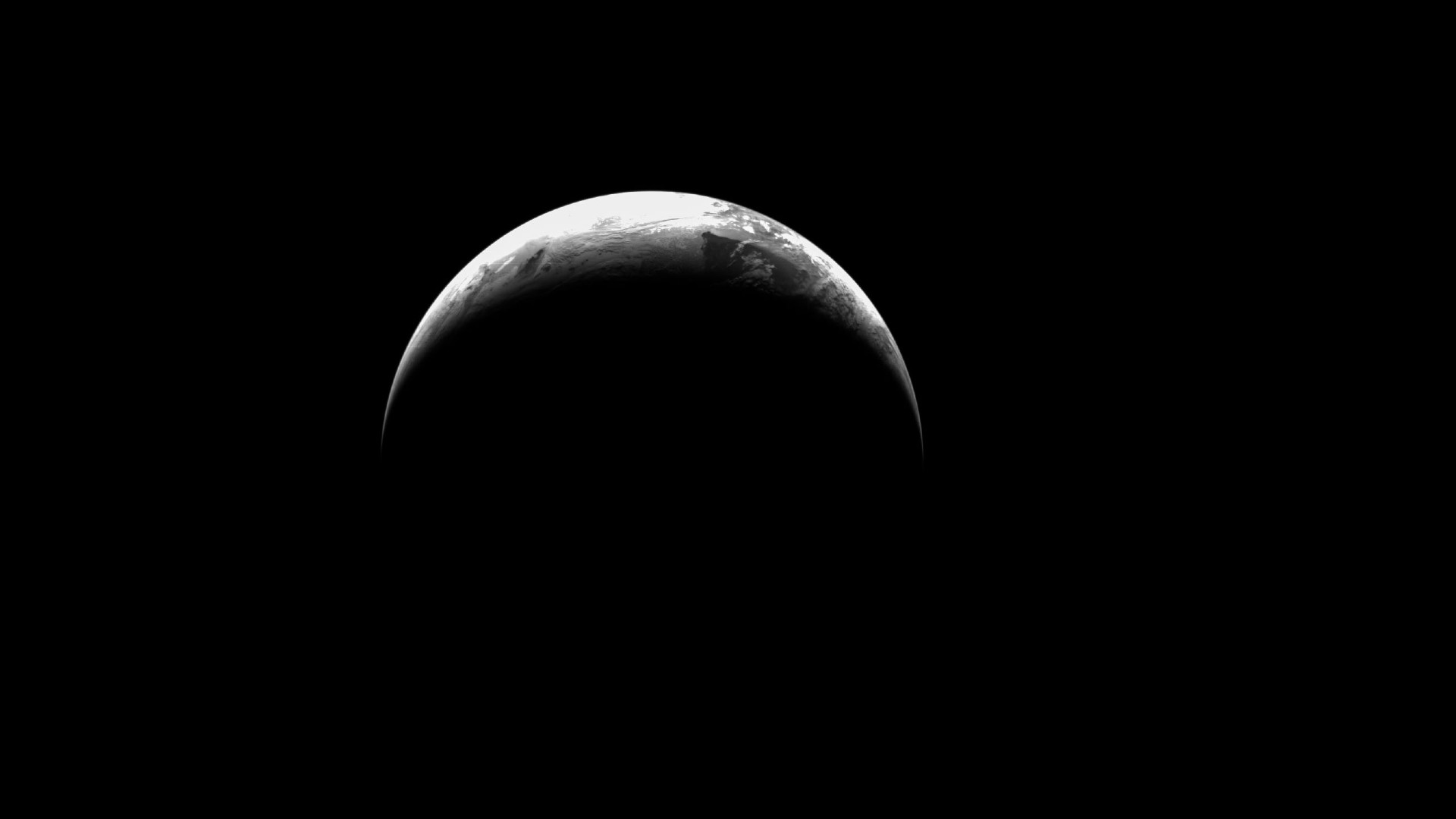
Moreover, the Earth’s appearance changes based on the phase angle—the angle between the Sun, the Earth, and the spacecraft. Depending on where Orion is in its trajectory, it might be seeing the Earth in a "gibbous" or "crescent" phase. When the Earth is not fully illuminated from the camera's perspective, the light must travel a longer path through the atmosphere (the limb), further increasing the scattering effect and making the colors appear even more desaturated and "dusty."
The Human Eye vs. The Camera Lens
Astronauts often describe the Earth as looking like a "glowing neon jewel" when viewed with the naked eye. The human eye has a much higher dynamic range and a more sophisticated processing system (the brain) than any camera sensor. We can perceive the deep blacks of space and the brilliant whites of the clouds simultaneously without one washing out the other.
The "muted" photos we see on our screens are a digital representation limited by the sRGB color gamut of our monitors and the limitations of the camera sensor. If you were standing in the Orion capsule, looking out the window, you would likely see the vibrant, glowing colors you expect. The "muted" look is essentially a translation error between the cosmic reality and the digital medium.
Conclusion: A New Perspective on Our Planet
The muted colors of Earth in the Artemis II photos are a testament to the reality of deep space travel. They represent the honest, unvarnished view of our planet from a vast distance, filtered through the necessary protections of a spacecraft designed to carry humans further than they have gone in half a century. While they may lack the artificial "pop" of a filtered smartphone photo, they offer a more profound scientific truth.
As the mission progresses and more data is downlinked, we may see processed versions of these images that align more closely with our visual expectations. However, there is a certain beauty in the raw, muted tones of the Artemis photos. They remind us that the Earth is a fragile oasis protected by a thin, hazy atmosphere, floating in an immense and unforgiving void. The "muted" Earth is not a sign of a technical flaw, but a badge of authenticity from the new frontier of lunar exploration.
Frequently Asked Questions (FAQ)
1. Are the Artemis II photos real or CGI?
The photos are 100% real. They are captured by high-definition cameras on the Orion spacecraft. The "muted" look is actually a sign of their authenticity, as CGI often over-saturates colors to make them look more appealing.
2. Why don't the photos look as good as the ones from the 1970s?
The 1970s Apollo photos were shot on high-quality film, which has a different color response than modern digital sensors. Additionally, many Apollo photos were heavily color-corrected for publication, whereas NASA often releases Artemis photos in their raw or near-raw state.
3. Will we see higher quality, more vibrant photos later?
Yes. Once the raw data is fully transmitted to Earth, imaging specialists can perform "white balancing" and color correction to match what the human eye would see. However, the initial "trending" photos are usually quick-look frames that haven't been processed yet.
4. Does the atmosphere really change how colors look from space?
Absolutely. Rayleigh scattering and Mie scattering (from clouds and aerosols) create a blue-tinted haze that desaturates the colors of the ground and ocean when viewed from high altitudes or deep space.
As we continue to follow the Artemis II journey, these images serve as a vital link between the crew and the billions of people watching from home. Understanding the science behind the "muted" colors only deepens our appreciation for the complexity of space photography and the incredible environment that our planet inhabits.
Why do Earth's colors appear muted in new photos from Artemis II?
Why do Earth's colors appear muted in new photos from Artemis II? Wallpapers
Collection of why do earth's colors appear muted in new photos from artemis ii? wallpapers for your desktop and mobile devices.

Exquisite Why Do Earth's Colors Appear Muted In New Photos From Artemis Ii? Background in 4K
This gorgeous why do earth's colors appear muted in new photos from artemis ii? photo offers a breathtaking view, making it a perfect choice for your next wallpaper.

Spectacular Why Do Earth's Colors Appear Muted In New Photos From Artemis Ii? Image Concept
This gorgeous why do earth's colors appear muted in new photos from artemis ii? photo offers a breathtaking view, making it a perfect choice for your next wallpaper.

Exquisite Why Do Earth's Colors Appear Muted In New Photos From Artemis Ii? View for Mobile
Find inspiration with this unique why do earth's colors appear muted in new photos from artemis ii? illustration, crafted to provide a fresh look for your background.

Stunning Why Do Earth's Colors Appear Muted In New Photos From Artemis Ii? Capture Photography
Immerse yourself in the stunning details of this beautiful why do earth's colors appear muted in new photos from artemis ii? wallpaper, designed for a captivating visual experience.
Beautiful Why Do Earth's Colors Appear Muted In New Photos From Artemis Ii? Background for Desktop
Experience the crisp clarity of this stunning why do earth's colors appear muted in new photos from artemis ii? image, available in high resolution for all your screens.

Crisp Why Do Earth's Colors Appear Muted In New Photos From Artemis Ii? View Digital Art
This gorgeous why do earth's colors appear muted in new photos from artemis ii? photo offers a breathtaking view, making it a perfect choice for your next wallpaper.

Stunning Why Do Earth's Colors Appear Muted In New Photos From Artemis Ii? Moment Nature
This gorgeous why do earth's colors appear muted in new photos from artemis ii? photo offers a breathtaking view, making it a perfect choice for your next wallpaper.
Artistic Why Do Earth's Colors Appear Muted In New Photos From Artemis Ii? Image Nature
Find inspiration with this unique why do earth's colors appear muted in new photos from artemis ii? illustration, crafted to provide a fresh look for your background.

Artistic Why Do Earth's Colors Appear Muted In New Photos From Artemis Ii? Capture Collection
This gorgeous why do earth's colors appear muted in new photos from artemis ii? photo offers a breathtaking view, making it a perfect choice for your next wallpaper.
Crisp Why Do Earth's Colors Appear Muted In New Photos From Artemis Ii? Abstract for Mobile
This gorgeous why do earth's colors appear muted in new photos from artemis ii? photo offers a breathtaking view, making it a perfect choice for your next wallpaper.

Spectacular Why Do Earth's Colors Appear Muted In New Photos From Artemis Ii? Background Digital Art
Find inspiration with this unique why do earth's colors appear muted in new photos from artemis ii? illustration, crafted to provide a fresh look for your background.

Beautiful Why Do Earth's Colors Appear Muted In New Photos From Artemis Ii? Artwork for Mobile
Explore this high-quality why do earth's colors appear muted in new photos from artemis ii? image, perfect for enhancing your desktop or mobile wallpaper.
Lush Why Do Earth's Colors Appear Muted In New Photos From Artemis Ii? View Digital Art
Find inspiration with this unique why do earth's colors appear muted in new photos from artemis ii? illustration, crafted to provide a fresh look for your background.
Stunning Why Do Earth's Colors Appear Muted In New Photos From Artemis Ii? Artwork Illustration
Find inspiration with this unique why do earth's colors appear muted in new photos from artemis ii? illustration, crafted to provide a fresh look for your background.

Mesmerizing Why Do Earth's Colors Appear Muted In New Photos From Artemis Ii? Picture for Mobile
Explore this high-quality why do earth's colors appear muted in new photos from artemis ii? image, perfect for enhancing your desktop or mobile wallpaper.

Beautiful Why Do Earth's Colors Appear Muted In New Photos From Artemis Ii? Abstract Digital Art
Discover an amazing why do earth's colors appear muted in new photos from artemis ii? background image, ideal for personalizing your devices with vibrant colors and intricate designs.

Beautiful Why Do Earth's Colors Appear Muted In New Photos From Artemis Ii? Background in HD
Experience the crisp clarity of this stunning why do earth's colors appear muted in new photos from artemis ii? image, available in high resolution for all your screens.

Mesmerizing Why Do Earth's Colors Appear Muted In New Photos From Artemis Ii? Capture for Mobile
Experience the crisp clarity of this stunning why do earth's colors appear muted in new photos from artemis ii? image, available in high resolution for all your screens.
Amazing Why Do Earth's Colors Appear Muted In New Photos From Artemis Ii? Landscape Nature
Experience the crisp clarity of this stunning why do earth's colors appear muted in new photos from artemis ii? image, available in high resolution for all your screens.
Dynamic Why Do Earth's Colors Appear Muted In New Photos From Artemis Ii? Artwork Illustration
Immerse yourself in the stunning details of this beautiful why do earth's colors appear muted in new photos from artemis ii? wallpaper, designed for a captivating visual experience.
Download these why do earth's colors appear muted in new photos from artemis ii? wallpapers for free and use them on your desktop or mobile devices.