'I was not looking for this': Scientist accidentally finds shortcut to Mars that could slash travel time in half
'I was not looking for this': Scientist accidentally finds shortcut to Mars that could slash travel time in half
The quest for the Red Planet has long been defined by grueling transit times, often spanning seven to nine months for a one-way trip, but a startling new discovery is turning traditional orbital mechanics on its head. Marcelo de Oliveira Souza, an astronomer at the State University of Northern Rio de Janeiro, has identified a potential interplanetary "fast lane" that could enable a complete round-trip to Mars and back in just 153 days. This breakthrough didn't come from complex supercomputer simulations of planetary alignment alone, but rather from the "discarded" early orbital data of a near-Earth asteroid, 2001 CA21. By analyzing preliminary mission trajectories that were initially thought to be miscalculated or unrefined, Souza uncovered a geometric shortcut that could shave hundreds of days off future human missions, potentially making deep-space exploration far more practical than ever imagined.
The featured snippet for this discovery highlights that a new study published in Acta Astronautica suggests using early, eccentric orbital predictions of asteroids like 2001 CA21 as templates for spacecraft trajectories. This method identifies specific "short-way" arcs that could reduce one-way travel to Mars to as little as 33 days, provided future propulsion technologies like nuclear thermal rockets are utilized. The most favorable window for this specific shortcut is projected for the 2031 Mars opposition, offering a total mission duration of under six months, including a month-long stay on the Martian surface.
The Accidental Discovery: How Asteroid 2001 CA21 Changed Everything
Science is often a story of serendipity, and the latest breakthrough in Martian travel is no exception. While most astronomers focus on refining asteroid orbits to assess collision risks with Earth, Marcelo de Oliveira Souza took an interest in the "erroneous" early data. When asteroid 2001 CA21 was first spotted, its initial orbital path was reconstructed with a significant degree of uncertainty. This "rough sketch" of the asteroid’s journey suggested a highly eccentric path that intersected the orbital regions of both Earth and Mars almost simultaneously. While subsequent observations refined the asteroid’s actual path to something different, the geometry of that initial, "wrong" orbit provided a mathematical epiphany.
Souza realized that the early-epoch solution encoded a natural heliocentric geometry that standard mission planning tools often overlook. By treating this discarded orbital data as a structural guide rather than a literal destination, the researcher was able to plot a rapid interplanetary pathway. The geometry of 2001 CA21’s preliminary orbit acted as a "template" for what is essentially a high-velocity bridge across the solar system. This approach shifts the focus from purely energy-efficient Hohmann transfer orbits to geometrically optimized "fast-track" routes.
The Physics of the Shortcut: Beyond the Hohmann Transfer
To understand why this discovery is so significant, one must look at how we currently get to Mars. Traditional missions use what is known as a Hohmann transfer orbit, which is an elliptical path that uses the least amount of propellant. While fuel-efficient, these orbits are slow, requiring the spacecraft to coast along a long, wide arc for the better part of a year. The "shortcut" identified by Souza utilizes a much more direct route, often referred to as a "short-way Lambert arc."
This route requires significantly higher departure velocities—approximately 32.5 kilometers per second—which is well beyond the capabilities of current chemical rockets like the SpaceX Starship or NASA’s SLS. However, for future concept spacecraft utilizing nuclear thermal propulsion (NTP) or nuclear electric propulsion (NEP), these speeds become theoretically attainable. The shortcut doesn't just rely on "going faster"; it utilizes the specific five-degree tilt of the 2001 CA21 orbital plane to find a corridor where Earth and Mars align in a way that allows for a radically direct flight path.
Launch Windows and the 2031 Opportunity
Interplanetary travel is a matter of timing. Because Earth and Mars move at different speeds around the Sun, the distance between them fluctuates wildly. Every 26 months, the two planets reach "opposition," their closest point to one another. Souza analyzed three upcoming opposition windows: 2027, 2029, and 2031. His research concluded that the 2031 configuration is the only one that perfectly aligns with the CA21-anchored plane to support a full round-trip within a single year.
In this 2031 window, the geometry allows for two distinct mission profiles. The first is an "ultra-short" mission that takes only 153 days for the entire journey, including 30 days of exploration on Mars. The second is an "optimal" mission of 226 days, which is still significantly faster than the current two-to-three-year total duration expected for a traditional crewed mission. This unique alignment suggests that 2031 could be the most pivotal year in the history of human spaceflight.
A Deep Dive into Mission Durations and Trajectories
The specific breakdown of the 153-day mission is staggering. According to the study, a spacecraft would depart Earth on April 20, 2031, and arrive at Mars just 33 days later on May 23. After a 30-day stay on the surface or in orbit, the crew would depart Mars on June 22 and arrive back at Earth on September 20. This rapid turnaround minimizes the crew's exposure to deep-space radiation and the debilitating effects of long-term microgravity.
| Mission Phase | Duration (Days) |
|---|---|
| Outbound Trip (Earth to Mars) | 33 Days |
| Stay on Martian Surface/Orbit | 30 Days |
| Inbound Trip (Mars to Earth) | 90 Days |
| Total Mission Duration | 153 Days |
Comparing this to the "Optimal" 226-day mission, the outbound leg takes 56 days, followed by a 35-day stay, and a 135-day return leg. Even this longer version is a massive improvement over current models, which typically require a six-to-eight-month outbound trip and a lengthy wait on Mars for the next alignment window to open for the return journey.
The Role of Nuclear Thermal Propulsion
While the shortcut exists geometrically, we lack the "engine" to take full advantage of it today. Standard chemical rockets simply cannot provide the necessary thrust (Delta-V) to enter these high-velocity trajectories without carrying a prohibitive amount of fuel. This is where nuclear technology becomes essential. NASA and DARPA are currently collaborating on the DRACO (Demonstration Rocket for Agile Cislunar Operations) program, which aims to test a nuclear thermal rocket engine in space by 2027.
Nuclear thermal rockets work by using a nuclear reactor to heat a propellant, such as liquid hydrogen, to extreme temperatures, expanding it through a nozzle to generate thrust. This method is at least twice as efficient as chemical rockets. With this technology, the 32.5 km/s departure speed required for Souza's shortcut becomes a reality. The 2031 window identified in the study aligns perfectly with the projected maturity of these next-generation propulsion systems.
Challenges: Landing at 64,800 MPH
Every shortcut has its price. The primary challenge with a 33-day trip to Mars is the arrival speed. Because the spacecraft is traveling on such a direct, high-energy path, it would arrive at Mars traveling at approximately 64,800 miles per hour (108,000 km/h). At these speeds, the thin Martian atmosphere provides very little "braking" power through traditional heat shields and parachutes.
To survive the arrival, a spacecraft would need to perform a massive "retro-burn"—firing its engines forward to slow down—before entering the atmosphere. This requires even more fuel, which in turn increases the mass of the ship. Critics of the study point out that while the trajectory is a breakthrough in mission design, the engineering of the landing systems will need to catch up. We are essentially talking about a "flip and burn" maneuver similar to those seen in science fiction like The Expanse.
Navigational Templates: A New Framework for Spaceflight
The broader implication of Souza's work is the creation of a "navigational framework" using asteroids as templates. There are millions of near-Earth objects (NEOs), each with its own orbital path and geometric properties. By systematically screening the unrefined or preliminary data of these objects, mission planners can identify "hidden" corridors to other destinations in the solar system, such as the asteroid belt or the moons of Jupiter.
This approach treats the solar system not as a void of empty space, but as a complex web of intersecting planes and geometric "fast lanes." If we can build a database of these asteroid-anchored trajectories, we can move away from the rigid 26-month launch cycles and find more flexible, rapid options for exploration. The "discarded drafts" of asteroid tracking may actually be the map for humanity's expansion into the stars.
Conclusion
The accidental discovery of a Mars shortcut via the orbital geometry of asteroid 2001 CA21 represents a paradigm shift in how we approach interplanetary travel. By looking at "mistakes" in asteroid data through a different lens, Marcelo de Oliveira Souza has provided a blueprint for a 153-day round trip that could redefine the 2031 launch window. While significant technological hurdles remain—specifically the need for nuclear propulsion and advanced landing systems capable of handling extreme arrival velocities—the identification of these geometric "fast lanes" offers a glimmer of hope. It suggests that the Red Planet is not nearly as far away as we thought, and that the keys to the solar system might be hiding in the data we've been throwing away for decades.
Frequently Asked Questions
Q1: Who discovered the new shortcut to Mars?
A1: The shortcut was identified by Marcelo de Oliveira Souza, an astronomer and researcher at the State University of Northern Rio de Janeiro in Brazil.
Q2: How much time could this shortcut save on a trip to Mars?
A2: A standard one-way trip takes 7-9 months. This shortcut could reduce the one-way travel time to just 33 days and a full round-trip to 153 days.
Q3: What role did an asteroid play in this discovery?
A3: The researcher used the preliminary, unrefined orbital data of asteroid 2001 CA21 as a geometric template to find a more direct flight path between Earth and Mars.
Q4: Can current rockets like the SpaceX Starship use this shortcut?
A4: Not currently. The trajectory requires extremely high departure speeds that likely necessitate the use of nuclear thermal or nuclear electric propulsion, which are still under development.
Q5: When is the best time to use this specific shortcut?
A5: The study identifies the 2031 Mars opposition as the ideal window where the planetary alignment perfectly matches the shortcut's geometry.
I was not looking for this': Scientist accidentally finds shortcut to Mars that could slash travel time in half
'I was not looking for this': Scientist accidentally finds shortcut to Mars that could slash travel time in half Wallpapers
Collection of 'i was not looking for this': scientist accidentally finds shortcut to mars that could slash travel time in half wallpapers for your desktop and mobile devices.

Captivating 'i Was Not Looking For This': Scientist Accidentally Finds Shortcut To Mars That Could Slash Travel Time In Half Artwork Nature
Find inspiration with this unique 'i was not looking for this': scientist accidentally finds shortcut to mars that could slash travel time in half illustration, crafted to provide a fresh look for your background.

High-Quality 'i Was Not Looking For This': Scientist Accidentally Finds Shortcut To Mars That Could Slash Travel Time In Half Capture for Desktop
Explore this high-quality 'i was not looking for this': scientist accidentally finds shortcut to mars that could slash travel time in half image, perfect for enhancing your desktop or mobile wallpaper.

Lush 'i Was Not Looking For This': Scientist Accidentally Finds Shortcut To Mars That Could Slash Travel Time In Half Design Collection
Find inspiration with this unique 'i was not looking for this': scientist accidentally finds shortcut to mars that could slash travel time in half illustration, crafted to provide a fresh look for your background.
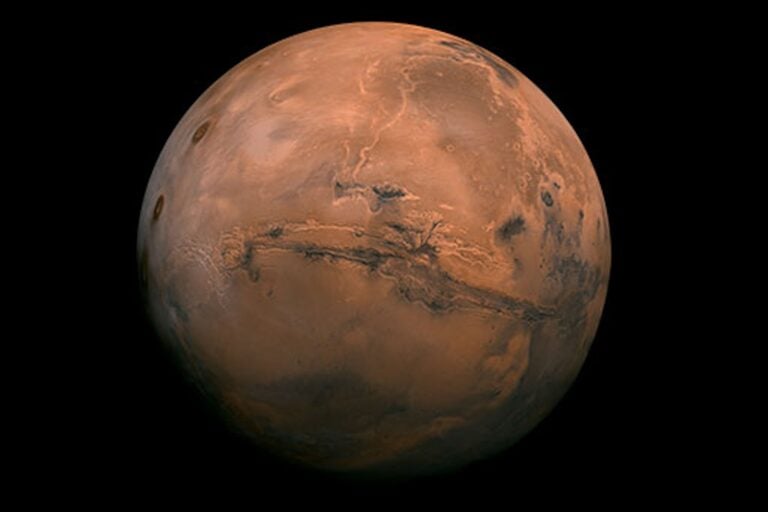
Crisp 'i Was Not Looking For This': Scientist Accidentally Finds Shortcut To Mars That Could Slash Travel Time In Half Photo for Mobile
Immerse yourself in the stunning details of this beautiful 'i was not looking for this': scientist accidentally finds shortcut to mars that could slash travel time in half wallpaper, designed for a captivating visual experience.
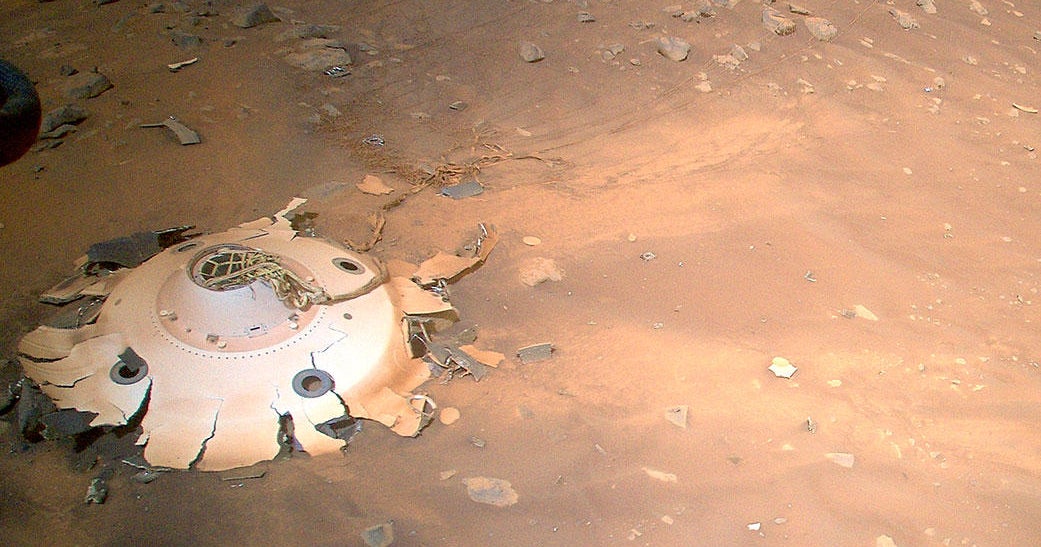
Amazing 'i Was Not Looking For This': Scientist Accidentally Finds Shortcut To Mars That Could Slash Travel Time In Half Artwork Collection
Transform your screen with this vivid 'i was not looking for this': scientist accidentally finds shortcut to mars that could slash travel time in half artwork, a true masterpiece of digital design.

Spectacular 'i Was Not Looking For This': Scientist Accidentally Finds Shortcut To Mars That Could Slash Travel Time In Half Landscape Illustration
Immerse yourself in the stunning details of this beautiful 'i was not looking for this': scientist accidentally finds shortcut to mars that could slash travel time in half wallpaper, designed for a captivating visual experience.

Exquisite 'i Was Not Looking For This': Scientist Accidentally Finds Shortcut To Mars That Could Slash Travel Time In Half Capture in 4K
This gorgeous 'i was not looking for this': scientist accidentally finds shortcut to mars that could slash travel time in half photo offers a breathtaking view, making it a perfect choice for your next wallpaper.

Crisp 'i Was Not Looking For This': Scientist Accidentally Finds Shortcut To Mars That Could Slash Travel Time In Half Photo in HD
Find inspiration with this unique 'i was not looking for this': scientist accidentally finds shortcut to mars that could slash travel time in half illustration, crafted to provide a fresh look for your background.

Mesmerizing 'i Was Not Looking For This': Scientist Accidentally Finds Shortcut To Mars That Could Slash Travel Time In Half Moment for Desktop
Experience the crisp clarity of this stunning 'i was not looking for this': scientist accidentally finds shortcut to mars that could slash travel time in half image, available in high resolution for all your screens.

Artistic 'i Was Not Looking For This': Scientist Accidentally Finds Shortcut To Mars That Could Slash Travel Time In Half Abstract for Mobile
Immerse yourself in the stunning details of this beautiful 'i was not looking for this': scientist accidentally finds shortcut to mars that could slash travel time in half wallpaper, designed for a captivating visual experience.

Lush 'i Was Not Looking For This': Scientist Accidentally Finds Shortcut To Mars That Could Slash Travel Time In Half Wallpaper Concept
Find inspiration with this unique 'i was not looking for this': scientist accidentally finds shortcut to mars that could slash travel time in half illustration, crafted to provide a fresh look for your background.

Vivid 'i Was Not Looking For This': Scientist Accidentally Finds Shortcut To Mars That Could Slash Travel Time In Half Scene for Mobile
Transform your screen with this vivid 'i was not looking for this': scientist accidentally finds shortcut to mars that could slash travel time in half artwork, a true masterpiece of digital design.

Artistic 'i Was Not Looking For This': Scientist Accidentally Finds Shortcut To Mars That Could Slash Travel Time In Half Capture for Desktop
A captivating 'i was not looking for this': scientist accidentally finds shortcut to mars that could slash travel time in half scene that brings tranquility and beauty to any device.

Crisp 'i Was Not Looking For This': Scientist Accidentally Finds Shortcut To Mars That Could Slash Travel Time In Half Artwork Digital Art
A captivating 'i was not looking for this': scientist accidentally finds shortcut to mars that could slash travel time in half scene that brings tranquility and beauty to any device.

Captivating 'i Was Not Looking For This': Scientist Accidentally Finds Shortcut To Mars That Could Slash Travel Time In Half Background Nature
Find inspiration with this unique 'i was not looking for this': scientist accidentally finds shortcut to mars that could slash travel time in half illustration, crafted to provide a fresh look for your background.

Stunning 'i Was Not Looking For This': Scientist Accidentally Finds Shortcut To Mars That Could Slash Travel Time In Half Background for Your Screen
Find inspiration with this unique 'i was not looking for this': scientist accidentally finds shortcut to mars that could slash travel time in half illustration, crafted to provide a fresh look for your background.
Serene 'i Was Not Looking For This': Scientist Accidentally Finds Shortcut To Mars That Could Slash Travel Time In Half Capture Concept
Transform your screen with this vivid 'i was not looking for this': scientist accidentally finds shortcut to mars that could slash travel time in half artwork, a true masterpiece of digital design.
Vibrant 'i Was Not Looking For This': Scientist Accidentally Finds Shortcut To Mars That Could Slash Travel Time In Half Abstract in HD
Transform your screen with this vivid 'i was not looking for this': scientist accidentally finds shortcut to mars that could slash travel time in half artwork, a true masterpiece of digital design.
Captivating 'i Was Not Looking For This': Scientist Accidentally Finds Shortcut To Mars That Could Slash Travel Time In Half Scene in 4K
Immerse yourself in the stunning details of this beautiful 'i was not looking for this': scientist accidentally finds shortcut to mars that could slash travel time in half wallpaper, designed for a captivating visual experience.
Gorgeous 'i Was Not Looking For This': Scientist Accidentally Finds Shortcut To Mars That Could Slash Travel Time In Half Picture Nature
A captivating 'i was not looking for this': scientist accidentally finds shortcut to mars that could slash travel time in half scene that brings tranquility and beauty to any device.
Download these 'i was not looking for this': scientist accidentally finds shortcut to mars that could slash travel time in half wallpapers for free and use them on your desktop or mobile devices.