Italy’s Meloni shares deepfake lingerie photo to denounce ‘dangerous’ political trend
Italy’s Meloni shares deepfake lingerie photo to denounce ‘dangerous’ political trend
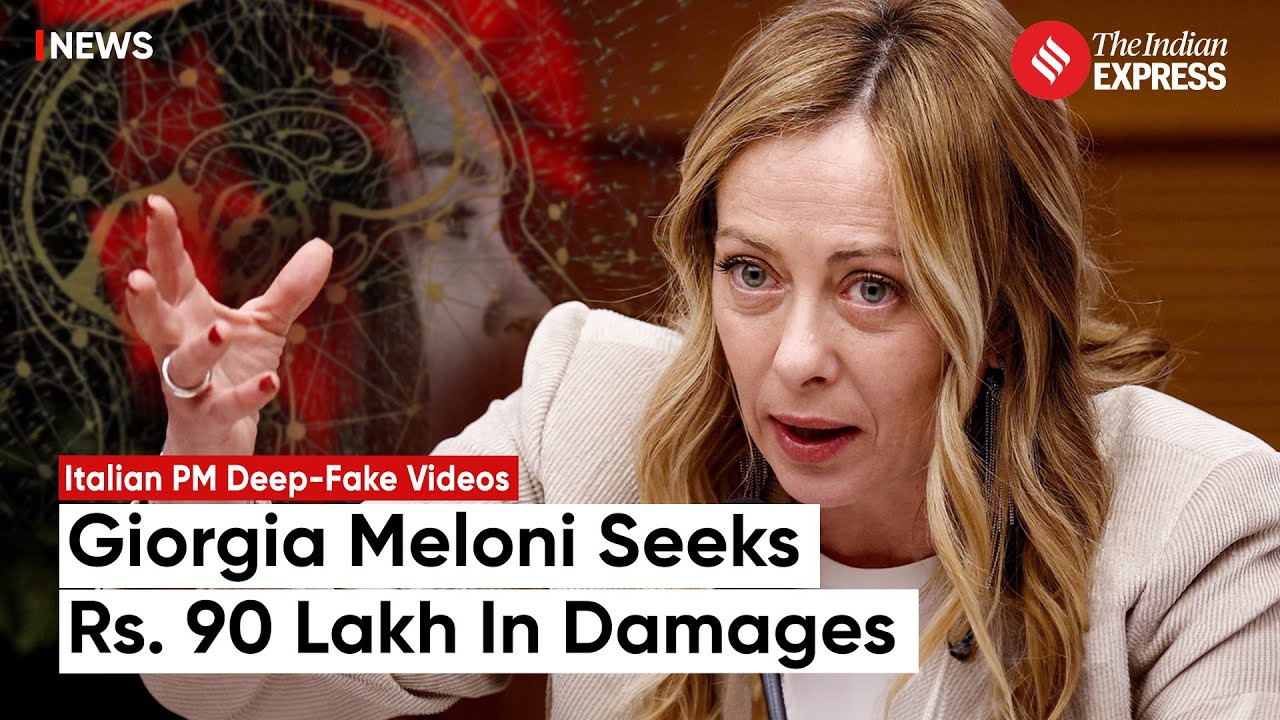
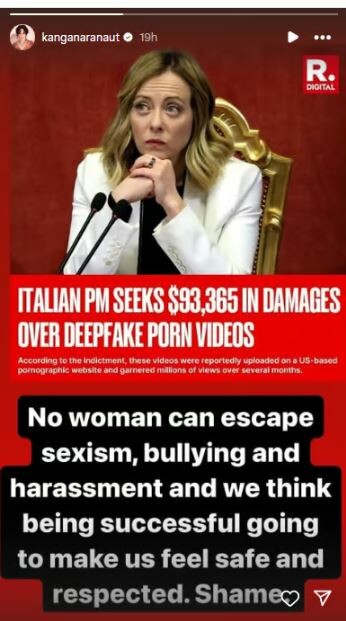
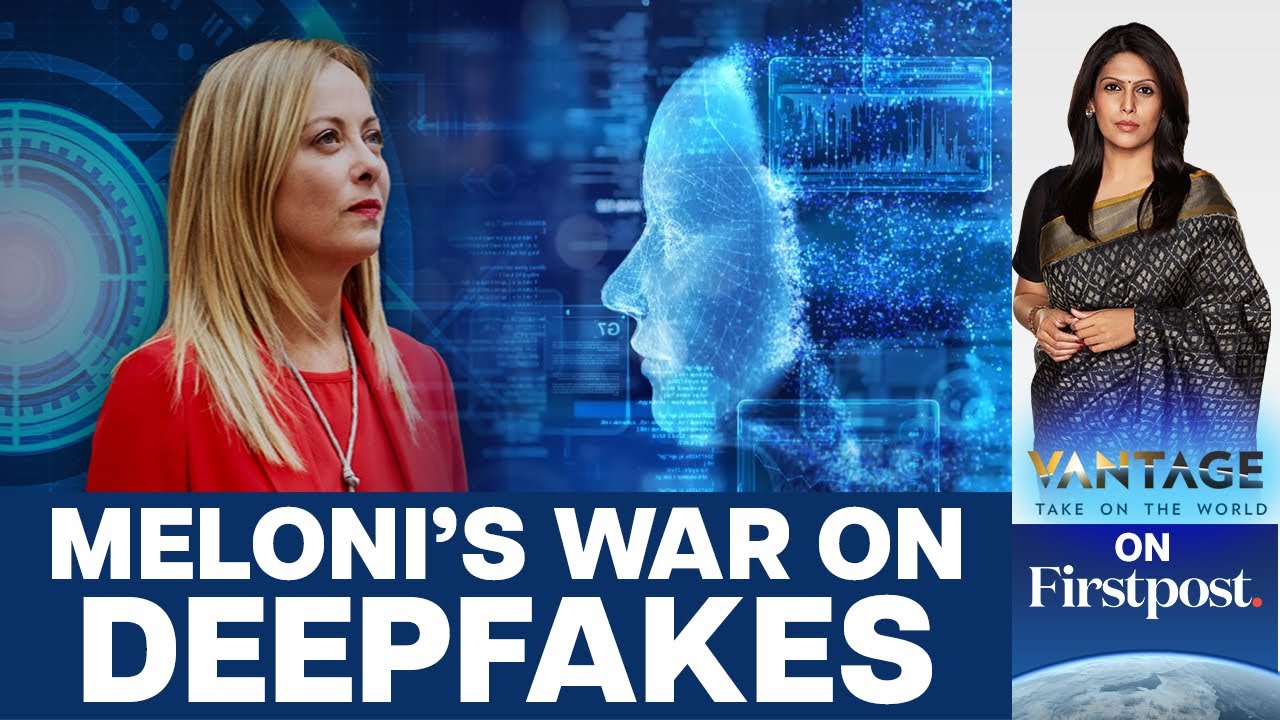
The digital landscape has entered a volatile new era where the lines between reality and artifice are increasingly blurred, a phenomenon underscored by the recent actions of Italian Prime Minister Giorgia Meloni. In a move that has reverberated across international political circles, Meloni took to social media to directly confront a viral deepfake image depicting her in lingerie. By sharing the manipulated content herself, she transformed a malicious attempt at character assassination into a powerful platform for denouncing the "dangerous" political trend of AI-driven misinformation. This incident serves as a stark reminder of the vulnerabilities inherent in the digital age, where even the highest-ranking officials are not immune to cyberbullying and the deceptive power of artificial intelligence.
The featured snippet for this trending topic is: Italian Prime Minister Giorgia Meloni recently denounced the circulation of an AI-generated deepfake photo showing her in lingerie. By sharing the fake image on her official Facebook account, Meloni warned that such technology is a dangerous tool used to manipulate public perception and attack individuals. She emphasized that while she has the resources to defend herself, many other victims of non-consensual deepfakes remain defenseless, highlighting the urgent need for verification and ethical AI standards in modern political discourse.
The Incident: Meloni’s Bold Response to AI-Generated Exploitation
The controversy erupted when a digitally manipulated photograph began circulating on various social media platforms. The image portrayed Giorgia Meloni, Italy's first female Prime Minister, in an intimate setting—posing on a bed while wearing lingerie. The deepfake was designed to look strikingly realistic, leading many unsuspecting users to believe it was a genuine photograph. This particular instance of "nudification" or sexualized deepfakes is part of a broader, more sinister trend targeting high-profile women to undermine their professional standing and personal dignity.
Rather than ignoring the provocation or allowing her communications team to issue a standard denial, Meloni chose a path of radical transparency. She shared the image on her own Facebook page, accompanied by a post that was both defiant and educational. She pointed to a specific instance where a user named "Roberto" had shared the image with a caption suggesting she should be "ashamed" of herself. By exposing the catalyst of the harassment, Meloni effectively flipped the script, moving from victim to prosecutor in the court of public opinion.
In her statement, Meloni acknowledged with a touch of irony that the AI-generated version "actually made me look a lot better," but she quickly pivoted to the gravity of the situation. She stressed that the ease with which falsehoods can be fabricated and spread is a threat to the fabric of democratic society. "The fact remains that, in order to attack and fabricate lies, people will now use absolutely anything," she wrote. This incident is not merely about a single photo; it is about the weaponization of technology to create alternate realities that serve partisan or malicious agendas.
The Rise of Deepfakes in Modern Politics and Diplomacy
Deepfakes represent the next frontier of "slopaganda"—a term coined to describe the low-quality, high-volume AI content used to flood the information ecosystem with noise and bias. In the political realm, these tools are being used to manufacture scandals, fake endorsements, and create "gotcha" moments that never actually occurred. For Meloni, this lingerie photo is just one chapter in a longer history of digital manipulation. Previously, she faced a minor scandal involving an AI-generated cherub that bore her likeness, and more recently, videos appeared to show her reacting angrily toward international leaders like Benjamin Netanyahu, which were later identified as robotic AI recreations.
The danger of these political deepfakes lies in their ability to bypass rational filters. Because humans are naturally inclined to believe visual evidence, a well-crafted deepfake can cause significant reputational damage before it is debunked. Even after a correction is issued, the "continued influence effect" ensures that the initial emotional response—often one of outrage or disgust—lingers in the minds of voters. This makes deepfakes an incredibly potent tool for opposition groups looking to discredit a leader without the need for factual evidence.
Furthermore, the global nature of the internet means that a deepfake created in one country can influence an election or a diplomatic relationship thousands of miles away. The Meloni lingerie photo, while centered in Italy, was shared globally, prompting discussions about the standards of conduct expected of world leaders and the ethics of the platforms that host such content. It raises critical questions about whether existing libel and defamation laws are equipped to handle a world where "seeing is no longer believing."
Legislative Action: Italy’s Pioneering Stance on AI Regulation
Italy has been at the forefront of the global movement to regulate artificial intelligence, driven in large part by the recurring attacks on its leadership and citizens. In September 2025, Italy became the first European Union country to approve a comprehensive law specifically targeting the misuse of AI. This legislation introduces strict penalties, including significant prison terms, for individuals who use AI to create and disseminate harmful content such as non-consensual deepfakes or "revenge porn."
The Italian government’s approach is closely aligned with the broader EU AI Act, which seeks to categorize AI applications based on their risk level. By placing "high-risk" labels on technologies capable of manipulating human behavior or creating deceptive content, the legislation aims to create a safer digital environment. For Meloni, these legal safeguards are personal. She has previously pursued legal action against a father and son who created deepfake pornographic videos featuring her face, seeking €100,000 in damages—a sum she pledged to donate to a fund assisting victims of domestic violence.
However, legislation alone is not a panacea. The borderless nature of the internet makes enforcement a logistical nightmare. While Italy can shut down domestic sites or prosecute local creators, much of the most harmful content is hosted on servers in jurisdictions with laxer regulations. This highlights the need for international cooperation and a global "digital Geneva Convention" to establish universal rules for the use of AI in the public sphere.
The Psychological and Social Impact of Non-Consensual AI Images
While high-profile figures like Giorgia Meloni or Taylor Swift have the financial and legal means to fight back, the average person is often left defenseless against deepfake attacks. The psychological toll of having one's likeness used in a sexualized or defamatory manner without consent is immense. It is a form of digital violation that can lead to severe anxiety, depression, and social ostracization. Meloni herself noted this in her Facebook post, stating, "I can defend myself. Many others cannot."
This "democratization" of harassment means that anyone with a smartphone and a basic AI app can now commit acts of cyberbullying that were previously the domain of sophisticated hackers. The impact is particularly devastating for women and marginalized groups, who are disproportionately targeted by non-consensual sexual content. This trend risks silencing voices in the public square, as individuals may withdraw from social media or public life to avoid becoming targets of AI-generated character assassination.
Moreover, the constant exposure to fake content creates a "liar’s dividend." This is a phenomenon where real evidence is dismissed as "fake news" or "another deepfake." When everything can be faked, nothing can be proven. This erosion of shared truth is perhaps the most dangerous consequence of the trend Meloni is denouncing. It weakens the foundations of trust required for a functioning democracy and allows bad actors to operate with impunity by simply claiming that any incriminating evidence against them was manufactured by AI.
Comparative Table: Deepfake Incidents and Legal Responses
To understand the scope of the problem and how different regions are reacting, it is helpful to look at the data surrounding recent high-profile AI controversies and the subsequent actions taken by authorities.
| Target/Incident | Regulatory or Legal Response |
|---|---|
| Giorgia Meloni Lingerie Photo | Denounced via social media; referred to Italy's 2025 AI Law and existing libel suits. |
| Taylor Swift Deepfake Pornography | Led to calls for the "NO FAKES Act" in the US Congress; platforms blocked specific search terms. |
| "Slopaganda" AI Election Videos | EU AI Act enforcement; social media platforms required to label AI-generated political ads. |
| German Actress Collien Fernandes | Sparked mass protests in Berlin; accelerated German legislative debate on deepfake dissemination. |
As shown in the table above, the response to deepfakes is multifaceted, involving a mix of personal litigation, social activism, and new national laws. The trend is clearly toward more stringent regulation as the technology becomes more accessible and harmful.
Technical Challenges in Identifying and Curbing AI Manipulation
One of the reasons the "lingerie photo" trend is so dangerous is the rapid advancement of generative adversarial networks (GANs). These AI systems are trained on millions of real images, allowing them to recreate human textures, lighting, and expressions with terrifying accuracy. In the past, deepfakes often had "telltale signs" like unnatural blinking or blurred edges around the neck. However, the newest iterations, like those used in the Meloni case, are virtually indistinguishable from real photos to the naked eye.
Detection tools are struggling to keep up. While researchers at institutions like the University at Buffalo have developed "Deepfake-o-Meters" that analyze robotic movement or pixel inconsistencies, these tools are not yet integrated into the average user's browsing experience. By the time an image is flagged as a fake, it has often already been shared thousands of times. This "viral speed" is the primary weapon of those using AI for political attacks.
Furthermore, there is the challenge of "intent." Not all AI-generated content is intended to be malicious. Some is created as satire or art. However, when satire is stripped of its context and shared as fact, it becomes misinformation. Platforms like X (formerly Twitter) and Meta are experimenting with "Community Notes" and AI-detection labels, but these systems are often reactive rather than proactive. The burden of proof has shifted to the viewer, requiring a level of digital literacy that much of the population has yet to achieve.
Global Trends: How World Leaders are Combatting Slopaganda
The Meloni incident is part of a global surge in what researchers call "slopaganda"—the use of AI to create a slurry of low-effort, high-impact misinformation. In the United States, the 2024 and 2026 election cycles have been plagued by AI-generated robocalls and videos mimicking the voices of candidates. From Donald Trump sharing AI-generated images of himself to the White House posting digitally altered videos of protestors, the use of AI has become a bipartisan tool for narrative control.
In response, a growing number of countries are following Italy's lead. The United Kingdom has updated its Online Safety Act to include specific provisions for deepfake pornography, and several Asian nations are drafting "truth in media" laws. The focus is shifting from simply removing content to holding the creators and the platforms accountable. There is also a push for "watermarking" technologies, where AI companies would be required to embed invisible digital signatures into any image or video generated by their software.
Despite these efforts, the "arms race" between AI creators and regulators continues. As soon as a new detection method is developed, AI models are updated to bypass it. This necessitates a broader cultural shift. Leaders like Meloni are emphasizing that technology is not a neutral force; its impact is determined by the ethics of those who wield it. The goal is to create a digital culture where "verify before believing" is the default setting for every citizen.
Protecting Victims: Strategies for the Digital Age
For the millions of women and men who find themselves targets of AI-generated harassment, the path to justice is often long and arduous. The first step is typically documenting the abuse and reporting it to the platforms, though response times can be slow. Legal experts recommend that victims seek "cease and desist" orders and explore civil litigation for defamation or the intentional infliction of emotional distress, similar to the strategy Meloni has employed in Sardinia.
Technological solutions are also emerging. Organizations are developing "digital vaults" where individuals can store authenticated versions of their photos and videos. If a deepfake appears, these vaults can provide a "provenance" trail to prove the new image is a fabrication. There is also a movement toward "adversarial attacks" on AI—adding invisible noise to personal photos that prevents AI models from being able to effectively scrape and manipulate the user's likeness.
Education remains the most effective long-term defense. Schools and community centers are increasingly offering "media literacy" courses that teach people how to spot the subtle signs of AI manipulation. By understanding how the technology works, individuals are less likely to be deceived by it. Meloni's public denunciation of her deepfake is a high-profile example of this educational approach, using her own experience to teach a nation—and the world—about the dangers of the digital frontier.
Frequently Asked Questions
- What is the Meloni lingerie photo deepfake? It is an AI-generated image showing Italian PM Giorgia Meloni posing on a bed in underwear, used by political opponents to attack her reputation.
- How did Giorgia Meloni respond to the deepfake? She shared the image on Facebook to denounce it as a dangerous tool of manipulation and urged the public to verify content before sharing.
- Is it illegal to create deepfakes in Italy? Yes, Italy passed a comprehensive AI law in 2025 that imposes prison sentences for creating and spreading harmful deepfakes.
- What is "slopaganda"? It refers to low-quality, AI-generated content used for political misinformation, trolling, or flooding the media landscape with fake narratives.
- What can victims of deepfakes do to protect themselves? They can report content to social media platforms, seek legal counsel for defamation, and use AI-detection tools to verify images.
Conclusion
The viral spread of Giorgia Meloni’s deepfake lingerie photo is a watershed moment for digital ethics and political communication. By choosing to confront the manipulation head-on, Meloni has stripped the "dangerous" political trend of its power to deceive, turning a personal attack into a global warning. As AI continues to evolve, the responsibility for maintaining the integrity of the public square will fall on everyone—from legislators drafting new laws to tech companies improving detection, and most importantly, to individual users exercising critical judgment. The incident underscores a fundamental truth of the 21st century: in the age of artificial intelligence, the most valuable currency we have is the truth, and it requires constant vigilance to protect it.
Italy’s Meloni shares deepfake lingerie photo to denounce ‘dangerous’ political trend
Italy’s Meloni shares deepfake lingerie photo to denounce ‘dangerous’ political trend Wallpapers
Collection of italy’s meloni shares deepfake lingerie photo to denounce ‘dangerous’ political trend wallpapers for your desktop and mobile devices.

Spectacular Italy’s Meloni Shares Deepfake Lingerie Photo To Denounce ‘dangerous’ Political Trend Photo in HD
This gorgeous italy’s meloni shares deepfake lingerie photo to denounce ‘dangerous’ political trend photo offers a breathtaking view, making it a perfect choice for your next wallpaper.

Crisp Italy’s Meloni Shares Deepfake Lingerie Photo To Denounce ‘dangerous’ Political Trend Artwork for Mobile
Immerse yourself in the stunning details of this beautiful italy’s meloni shares deepfake lingerie photo to denounce ‘dangerous’ political trend wallpaper, designed for a captivating visual experience.

Lush Italy’s Meloni Shares Deepfake Lingerie Photo To Denounce ‘dangerous’ Political Trend Landscape Digital Art
A captivating italy’s meloni shares deepfake lingerie photo to denounce ‘dangerous’ political trend scene that brings tranquility and beauty to any device.
Breathtaking Italy’s Meloni Shares Deepfake Lingerie Photo To Denounce ‘dangerous’ Political Trend View for Your Screen
Experience the crisp clarity of this stunning italy’s meloni shares deepfake lingerie photo to denounce ‘dangerous’ political trend image, available in high resolution for all your screens.

Spectacular Italy’s Meloni Shares Deepfake Lingerie Photo To Denounce ‘dangerous’ Political Trend Background Nature
Immerse yourself in the stunning details of this beautiful italy’s meloni shares deepfake lingerie photo to denounce ‘dangerous’ political trend wallpaper, designed for a captivating visual experience.

Captivating Italy’s Meloni Shares Deepfake Lingerie Photo To Denounce ‘dangerous’ Political Trend Capture in 4K
A captivating italy’s meloni shares deepfake lingerie photo to denounce ‘dangerous’ political trend scene that brings tranquility and beauty to any device.
Serene Italy’s Meloni Shares Deepfake Lingerie Photo To Denounce ‘dangerous’ Political Trend Capture Illustration
Experience the crisp clarity of this stunning italy’s meloni shares deepfake lingerie photo to denounce ‘dangerous’ political trend image, available in high resolution for all your screens.

Mesmerizing Italy’s Meloni Shares Deepfake Lingerie Photo To Denounce ‘dangerous’ Political Trend Capture Photography
Explore this high-quality italy’s meloni shares deepfake lingerie photo to denounce ‘dangerous’ political trend image, perfect for enhancing your desktop or mobile wallpaper.
Beautiful Italy’s Meloni Shares Deepfake Lingerie Photo To Denounce ‘dangerous’ Political Trend Background for Mobile
Explore this high-quality italy’s meloni shares deepfake lingerie photo to denounce ‘dangerous’ political trend image, perfect for enhancing your desktop or mobile wallpaper.

Artistic Italy’s Meloni Shares Deepfake Lingerie Photo To Denounce ‘dangerous’ Political Trend Design for Your Screen
Find inspiration with this unique italy’s meloni shares deepfake lingerie photo to denounce ‘dangerous’ political trend illustration, crafted to provide a fresh look for your background.

Stunning Italy’s Meloni Shares Deepfake Lingerie Photo To Denounce ‘dangerous’ Political Trend Moment Digital Art
This gorgeous italy’s meloni shares deepfake lingerie photo to denounce ‘dangerous’ political trend photo offers a breathtaking view, making it a perfect choice for your next wallpaper.

Captivating Italy’s Meloni Shares Deepfake Lingerie Photo To Denounce ‘dangerous’ Political Trend Moment Illustration
This gorgeous italy’s meloni shares deepfake lingerie photo to denounce ‘dangerous’ political trend photo offers a breathtaking view, making it a perfect choice for your next wallpaper.
:strip_icc()/kly-media-production/medias/4781521/original/094151900_1711117330-Snapinsta.app_432048481_916580540209020_5811450103930201951_n_1080.jpg "Detailed Italy’s Meloni Shares Deepfake Lingerie Photo To Denounce ‘dangerous’ Political Trend Capture in HD")
Detailed Italy’s Meloni Shares Deepfake Lingerie Photo To Denounce ‘dangerous’ Political Trend Capture in HD
Discover an amazing italy’s meloni shares deepfake lingerie photo to denounce ‘dangerous’ political trend background image, ideal for personalizing your devices with vibrant colors and intricate designs.

Dynamic Italy’s Meloni Shares Deepfake Lingerie Photo To Denounce ‘dangerous’ Political Trend View for Desktop
Find inspiration with this unique italy’s meloni shares deepfake lingerie photo to denounce ‘dangerous’ political trend illustration, crafted to provide a fresh look for your background.

Mesmerizing Italy’s Meloni Shares Deepfake Lingerie Photo To Denounce ‘dangerous’ Political Trend Scene Illustration
Explore this high-quality italy’s meloni shares deepfake lingerie photo to denounce ‘dangerous’ political trend image, perfect for enhancing your desktop or mobile wallpaper.
Spectacular Italy’s Meloni Shares Deepfake Lingerie Photo To Denounce ‘dangerous’ Political Trend Design Photography
Find inspiration with this unique italy’s meloni shares deepfake lingerie photo to denounce ‘dangerous’ political trend illustration, crafted to provide a fresh look for your background.

Exquisite Italy’s Meloni Shares Deepfake Lingerie Photo To Denounce ‘dangerous’ Political Trend View Photography
A captivating italy’s meloni shares deepfake lingerie photo to denounce ‘dangerous’ political trend scene that brings tranquility and beauty to any device.

Detailed Italy’s Meloni Shares Deepfake Lingerie Photo To Denounce ‘dangerous’ Political Trend Capture Nature
Transform your screen with this vivid italy’s meloni shares deepfake lingerie photo to denounce ‘dangerous’ political trend artwork, a true masterpiece of digital design.

Breathtaking Italy’s Meloni Shares Deepfake Lingerie Photo To Denounce ‘dangerous’ Political Trend Image Photography
Transform your screen with this vivid italy’s meloni shares deepfake lingerie photo to denounce ‘dangerous’ political trend artwork, a true masterpiece of digital design.
Artistic Italy’s Meloni Shares Deepfake Lingerie Photo To Denounce ‘dangerous’ Political Trend Landscape Nature
Immerse yourself in the stunning details of this beautiful italy’s meloni shares deepfake lingerie photo to denounce ‘dangerous’ political trend wallpaper, designed for a captivating visual experience.
Download these italy’s meloni shares deepfake lingerie photo to denounce ‘dangerous’ political trend wallpapers for free and use them on your desktop or mobile devices.