Microsoft in China: Navigating the Complex Frontier of Artificial Intelligence and Global Geopolitics
Microsoft in China: Navigating the Complex Frontier of Artificial Intelligence and Global Geopolitics
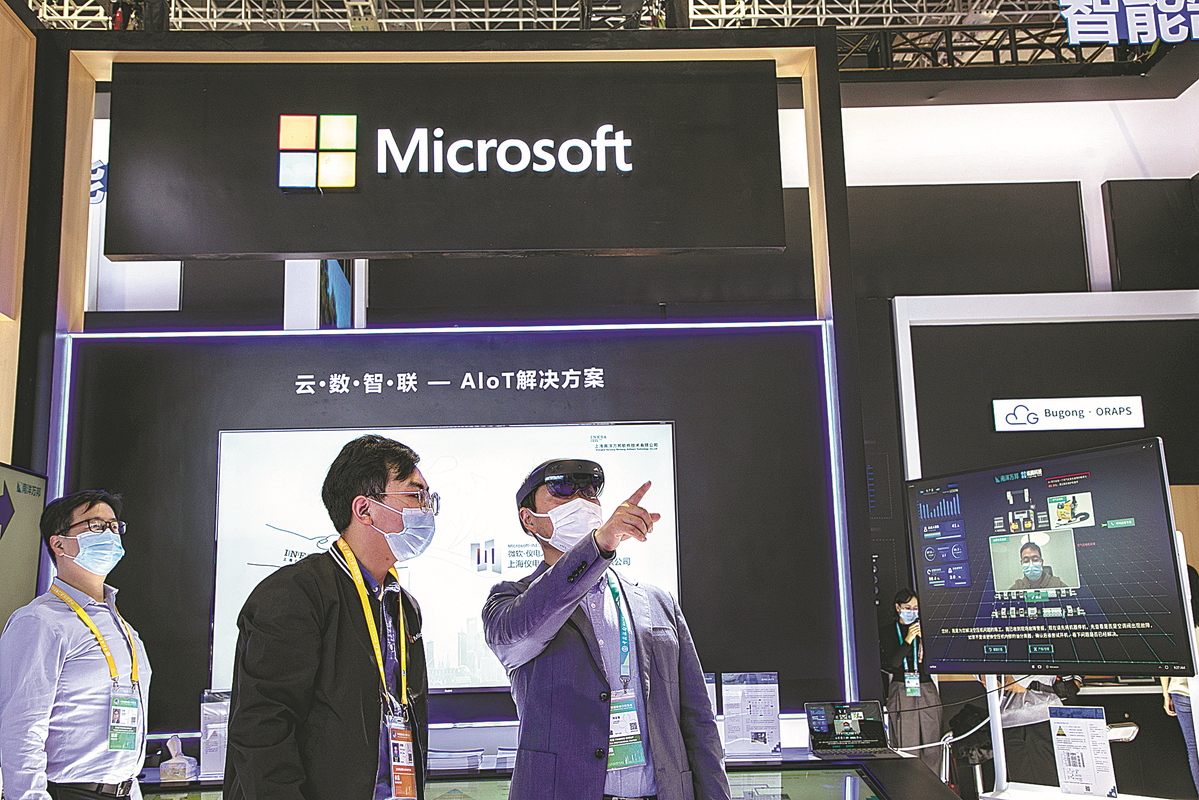
In the rapidly evolving landscape of global technology, few narratives are as compelling or as fraught with tension as the intersection of China, AI, and Microsoft. For over three decades, Microsoft has maintained a unique and influential presence in the Chinese market, acting as a bridge between Western innovation and Eastern technical prowess. However, as Artificial Intelligence (AI) becomes the primary battlefield for global supremacy, this relationship is facing unprecedented scrutiny. From the hallowed halls of Microsoft Research Asia (MSRA) in Beijing to the high-stakes corridors of Washington D.C., the dynamics of how one of America’s most valuable companies operates in China’s burgeoning AI ecosystem are being rewritten in real-time.
The Legacy of Microsoft Research Asia (MSRA)
To understand Microsoft’s role in China AI, one must first look at the establishment of Microsoft Research Asia (MSRA). Founded in 1998, MSRA has been described as the "Whampoa Academy" of the Chinese tech industry—a reference to the legendary military academy that produced China's greatest leaders. Over the years, MSRA has nurtured a generation of talent that went on to lead Chinese tech giants like Alibaba, Baidu, and Tencent, or found unicorns like Sensetime and Megvii.
MSRA’s contributions to computer vision, natural language processing (NLP), and machine learning have been foundational. The lab’s commitment to open scientific exchange allowed Chinese researchers to publish in top-tier international journals, effectively integrating China into the global AI research community. However, this open exchange is now under pressure. As AI becomes a "dual-use" technology with significant military implications, the collaboration that once seemed purely academic is now viewed through the lens of national security.
Navigating the Geopolitical Tightrope: US Export Controls and Chinese Regulations
The relationship between Microsoft and China’s AI development is heavily influenced by the escalating "tech war" between the United States and the People's Republic of China. The US government has implemented stringent export controls, particularly on high-end semiconductors like NVIDIA’s H100s, which are essential for training large language models (LLMs). These restrictions limit the hardware available to Microsoft’s data centers in China, complicating the rollout of advanced AI services like Azure OpenAI.
On the other side of the Pacific, the Cyberspace Administration of China (CAC) has introduced its own set of rigorous regulations for generative AI. Any AI model released to the public in China must adhere to "socialist core values" and undergo a strict security assessment. For Microsoft, this means navigating a bifurcated world where the AI tools offered in Seattle or London may look very different from those permitted in Shanghai or Beijing. The company must balance its commitment to global innovation with the legal realities of two opposing regulatory regimes.
| Fitur/Aspek | Deskripsi |
|---|---|
| Research Presence | Microsoft Research Asia (MSRA) remains a premier hub for AI innovation in Beijing and Shanghai. |
| Cloud Services | Azure operates in China through a partnership with 21Vianet to comply with data sovereignty laws. |
| Talent Management | Recent shifts include moving top AI researchers from China to Vancouver to mitigate geopolitical risk. |
| Search and AI | Bing is one of the few foreign search engines available in China, integrating localized AI features. |
| Regulatory Compliance | Strict adherence to US export controls and Chinese CAC generative AI regulations. |
The "Vancouver Move": Strategic Talent Relocation
In mid-2023, reports surfaced that Microsoft was in the process of relocating dozens of its top AI researchers from China to its global hub in Vancouver, Canada. This move, internally referred to as the "Vancouver Plan," was seen as a defensive measure to prevent talent from being poached by Chinese competitors or caught in the crossfire of US-China political tensions. By moving these experts, Microsoft ensures that its intellectual property and human capital remain within a jurisdiction more aligned with its headquarters in Redmond.
This "brain drain" from Beijing highlights the precarious position of foreign R&D centers in China. While China remains a goldmine for mathematical and engineering talent, the political risks associated with housing high-level AI research within Chinese borders have reached a tipping point for many Western multinationals.
Microsoft Azure and the Democratization of AI in China
Despite the challenges, Microsoft remains a critical infrastructure provider for Chinese businesses. Through its partnership with 21Vianet, Microsoft Azure provides the backbone for many domestic companies looking to integrate AI into their operations. While the full suite of OpenAI’s GPT models isn't as easily accessible as it is in the US, Microsoft has worked to provide localized versions and "Azure OpenAI" instances that comply with Chinese data residency requirements.
The demand for AI in the Chinese enterprise sector is staggering. From manufacturing automation to retail analytics, Chinese firms are eager to leverage Microsoft’s cloud expertise. However, Microsoft faces stiff competition from local champions like Alibaba Cloud and Huawei, who are developing their own foundational models (such as Tongyi Qianwen) that are inherently optimized for the Chinese linguistic and cultural context.
Ethical AI and the Global Standards Debate
One of the most significant areas of friction in the China AI Microsoft saga is the debate over AI ethics and safety. Microsoft has been a vocal advocate for "Responsible AI," establishing principles regarding fairness, transparency, and accountability. Implementing these principles in China, where the state maintains a different philosophy on data privacy and information control, is a complex task.
Microsoft’s participation in global AI safety summits and its role in the Frontier Model Forum often place it in the position of a mediator. Can a company help set global safety standards while operating in a market that has fundamentally different views on censorship and state surveillance? This is the central ethical dilemma facing Microsoft as it continues to invest in the Chinese market.
The Role of GitHub in China's AI Growth
Owned by Microsoft, GitHub is perhaps the most important tool for Chinese AI developers. It remains one of the few Western platforms largely accessible within China (though occasionally throttled or partially blocked). The open-source community on GitHub allows Chinese developers to access global AI frameworks like PyTorch and TensorFlow, while also contributing their own innovations. For Microsoft, maintaining GitHub’s neutrality is essential for the global progress of AI, even as calls for "technological decoupling" grow louder.
Frequently Asked Questions (FAQ)
1. Does Microsoft still have an AI lab in China?
Yes, Microsoft Research Asia (MSRA) continues to operate in Beijing and Shanghai, though some high-level research staff have been relocated to Canada to mitigate geopolitical risks.
2. Can Chinese users access ChatGPT through Microsoft?
While ChatGPT (by OpenAI) is not officially available in China, Microsoft offers "Azure OpenAI" services to enterprise customers in China through localized data centers, subject to Chinese regulatory approval and US export laws.
3. How does Microsoft handle data privacy for its AI services in China?
Microsoft complies with the Chinese Data Security Law (DSL) and Personal Information Protection Law (PIPL). Its cloud services are operated by 21Vianet, ensuring that data generated within China stays within the country's borders.
Conclusion: A Balancing Act with Global Implications
The relationship between Microsoft and China’s AI sector is a microcosm of the broader challenges facing the global tech industry. Microsoft’s presence in China provides it with unparalleled access to a massive market and a brilliant talent pool, yet it also exposes the company to intense political and ethical pressures. As the US and China continue to vie for AI dominance, Microsoft must navigate a narrow path: fostering innovation and maintaining its "bridge-builder" status while strictly adhering to the increasingly restrictive laws of both nations.
Ultimately, the success of Microsoft in China will depend on its ability to remain indispensable to the Chinese developer community without compromising the security or ethical standards demanded by the West. It is a high-stakes game of digital diplomacy where the prize is not just market share, but the ability to shape the future of Artificial Intelligence on a truly global scale. As we move further into the decade, the world will be watching to see if Microsoft can sustain this delicate balance or if the forces of decoupling will eventually force a final, definitive choice.