What Is Hedging In Academic Writing
Mastering the Nuance: What Is Hedging In Academic Writing?
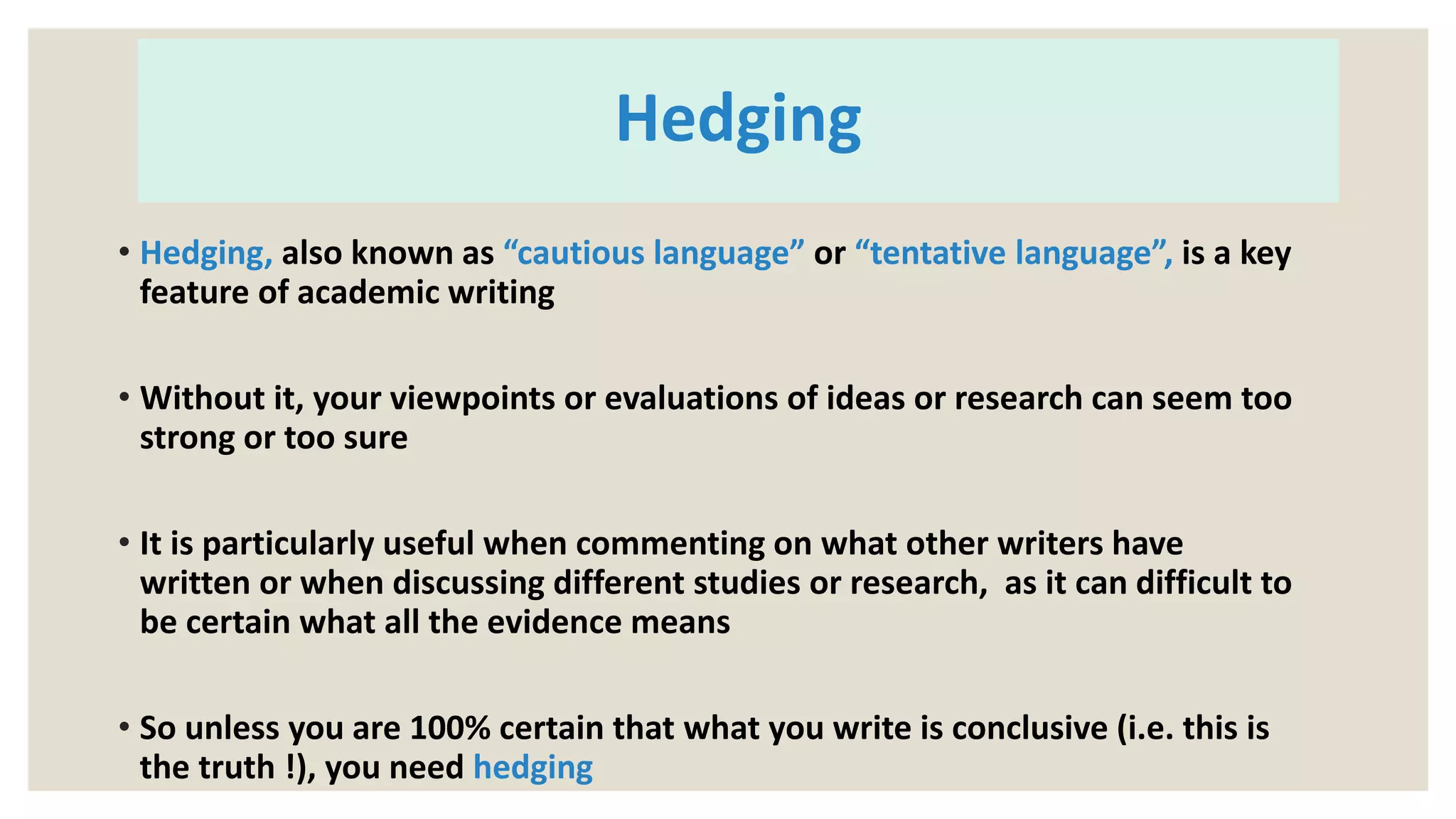
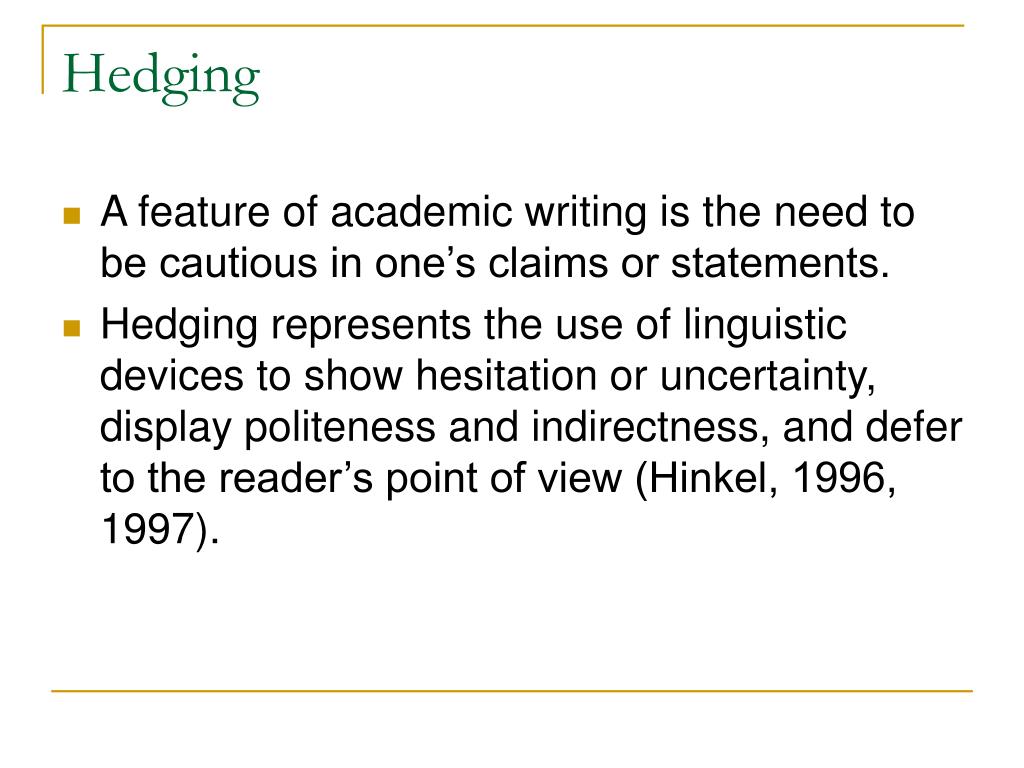
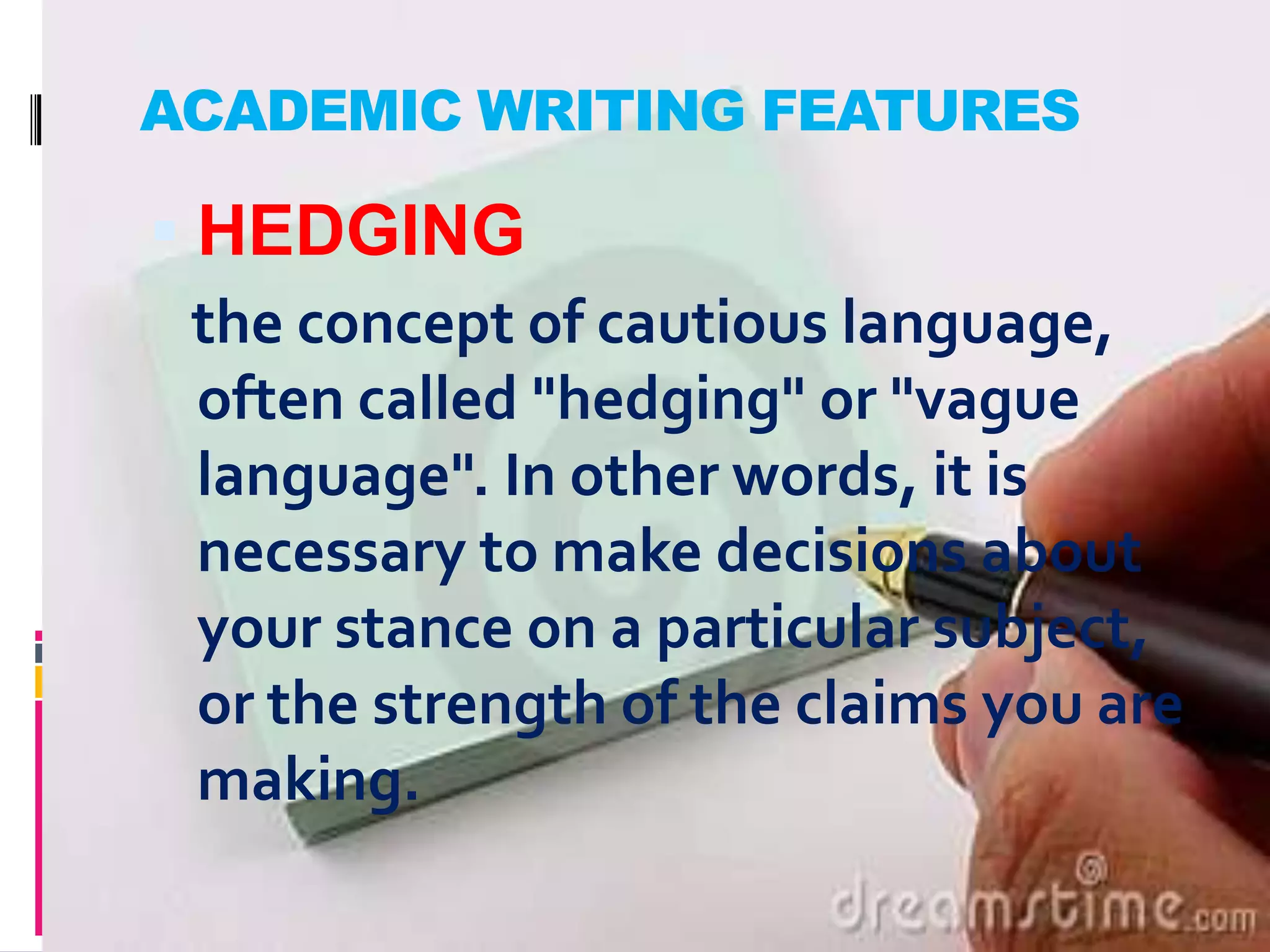
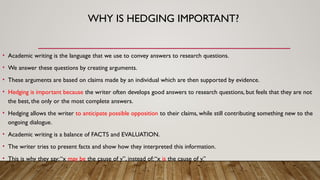
In the world of scholarly discourse, the way you present your findings is often as important as the findings themselves. Many novice writers believe that to be persuasive, they must sound absolute and unwavering. However, in the realm of research and peer-reviewed journals, overconfidence can be a fatal flaw. This is where hedging in academic writing comes into play. Hedging is the use of cautious or tentative language to express a claim, ensuring that the writer does not overstate their results or make generalizations that cannot be fully supported by evidence.
Whether you are writing a PhD thesis, a scientific report, or a literary analysis, understanding how to "hedge" your language is a critical skill. It allows you to navigate the complexities of data interpretation while protecting your professional reputation from being discredited by future contradictory evidence. This guide explores the definition, importance, and practical application of hedging to help you elevate your academic prose.
The Core Definition and Purpose of Hedging
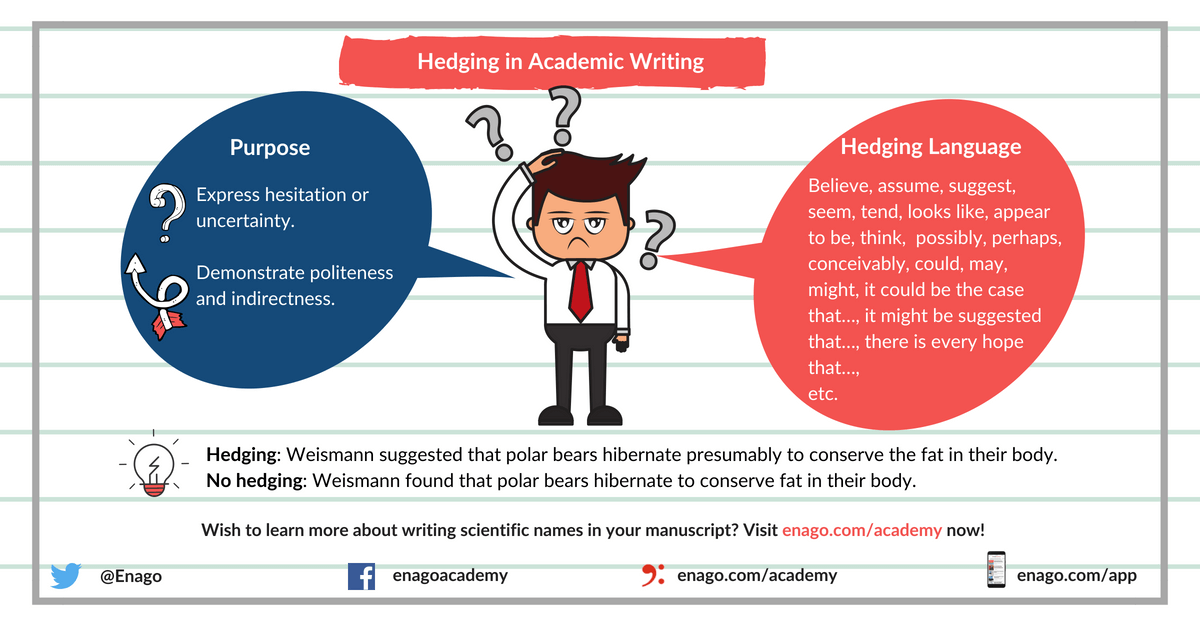
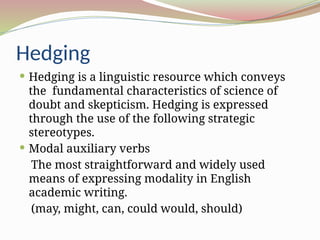
Hedging, often referred to as "cautious language" or "vague language," involves using linguistic devices to express hesitation or uncertainty. It is a rhetorical strategy that signals the writer's awareness that their claims may not be 100% certain. In academic writing, facts are rarely "absolute truths"; rather, they are interpretations based on current data, specific methodologies, and particular contexts.
The primary purpose of hedging is to indicate the epistemic modality of a statement—that is, the degree of certainty the writer has regarding the truth of a claim. By using hedging, a writer acknowledges that there may be alternative interpretations or that the evidence, while strong, is not exhaustive. This creates a more balanced and intellectually honest tone that is highly valued in the scientific and academic communities.
Key Types of Hedging Language
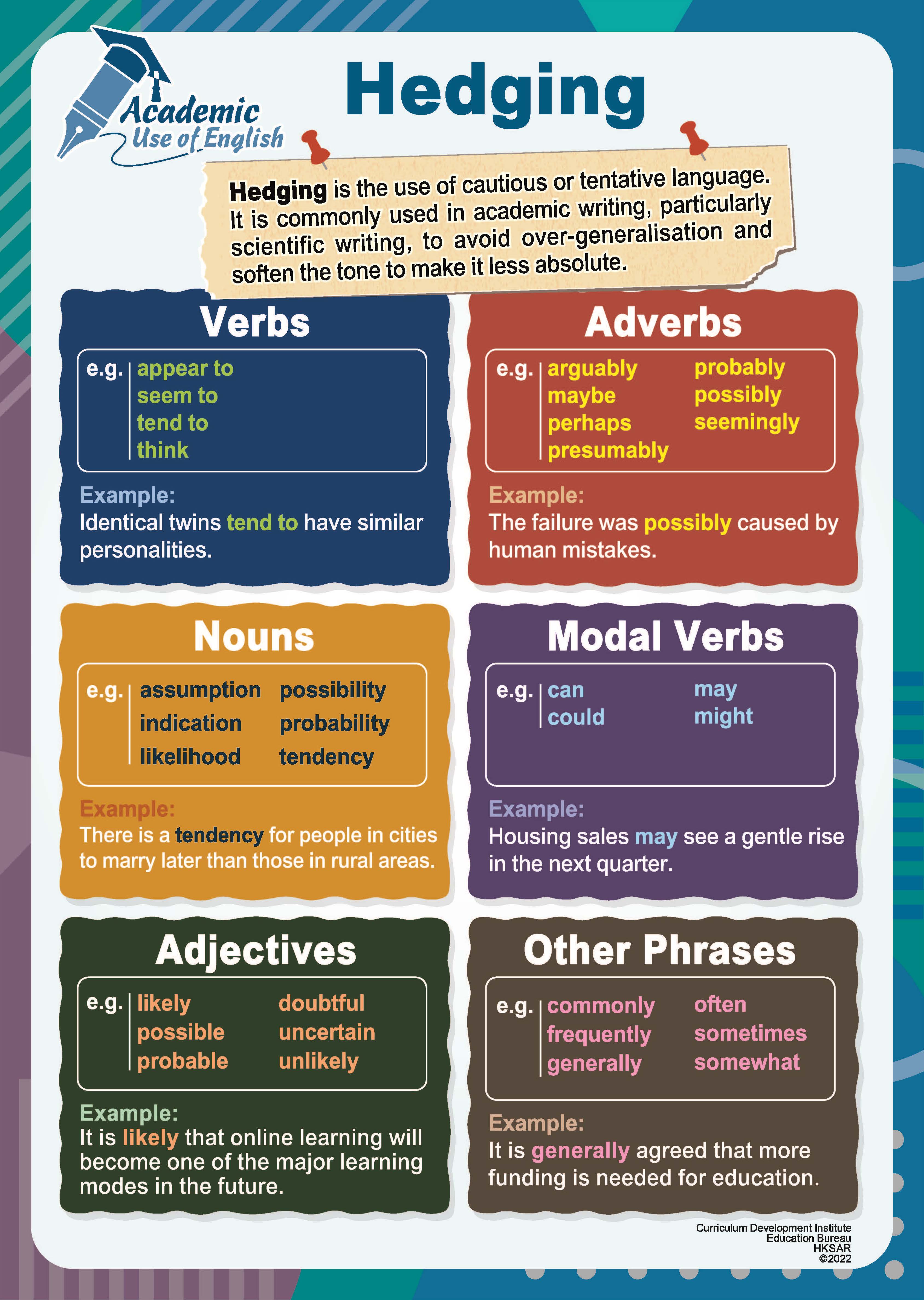
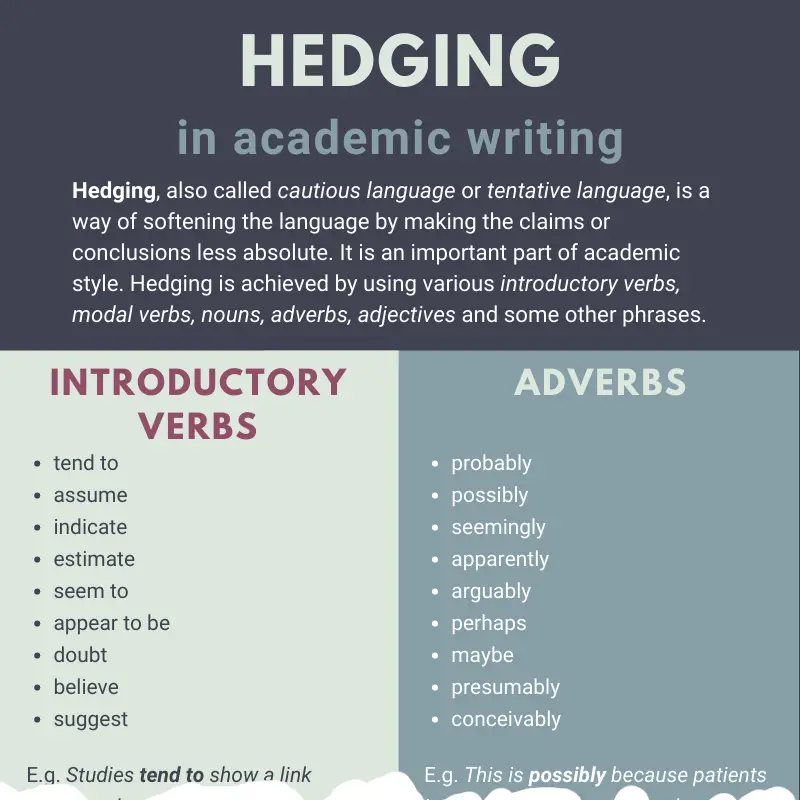
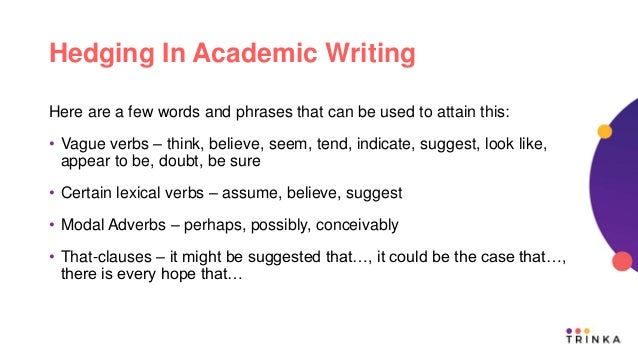
Hedging is not a single word but a collection of various grammatical structures and vocabulary choices. To master this technique, you must be familiar with the different categories of "hedges" available in the English language:
1. Modal Auxiliary Verbs
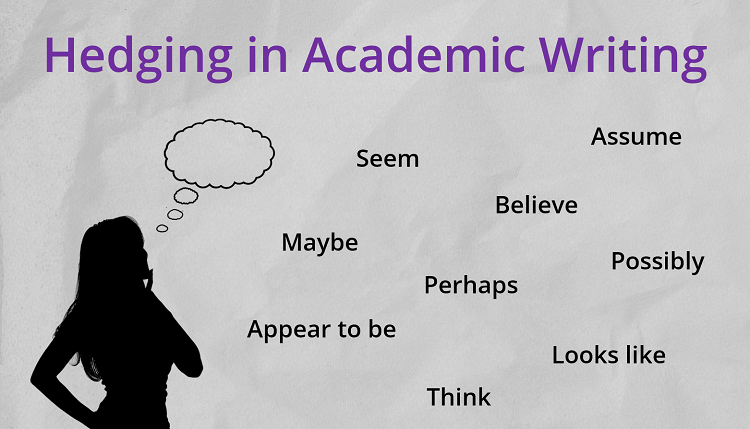
These are the most common tools for hedging. Instead of saying something *is* the case, you suggest it *could* be the case. Examples include:
- May / Might: "The results may suggest a correlation."
- Could / Can: "These findings could lead to further breakthroughs."
- Should: "The implementation should improve efficiency."
2. Lexical Verbs (Tentative Verbs)
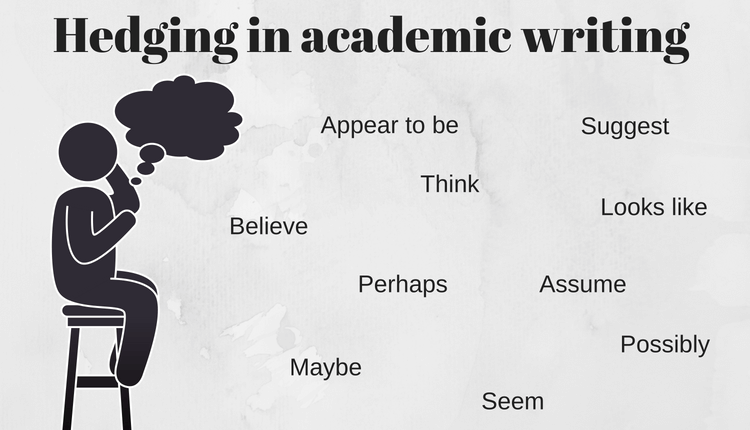
Certain verbs inherently carry a sense of caution or interpretation. They distance the author from the claim.
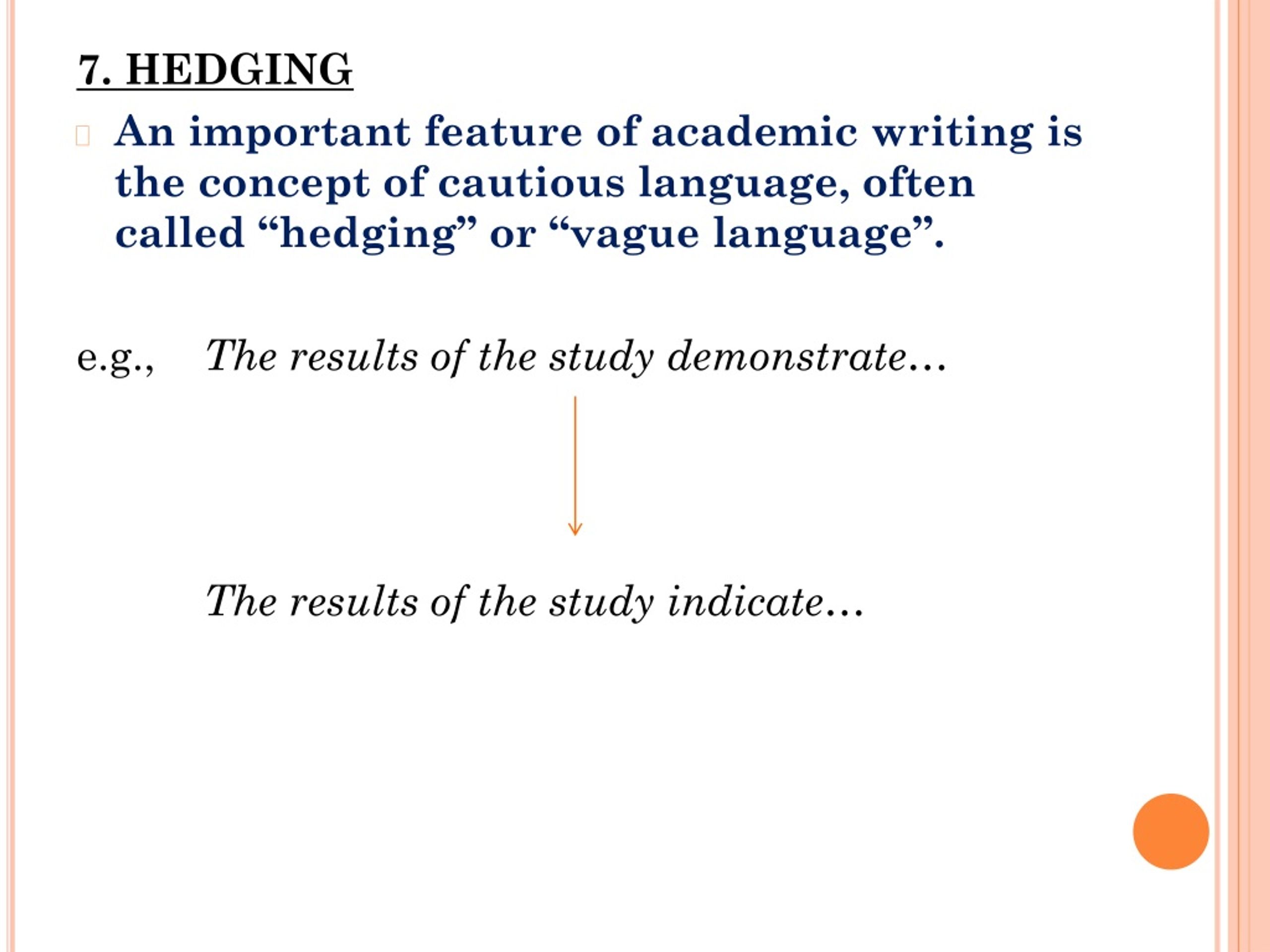
- Suggest / Indicate: "The data indicates that..."
- Appear / Seem: "It appears that the participants reacted positively."
- Assume / Believe: "Researchers believe that climate change..."
3. Adverbs of Frequency and Probability
Qualifying the "how often" or "how likely" helps avoid broad generalizations that are easily debunked.
- Probably / Possibly: "This is probably due to external factors."
- Frequently / Occasionally: "Such events occur frequently in urban settings."
- Relatively / Generally: "The reaction was generally consistent across groups."
4. Adjectives and Nouns
Even nouns and adjectives can act as hedges to soften a statement.
- Probable / Likely: "A likely explanation for this is..."
- Possibility / Suggestion: "There is a possibility that..."
| Category of Hedge | Description & Examples |
|---|---|
| Modal Verbs | Words like may, might, could that reduce the certainty of a verb. |
| Probability Adverbs | Terms like perhaps, possibly, probably used to qualify the likelihood of a claim. |
| Approximators | Words such as roughly, approximately, about used to avoid precise numerical claims that might be inaccurate. |
| Introductory Phrases | Phrases like "It is often argued that" or "According to some studies" that distance the author. |
Why Academic Writers Use Hedging: The Benefits
Why would a researcher want to sound less certain? It may seem counterintuitive, but hedging actually strengthens an argument. Here are the three primary reasons why expert writers use hedging:
1. Minimizing the Risk of Opposition
In academia, peers will scrutinize your work. If you make a definitive claim like "The sun always causes skin cancer," a single case of a person with high sun exposure and no cancer could invalidate your entire premise. By saying "Excessive sun exposure is widely considered a primary risk factor for skin cancer," you make your statement defensible and harder to disprove.
2. Adhering to Precision and Accuracy
Most research involves variables that cannot be perfectly controlled. Hedging allows you to be more precise about the scope of your findings. It signals that your conclusions apply specifically to the population you studied under the conditions you described, rather than making a universal claim that your data doesn't support.
3. Academic Etiquette and Dialogue
Academic writing is a conversation between scholars. Using "hedged" language shows humility and respect for the work of others. It invites other researchers to contribute to the discussion, rather than attempting to have the "final word" on a subject. It leaves room for future discovery.
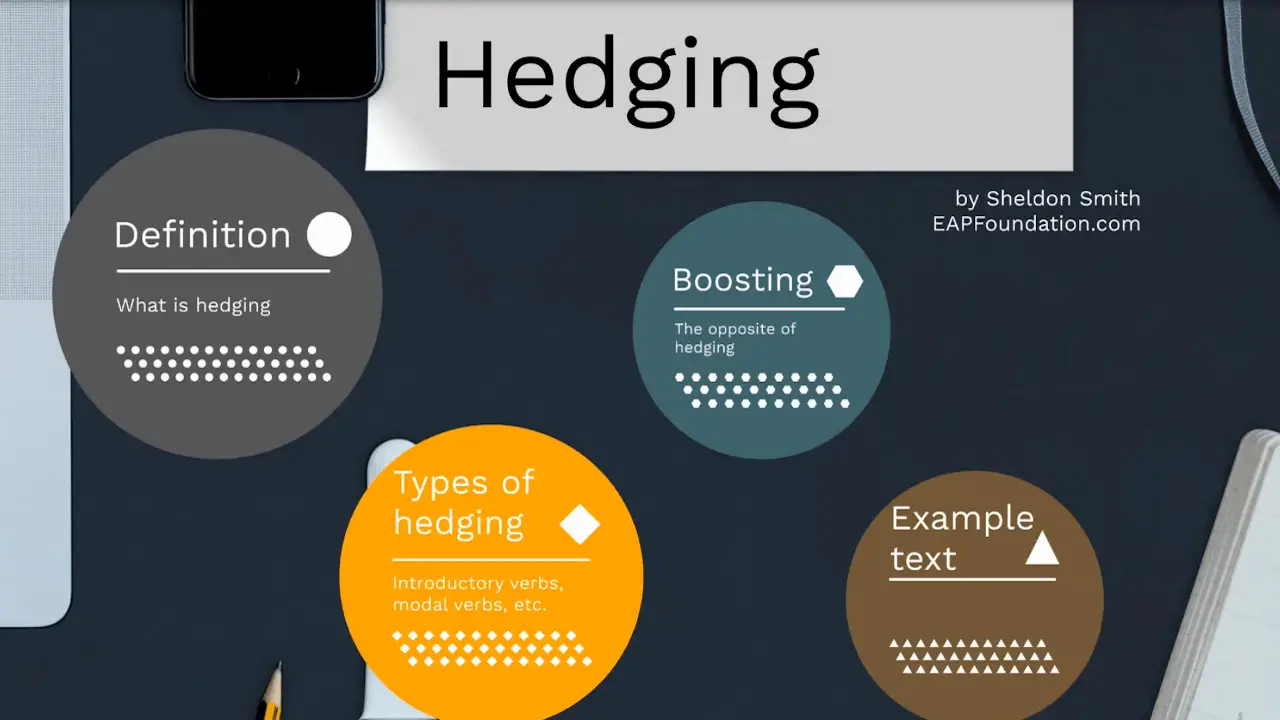
Practical Examples: Before and After Hedging
To better understand how hedging changes the tone of a sentence, let’s look at some direct comparisons:
Example 1:
Unhedged: "This software is the reason why productivity increased."
Hedged: "The implementation of this software appears to be a contributing factor to the observed increase in productivity."
Example 2:
Unhedged: "Low interest rates cause inflation."
Hedged: "Low interest rates can potentially lead to inflation under certain economic conditions."
In both examples, the hedged versions are more "academic" because they acknowledge that there might be other variables at play. They sound more professional and measured.
How to Avoid Over-Hedging
While hedging is essential, there is such a thing as "over-hedging." If you use too many cautious words in a single sentence, your writing can become weak, wordy, and confusing. For example: "It might possibly be that it could perhaps be argued that..." This makes the writer sound like they have no idea what they are talking about.
The key is balance. Use hedges where there is genuine uncertainty or where you are interpreting data. However, for established facts or your own methodological descriptions (e.g., "We conducted the interview in May"), you should remain direct and assertive. The goal is to be cautious, not vague.
Frequently Asked Questions (FAQ)
1. Is hedging the same as being dishonest?
No. Hedging is actually a form of academic honesty. It involves accurately representing the limits of your knowledge and the strength of your evidence. Claiming 100% certainty when it doesn't exist is more dishonest than using cautious language.
2. When should I avoid using hedging?
Avoid hedging when stating widely accepted facts (e.g., "The Earth orbits the Sun") or when describing your own actions in the research process (e.g., "The survey was distributed to 500 participants").
3. Does hedging make my writing sound weak?
To a general audience, it might. But to an academic audience, it makes you sound sophisticated and scientifically rigorous. Scholars value accuracy over bold, unsupported assertions.
Conclusion
Hedging in academic writing is a sophisticated tool that allows researchers to present their claims with the appropriate level of caution. By using modal verbs, tentative adjectives, and qualifying adverbs, you can protect your work from criticism, maintain a professional tone, and accurately reflect the limitations of your study. Mastering the balance between being assertive and being cautious is one of the hallmarks of a truly expert academic writer. As you refine your manuscripts, remember: it is not about being "unsure," it is about being precisely sure of what you do and do not know.
What Is Hedging In Academic Writing
What Is Hedging In Academic Writing Wallpapers
Collection of what is hedging in academic writing wallpapers for your desktop and mobile devices.

Spectacular What Is Hedging In Academic Writing Capture Concept
A captivating what is hedging in academic writing scene that brings tranquility and beauty to any device.
High-Quality What Is Hedging In Academic Writing Moment for Desktop
Transform your screen with this vivid what is hedging in academic writing artwork, a true masterpiece of digital design.
Breathtaking What Is Hedging In Academic Writing Capture Digital Art
Discover an amazing what is hedging in academic writing background image, ideal for personalizing your devices with vibrant colors and intricate designs.
Breathtaking What Is Hedging In Academic Writing Moment in 4K
Discover an amazing what is hedging in academic writing background image, ideal for personalizing your devices with vibrant colors and intricate designs.
Crisp What Is Hedging In Academic Writing Photo Digital Art
A captivating what is hedging in academic writing scene that brings tranquility and beauty to any device.
Artistic What Is Hedging In Academic Writing Moment for Your Screen
Immerse yourself in the stunning details of this beautiful what is hedging in academic writing wallpaper, designed for a captivating visual experience.

Stunning What Is Hedging In Academic Writing View for Mobile
This gorgeous what is hedging in academic writing photo offers a breathtaking view, making it a perfect choice for your next wallpaper.
Beautiful What Is Hedging In Academic Writing Scene for Your Screen
Explore this high-quality what is hedging in academic writing image, perfect for enhancing your desktop or mobile wallpaper.

Lush What Is Hedging In Academic Writing Abstract for Your Screen
This gorgeous what is hedging in academic writing photo offers a breathtaking view, making it a perfect choice for your next wallpaper.
Serene What Is Hedging In Academic Writing Abstract Concept
Transform your screen with this vivid what is hedging in academic writing artwork, a true masterpiece of digital design.
Captivating What Is Hedging In Academic Writing Landscape in 4K
Immerse yourself in the stunning details of this beautiful what is hedging in academic writing wallpaper, designed for a captivating visual experience.
Beautiful What Is Hedging In Academic Writing Scene in 4K
Experience the crisp clarity of this stunning what is hedging in academic writing image, available in high resolution for all your screens.
Captivating What Is Hedging In Academic Writing Design Digital Art
Find inspiration with this unique what is hedging in academic writing illustration, crafted to provide a fresh look for your background.
Crisp What Is Hedging In Academic Writing Background Art
Immerse yourself in the stunning details of this beautiful what is hedging in academic writing wallpaper, designed for a captivating visual experience.

Amazing What Is Hedging In Academic Writing Moment Collection
Experience the crisp clarity of this stunning what is hedging in academic writing image, available in high resolution for all your screens.
Breathtaking What Is Hedging In Academic Writing Moment in HD
Discover an amazing what is hedging in academic writing background image, ideal for personalizing your devices with vibrant colors and intricate designs.

Captivating What Is Hedging In Academic Writing Artwork Concept
Find inspiration with this unique what is hedging in academic writing illustration, crafted to provide a fresh look for your background.

Crisp What Is Hedging In Academic Writing Photo Nature
A captivating what is hedging in academic writing scene that brings tranquility and beauty to any device.

Stunning What Is Hedging In Academic Writing Scene Art
Immerse yourself in the stunning details of this beautiful what is hedging in academic writing wallpaper, designed for a captivating visual experience.
Vivid What Is Hedging In Academic Writing Wallpaper Concept
Discover an amazing what is hedging in academic writing background image, ideal for personalizing your devices with vibrant colors and intricate designs.
Download these what is hedging in academic writing wallpapers for free and use them on your desktop or mobile devices.