“So many mistakes” Joaquin Phoenix refuses to watch the 1995 performance that launched his career
“So many mistakes”: Joaquin Phoenix Refuses to Watch the 1995 Performance That Launched His Career
In the high-stakes world of Hollywood, where egos are often as large as the billboards on Sunset Boulevard, Joaquin Phoenix remains a fascinating anomaly. Known for his intense immersion into characters and his penchant for avoiding the typical celebrity circuit, the Oscar-winning actor has recently made headlines for his candid reflections on his early work. Specifically, Phoenix has expressed a profound reluctance to revisit the performance that many critics agree was his "big break": his role in the 1995 cult classic, To Die For. In a series of introspective remarks, Phoenix confessed that when he looks back at that era, he sees “so many mistakes,” a sentiment that highlights the perfectionism and evolution of one of cinema's most formidable talents.
The Genesis of a Titan: Analyzing Joaquin Phoenix in 'To Die For'
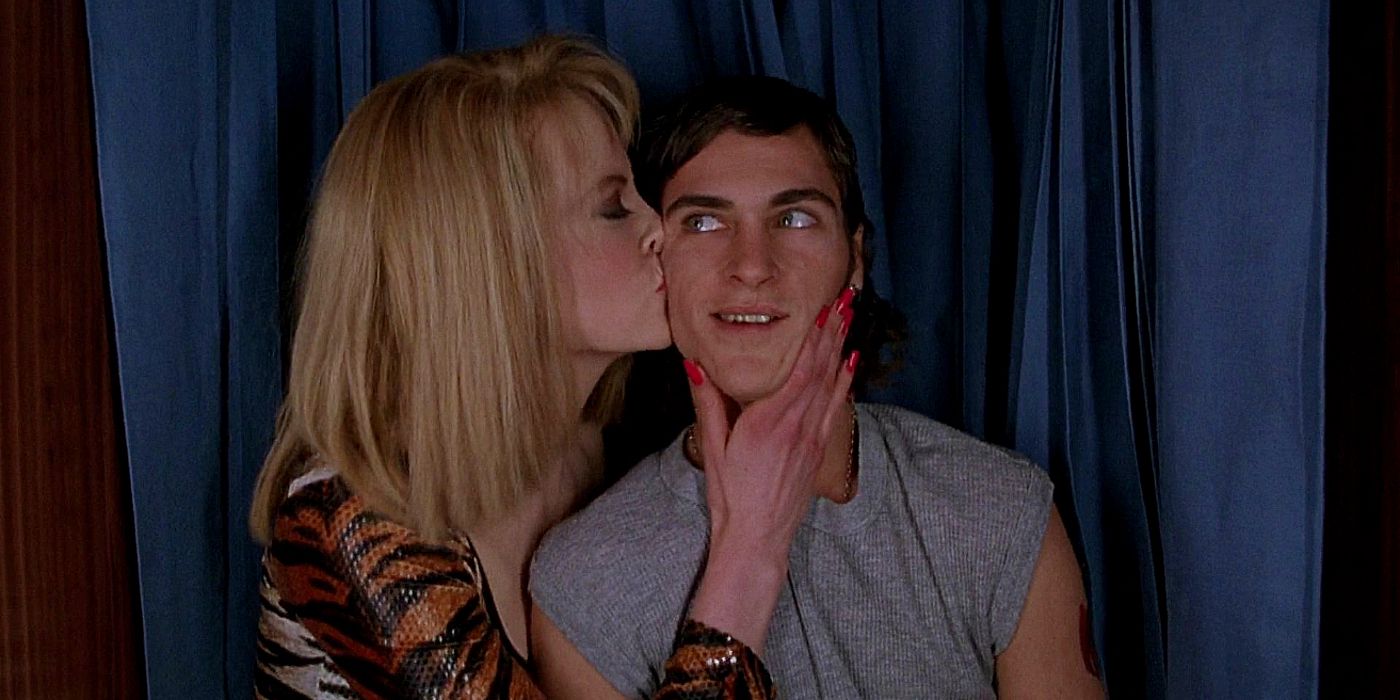
Before he was Arthur Fleck or Johnny Cash, Joaquin Phoenix was Jimmy Emmett—a vulnerable, easily manipulated teenager caught in the web of a fame-hungry weatherwoman played by Nicole Kidman. Directed by the visionary Gus Van Sant, To Die For served as a biting satire of the American obsession with television and celebrity culture. For Phoenix, who had taken a hiatus from acting following the tragic death of his brother, River Phoenix, this was the role that signaled his return to the screen and his transition from child actor (then known as Leaf Phoenix) to a serious adult performer.
Critics at the time were mesmerized by his raw energy. Phoenix portrayed Jimmy with a mix of puppy-like devotion and simmering hormonal angst that felt uncomfortably real. However, looking back nearly thirty years later, Phoenix does not see the brilliance that audiences saw. Instead, he views his performance through a lens of technical inadequacy. He has often described his early approach to acting as one dictated by instinct rather than control, leading him to feel that his choices in 1995 were unrefined and "full of mistakes."
This self-criticism is not uncommon among elite artists. For Phoenix, the process of acting is about the "doing," not the "viewing." Once a project is finished, he rarely revisits it, fearing that seeing himself on screen will make him self-conscious and destroy the spontaneity he strives for in future roles. In his mind, Jimmy Emmett is a ghost of a younger version of himself—a version that hadn't yet mastered the nuance of silence or the weight of a gaze.
The Gus Van Sant Connection: Launching a Legacy
The collaboration between Gus Van Sant and Joaquin Phoenix was instrumental in shaping the actor's trajectory. Van Sant, known for his experimental style and ability to coax naturalistic performances out of young actors, gave Phoenix the space to be messy. To Die For required Phoenix to play a character who was fundamentally "lost," and Van Sant leaned into Phoenix's natural awkwardness at the time.
While Phoenix might cringe at his "mistakes," film historians argue that those very imperfections are what made the performance iconic. In 1995, Phoenix didn't look like a Hollywood star; he looked like a kid from the suburbs who could actually be lured into a murder plot. This authenticity was the foundation upon which he built his later, more controlled masterpieces. The "mistakes" he references were, in fact, the building blocks of his method. They represented a lack of vanity—a trait that has become his trademark.
| Fitur/Aspek | Deskripsi |
|---|---|
| Movie Title | To Die For (1995) |
| Director | Gus Van Sant |
| Character Name | Jimmy Emmett |
| Breakthrough Status | Transition from "Leaf Phoenix" to adult actor |
| Phoenix's Current View | Refuses to watch; sees "so many mistakes" |
| Critical Reception | Highly acclaimed; launched his A-list career |
From Jimmy Emmett to Arthur Fleck: An Evolution of Craft
To understand why Joaquin Phoenix is so hard on his 1995 self, one must look at the evolution of his craft. His career can be divided into distinct eras: the experimental 90s, the blockbuster breakthrough of the early 2000s (Gladiator), the transformative mid-career (The Master, Walk the Line), and the modern era of legendary character studies (Joker, Beau Is Afraid).
In To Die For, Phoenix was reacting. In his modern roles, he is orchestrating. His performance as Arthur Fleck in Joker, which earned him an Academy Award, was a masterclass in physical transformation and psychological layering. Every twitch, every laugh, and every dance move was a calculated expression of the character's internal decay. When he looks back at the 21-year-old Phoenix in 1995, he likely sees a performer who hadn't yet learned how to weaponize his physicality. To the modern Phoenix, the younger version was "guessing," whereas the current version is "constructing."
However, many film enthusiasts believe that Phoenix is his own harshest critic. The "mistakes" he sees—perhaps a line delivery that felt forced or a movement that lacked purpose—are the very things that give To Die For its enduring charm. It is the sound of an artist finding his voice, and there is a certain beauty in that vulnerability that cannot be replicated once an actor becomes a master of their trade.
The Psychological Weight of Perfectionism in Hollywood
Joaquin Phoenix’s refusal to watch his own work isn't just a quirk; it’s a psychological survival mechanism. Many actors, including Adam Driver and Meryl Streep, have expressed similar discomfort with seeing themselves on screen. For Phoenix, the camera is a tool to capture a moment that should exist only in that moment. Once it is digitized and projected, it becomes a fixed object for scrutiny, which runs counter to his philosophy of acting as a fluid, living process.
His "mistakes" comment also touches on the nature of regret in the creative process. As artists grow, their standards evolve. What seemed like a profound creative choice in 1995 might feel amateurish to a man who has spent decades studying the human condition. This drive for perfection is what keeps Phoenix relevant today. He isn't interested in resting on his laurels or celebrating his past hits; he is constantly looking for the next "mistake" to fix in his next role.
In the digital age, where every clip of a celebrity's past is available at the click of a button, Phoenix’s desire for a "clean slate" is increasingly difficult to maintain. Yet, his commitment to the present moment remains unshaken. Whether he likes the performance or not, To Die For remains a pivotal piece of cinematic history that proved Joaquin Phoenix was a force to be reckoned with, long before the rest of the world caught up to his genius.
FAQ: Understanding Joaquin Phoenix’s Career and Philosophy
1. Why did Joaquin Phoenix change his name from Leaf Phoenix?
Joaquin was born Joaquin, but as a child, he felt left out because his siblings had nature-themed names (River, Rain, Summer, Liberty). He chose the name "Leaf" to fit in and used it for his early roles in the 1980s. He changed it back to Joaquin in the early 90s to reclaim his identity as he transitioned into adult roles.
2. What other actors were in 'To Die For' with Phoenix?
The film starred Nicole Kidman in a career-defining role, along with Matt Dillon, Casey Affleck, and Illeana Douglas. It was a star-studded cast that helped solidify the film as a 90s staple.
3. Does Joaquin Phoenix ever watch any of his movies?
Phoenix has famously stated in multiple interviews that he rarely, if ever, watches his completed films. He has admitted to seeing parts of The Master and Her, but generally finds the experience of watching himself uncomfortable and unhelpful to his process.
4. How did 'To Die For' influence Phoenix's later roles?
The film established Phoenix as an actor capable of playing "troubled" or "outsider" characters. This archetype followed him through films like Gladiator, where he played the villainous Commodus, and The Master, where he played a drifting veteran. It set the stage for his reputation as an actor who gravitates toward complex, psychological dramas.
Conclusion
Joaquin Phoenix's dismissal of his 1995 performance in To Die For as being riddled with "mistakes" is perhaps the most "Joaquin Phoenix" statement he could make. It reflects a man who is perpetually dissatisfied with the status quo, an artist who views his past not as a trophy room, but as a laboratory of failed experiments that led to eventual success. While he may never sit down to re-watch Jimmy Emmett’s tragic journey, the rest of the world continues to do so, finding beauty in the very "errors" he despises.
Ultimately, Phoenix’s career serves as a testament to the power of growth. From the raw, unpolished energy of the mid-90s to the haunting, Oscar-winning precision of the present day, he remains one of the most compelling figures in modern cinema. Whether he sees mistakes or we see masterpieces, one thing is certain: Joaquin Phoenix’s journey is far from over, and his refusal to look back is exactly what keeps him moving forward.
“So many mistakes”: Joaquin Phoenix refuses to watch the 1995 performance that launched his career
“So many mistakes”: Joaquin Phoenix refuses to watch the 1995 performance that launched his career
Collection of “so many mistakes”: joaquin phoenix refuses to watch the 1995 performance that launched his career wallpapers for your desktop and mobile devices.
Amazing “so Many Mistakes”: Joaquin Phoenix Refuses To Watch The 1995 Performance That Launched His Career Capture Digital Art
Experience the crisp clarity of this stunning “so many mistakes”: joaquin phoenix refuses to watch the 1995 performance that launched his career image, available in high resolution for all your screens.

Captivating “so Many Mistakes”: Joaquin Phoenix Refuses To Watch The 1995 Performance That Launched His Career Scene for Mobile
A captivating “so many mistakes”: joaquin phoenix refuses to watch the 1995 performance that launched his career scene that brings tranquility and beauty to any device.

Crisp “so Many Mistakes”: Joaquin Phoenix Refuses To Watch The 1995 Performance That Launched His Career Abstract Art
Immerse yourself in the stunning details of this beautiful “so many mistakes”: joaquin phoenix refuses to watch the 1995 performance that launched his career wallpaper, designed for a captivating visual experience.

Dynamic “so Many Mistakes”: Joaquin Phoenix Refuses To Watch The 1995 Performance That Launched His Career View for Mobile
Find inspiration with this unique “so many mistakes”: joaquin phoenix refuses to watch the 1995 performance that launched his career illustration, crafted to provide a fresh look for your background.

Artistic “so Many Mistakes”: Joaquin Phoenix Refuses To Watch The 1995 Performance That Launched His Career Design Concept
A captivating “so many mistakes”: joaquin phoenix refuses to watch the 1995 performance that launched his career scene that brings tranquility and beauty to any device.

Dynamic “so Many Mistakes”: Joaquin Phoenix Refuses To Watch The 1995 Performance That Launched His Career Artwork for Desktop
Find inspiration with this unique “so many mistakes”: joaquin phoenix refuses to watch the 1995 performance that launched his career illustration, crafted to provide a fresh look for your background.

Gorgeous “so Many Mistakes”: Joaquin Phoenix Refuses To Watch The 1995 Performance That Launched His Career Photo Illustration
This gorgeous “so many mistakes”: joaquin phoenix refuses to watch the 1995 performance that launched his career photo offers a breathtaking view, making it a perfect choice for your next wallpaper.

Mesmerizing “so Many Mistakes”: Joaquin Phoenix Refuses To Watch The 1995 Performance That Launched His Career Photo Illustration
Explore this high-quality “so many mistakes”: joaquin phoenix refuses to watch the 1995 performance that launched his career image, perfect for enhancing your desktop or mobile wallpaper.

Artistic “so Many Mistakes”: Joaquin Phoenix Refuses To Watch The 1995 Performance That Launched His Career Landscape Photography
Find inspiration with this unique “so many mistakes”: joaquin phoenix refuses to watch the 1995 performance that launched his career illustration, crafted to provide a fresh look for your background.

Stunning “so Many Mistakes”: Joaquin Phoenix Refuses To Watch The 1995 Performance That Launched His Career View Collection
A captivating “so many mistakes”: joaquin phoenix refuses to watch the 1995 performance that launched his career scene that brings tranquility and beauty to any device.

Mesmerizing “so Many Mistakes”: Joaquin Phoenix Refuses To Watch The 1995 Performance That Launched His Career Wallpaper for Your Screen
Transform your screen with this vivid “so many mistakes”: joaquin phoenix refuses to watch the 1995 performance that launched his career artwork, a true masterpiece of digital design.
Breathtaking “so Many Mistakes”: Joaquin Phoenix Refuses To Watch The 1995 Performance That Launched His Career Image Nature
Explore this high-quality “so many mistakes”: joaquin phoenix refuses to watch the 1995 performance that launched his career image, perfect for enhancing your desktop or mobile wallpaper.

Vibrant “so Many Mistakes”: Joaquin Phoenix Refuses To Watch The 1995 Performance That Launched His Career Background for Mobile
Transform your screen with this vivid “so many mistakes”: joaquin phoenix refuses to watch the 1995 performance that launched his career artwork, a true masterpiece of digital design.
Vibrant “so Many Mistakes”: Joaquin Phoenix Refuses To Watch The 1995 Performance That Launched His Career Abstract for Your Screen
Discover an amazing “so many mistakes”: joaquin phoenix refuses to watch the 1995 performance that launched his career background image, ideal for personalizing your devices with vibrant colors and intricate designs.

Detailed “so Many Mistakes”: Joaquin Phoenix Refuses To Watch The 1995 Performance That Launched His Career Picture Concept
Discover an amazing “so many mistakes”: joaquin phoenix refuses to watch the 1995 performance that launched his career background image, ideal for personalizing your devices with vibrant colors and intricate designs.
Exquisite “so Many Mistakes”: Joaquin Phoenix Refuses To Watch The 1995 Performance That Launched His Career Artwork in 4K
Immerse yourself in the stunning details of this beautiful “so many mistakes”: joaquin phoenix refuses to watch the 1995 performance that launched his career wallpaper, designed for a captivating visual experience.

Beautiful “so Many Mistakes”: Joaquin Phoenix Refuses To Watch The 1995 Performance That Launched His Career Wallpaper Photography
Explore this high-quality “so many mistakes”: joaquin phoenix refuses to watch the 1995 performance that launched his career image, perfect for enhancing your desktop or mobile wallpaper.
Stunning “so Many Mistakes”: Joaquin Phoenix Refuses To Watch The 1995 Performance That Launched His Career Background for Desktop
Immerse yourself in the stunning details of this beautiful “so many mistakes”: joaquin phoenix refuses to watch the 1995 performance that launched his career wallpaper, designed for a captivating visual experience.

Vivid “so Many Mistakes”: Joaquin Phoenix Refuses To Watch The 1995 Performance That Launched His Career Background in HD
Discover an amazing “so many mistakes”: joaquin phoenix refuses to watch the 1995 performance that launched his career background image, ideal for personalizing your devices with vibrant colors and intricate designs.

Breathtaking “so Many Mistakes”: Joaquin Phoenix Refuses To Watch The 1995 Performance That Launched His Career Wallpaper Concept
Discover an amazing “so many mistakes”: joaquin phoenix refuses to watch the 1995 performance that launched his career background image, ideal for personalizing your devices with vibrant colors and intricate designs.
Download these “so many mistakes”: joaquin phoenix refuses to watch the 1995 performance that launched his career wallpapers for free and use them on your desktop or mobile devices.