Instructure hacker claims data theft from 8,800 schools, universities
Instructure hacker claims data theft from 8,800 schools, universities
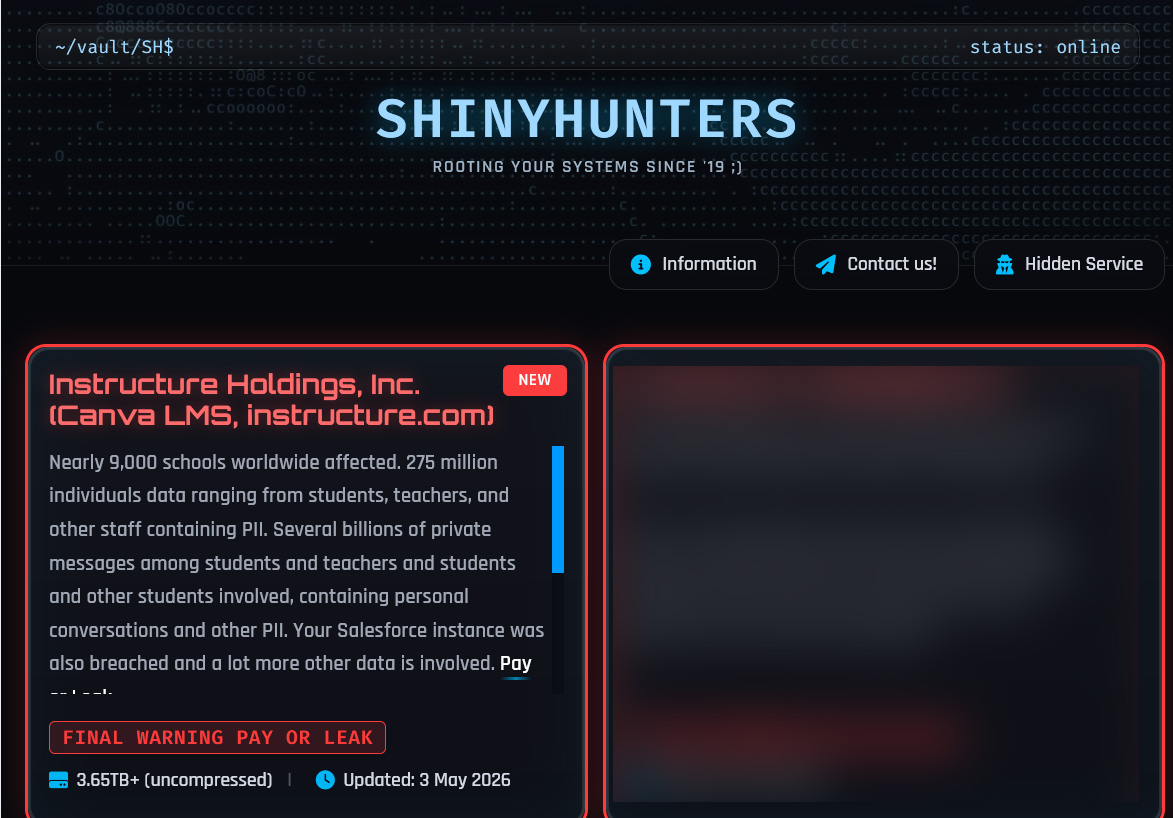
The education sector is currently reeling from one of the most significant cybersecurity incidents in recent history as a notorious extortion group, ShinyHunters, claims to have breached Instructure, the parent company of the widely used Canvas learning management system. This massive data breach has reportedly compromised the personal information of approximately 275 million individuals, including students, teachers, and staff members worldwide. As educational institutions across the globe move toward increasingly digital environments, this breach underscores the critical vulnerabilities within the ed-tech supply chain and the far-reaching consequences of centralized platform failures.
The Instructure data breach involves the alleged theft of 275 million records from over 8,800 schools and universities globally. Perpetrated by the hacker group ShinyHunters, the breach reportedly exposed sensitive information such as names, email addresses, student ID numbers, and billions of private messages. While Instructure has implemented security patches and rotated API keys, the extortion group has threatened to leak the stolen data by May 12, 2026, if a settlement is not reached.
The Emergence of the ShinyHunters Threat
The group claiming responsibility for this unprecedented attack, ShinyHunters, is no stranger to high-profile data theft. Since 2020, this financially motivated extortion gang has targeted major corporations and service providers, including Tokopedia, AT&T, and Ticketmaster. Unlike traditional ransomware groups that encrypt systems to block access, ShinyHunters typically focuses on a "pay-or-leak" strategy. They specialize in exfiltrating massive volumes of data from cloud-hosted environments and then pressuring the victims to pay a ransom to prevent the public release of the information.
In the case of Instructure, the group claims to have harvested over 3.6 terabytes of data. Their methodology involved exploiting vulnerabilities in Instructure's systems to compromise Application Programming Interfaces (APIs) and privileged credentials. This allowed them to bypass traditional perimeter defenses, such as firewalls, and extract data directly from the cloud infrastructure where the Canvas platform operates. The group's presence was even felt directly by users when they allegedly defaced Canvas login pages with messages demanding a settlement by May 12, 2026.
Scope of the Breach: 8,800 Institutions Impacted
The sheer scale of the Instructure breach is what makes it particularly devastating. The hacker group published a list of 8,809 school districts, universities, and online education platforms that they claim were affected. This list includes prestigious higher education institutions like the University of California, Berkeley, the University of Colorado Boulder, and Columbia University, as well as numerous K-12 districts across North America and international schools.
For many institutions, Canvas serves as the backbone of their educational delivery. It is used for submitting assignments, grading, hosting course materials, and facilitating communication between students and faculty. The reach of the platform—estimated at over 30 million active users—means that even a single point of failure at the vendor level can expose the data of millions. In the United States alone, Canvas supports approximately 41% of higher education institutions, highlighting the massive "blast radius" of this single cyberattack.
Nature of the Exposed Data
Understanding exactly what was stolen is a primary concern for parents, students, and administrators. According to official disclosures from Instructure and reports from affected universities, the compromised data primarily consists of "directory-style" information. This includes full names, school-issued email addresses, and student identification numbers. However, more concerning is the claim by ShinyHunters that they have accessed billions of private messages exchanged within the Canvas platform.
These private messages often contain more than just academic queries. Students frequently use these channels to communicate with academic advisors about medical issues, mental health concerns, or to request learning accommodations. They are also used for sensitive communications involving Title IX advocates. While Instructure has stated there is currently no evidence that passwords, financial records, government identifiers (like Social Security numbers), or dates of birth were compromised, the exposure of private conversations and personal identifiers remains a significant privacy violation and a goldmine for future social engineering attacks.
Immediate Response and Containment Efforts
Instructure detected the unauthorized access in late April 2026 and began implementing containment measures immediately. The company's response involved several technical layers: revoking privileged credentials, canceling and renewing security keys (API tokens), and deploying security patches to close the vulnerability exploited by the hackers. To restore services, many institutions required their users to re-authorize integrations, a move designed to ensure that the new, secure keys were in place.
| Information Category | Status in Instructure Breach |
|---|---|
| User Identifiers | Confirmed Compromised (Names, Emails, IDs) |
| Communication Data | Confirmed Compromised (Private Messages) |
| Passwords & 2FA | No Evidence of Compromise |
| Financial & Tax Info | No Evidence of Compromise |
Despite these technical fixes, the disruption was widespread. In early May, Instructure temporarily took Canvas offline worldwide to address lingering impacts and ensure the environment was fully secure. This outage occurred during a critical period for many students: the end of the semester and final exam week. The unavailability of study materials and submission portals caused significant stress and academic disruption across the global student body.
The Impact on Final Exams and Academic Operations
The timing of the breach could hardly have been worse. For many universities, May marks the peak of "reading week" or the beginning of final examinations. When Canvas went down or became unstable due to the breach, students lost access to the very tools they needed to succeed. Reports from various campuses described a chaotic scene where final exams were canceled or postponed because professors could not access the digital materials or grading platforms.
In law schools and other graduate programs where a single final exam can represent 100% of a student's grade, the loss of access to course materials was described as "devastating." Furthermore, the defacement of the Canvas homepage by ShinyHunters served as a jarring distraction for students who were already under high pressure. Universities have had to scramble to provide alternative methods for submitting work and communicating with students, highlighting a lack of robust "Plan B" options for total platform outages.
Supply Chain Security: A Wake-Up Call for Education
This incident serves as a stark reminder of the risks associated with the educational "supply chain." School districts and universities often invest heavily in securing their own internal networks with firewalls and endpoint protection. However, these defenses offer little protection when a third-party SaaS (Software as a Service) provider like Instructure is compromised. The hackers did not need to breach thousands of individual school firewalls; they only needed to breach the central repository where all that data was stored.
Cybersecurity experts are now calling for a shift in how educational institutions evaluate their vendors. An "assume breach" mindset is becoming necessary, where IT leaders operate under the premise that even their most trusted partners could be compromised. This involves implementing stricter data minimization policies—not storing more data in a third-party platform than is absolutely necessary—and demanding greater transparency and more frequent security audits from ed-tech giants.
Risks of Phishing and Social Engineering
While the lack of stolen passwords is a positive note, the theft of names, emails, and private messages creates a high risk for sophisticated phishing attacks. Hackers can use the stolen information to craft highly convincing emails that appear to come from a student's actual professor or a university's IT department. Because the hackers have access to real conversation history, they can reference specific courses, assignments, or even previous help-desk tickets to build trust.
These follow-on scams are often the real objective of such data breaches. Attackers may try to trick users into revealing their actual login credentials (which are often protected by 2FA) or into downloading malware disguised as a "mandatory security update" related to the Canvas breach. Both Instructure and individual schools are urging students and staff to be extremely cautious of unsolicited messages and to always verify requests for information through official, known channels rather than clicking on links in emails.
Legal and Regulatory Implications
As the investigation continues, Instructure is likely to face significant legal and regulatory scrutiny. In the United States, the Family Educational Rights and Privacy Act (FERPA) protects the privacy of student education records. While FERPA primarily applies to educational institutions, the vendors they hire to manage those records are also bound by certain privacy requirements. Additionally, for schools located in the European Union or those serving EU citizens, the General Data Protection Regulation (GDPR) imposes strict penalties for data breaches and requirements for timely notification.
The incident at Instructure is part of a growing trend of attacks on ed-tech providers, following breaches at PowerSchool and Illuminate Education in previous years. This pattern is drawing the attention of federal regulators who are increasingly holding tech companies accountable for their security practices. Class-action lawsuits from affected individuals are also a common outcome of breaches of this magnitude, which could have long-term financial implications for the company.
Steps for Affected Students and Parents
If you are a student or parent at an affected institution, there are several steps you should take to protect your information. First, stay informed by checking the official status pages of both your school and Instructure. While you may not need to change your password immediately if your school uses an external authentication method (like Microsoft Entra or Duo), it is always a good practice to update passwords periodically and ensure that Multi-Factor Authentication (MFA) is active on all school-related accounts.
Be on high alert for phishing. If you receive an email asking you to "confirm" your login details or to pay a fee to access your grades, it is almost certainly a scam. Do not click links or download attachments from unexpected sources. For parents of younger students, consider extra identity protection measures, as children's Social Security numbers and identities are often highly valued by cybercriminals because they can go unused for years, allowing identity theft to remain undetected for long periods.
Conclusion
The Instructure data breach is a landmark event that highlights the precarious state of cybersecurity in the modern educational landscape. By targeting a central pillar of digital learning, ShinyHunters has demonstrated how a single vulnerability can disrupt the lives of millions and compromise the privacy of an entire generation of students. As schools and universities continue to rely on cloud-based platforms, the lessons learned from this breach must lead to a fundamental reassessment of digital trust, vendor accountability, and the strategies used to protect sensitive academic data. The deadline of May 12, 2026, looms large, and the education world waits to see if the promised leak will further deepen the impact of this unprecedented attack.
Frequently Asked Questions
What schools were affected by the Instructure/Canvas breach?
Was my password stolen in the Canvas hack?
What should I do if my data was part of the breach?
When is the hacker group's deadline for leaking the data?
Were financial records or grades compromised?
Instructure hacker claims data theft from 8,800 schools, universities
Instructure hacker claims data theft from 8,800 schools, universities Wallpapers
Collection of instructure hacker claims data theft from 8,800 schools, universities wallpapers for your desktop and mobile devices.

Stunning Instructure Hacker Claims Data Theft From 8,800 Schools, Universities Abstract in HD
A captivating instructure hacker claims data theft from 8,800 schools, universities scene that brings tranquility and beauty to any device.

Captivating Instructure Hacker Claims Data Theft From 8,800 Schools, Universities Picture in 4K
Immerse yourself in the stunning details of this beautiful instructure hacker claims data theft from 8,800 schools, universities wallpaper, designed for a captivating visual experience.

Breathtaking Instructure Hacker Claims Data Theft From 8,800 Schools, Universities View Digital Art
Discover an amazing instructure hacker claims data theft from 8,800 schools, universities background image, ideal for personalizing your devices with vibrant colors and intricate designs.

Stunning Instructure Hacker Claims Data Theft From 8,800 Schools, Universities Moment Art
A captivating instructure hacker claims data theft from 8,800 schools, universities scene that brings tranquility and beauty to any device.
Spectacular Instructure Hacker Claims Data Theft From 8,800 Schools, Universities Moment for Desktop
This gorgeous instructure hacker claims data theft from 8,800 schools, universities photo offers a breathtaking view, making it a perfect choice for your next wallpaper.

Spectacular Instructure Hacker Claims Data Theft From 8,800 Schools, Universities Picture in HD
This gorgeous instructure hacker claims data theft from 8,800 schools, universities photo offers a breathtaking view, making it a perfect choice for your next wallpaper.

High-Quality Instructure Hacker Claims Data Theft From 8,800 Schools, Universities Photo for Your Screen
Explore this high-quality instructure hacker claims data theft from 8,800 schools, universities image, perfect for enhancing your desktop or mobile wallpaper.

Spectacular Instructure Hacker Claims Data Theft From 8,800 Schools, Universities View for Your Screen
Find inspiration with this unique instructure hacker claims data theft from 8,800 schools, universities illustration, crafted to provide a fresh look for your background.
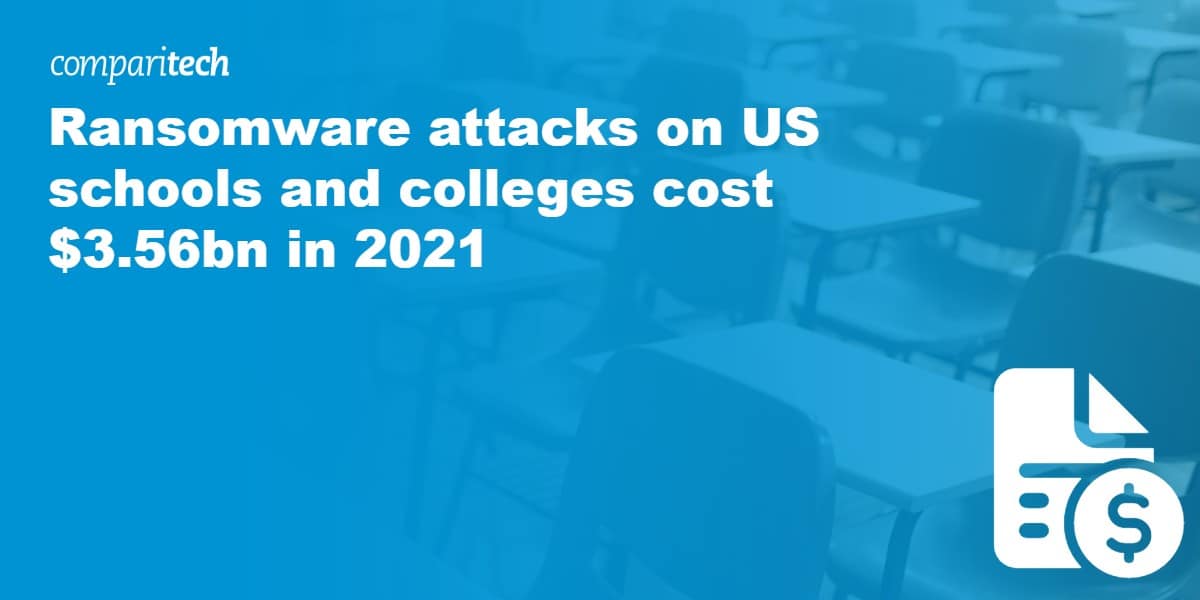
Artistic Instructure Hacker Claims Data Theft From 8,800 Schools, Universities Photo for Mobile
Immerse yourself in the stunning details of this beautiful instructure hacker claims data theft from 8,800 schools, universities wallpaper, designed for a captivating visual experience.
Breathtaking Instructure Hacker Claims Data Theft From 8,800 Schools, Universities Scene in 4K
Discover an amazing instructure hacker claims data theft from 8,800 schools, universities background image, ideal for personalizing your devices with vibrant colors and intricate designs.

Amazing Instructure Hacker Claims Data Theft From 8,800 Schools, Universities Background Nature
Transform your screen with this vivid instructure hacker claims data theft from 8,800 schools, universities artwork, a true masterpiece of digital design.

Stunning Instructure Hacker Claims Data Theft From 8,800 Schools, Universities Picture Nature
A captivating instructure hacker claims data theft from 8,800 schools, universities scene that brings tranquility and beauty to any device.

Gorgeous Instructure Hacker Claims Data Theft From 8,800 Schools, Universities Wallpaper for Your Screen
This gorgeous instructure hacker claims data theft from 8,800 schools, universities photo offers a breathtaking view, making it a perfect choice for your next wallpaper.

Vivid Instructure Hacker Claims Data Theft From 8,800 Schools, Universities Moment for Mobile
Experience the crisp clarity of this stunning instructure hacker claims data theft from 8,800 schools, universities image, available in high resolution for all your screens.
Captivating Instructure Hacker Claims Data Theft From 8,800 Schools, Universities Scene Digital Art
Find inspiration with this unique instructure hacker claims data theft from 8,800 schools, universities illustration, crafted to provide a fresh look for your background.

Captivating Instructure Hacker Claims Data Theft From 8,800 Schools, Universities Capture in HD
Immerse yourself in the stunning details of this beautiful instructure hacker claims data theft from 8,800 schools, universities wallpaper, designed for a captivating visual experience.

Captivating Instructure Hacker Claims Data Theft From 8,800 Schools, Universities Design Collection
Immerse yourself in the stunning details of this beautiful instructure hacker claims data theft from 8,800 schools, universities wallpaper, designed for a captivating visual experience.

Breathtaking Instructure Hacker Claims Data Theft From 8,800 Schools, Universities Moment in 4K
Discover an amazing instructure hacker claims data theft from 8,800 schools, universities background image, ideal for personalizing your devices with vibrant colors and intricate designs.
Exquisite Instructure Hacker Claims Data Theft From 8,800 Schools, Universities Abstract Illustration
A captivating instructure hacker claims data theft from 8,800 schools, universities scene that brings tranquility and beauty to any device.

Spectacular Instructure Hacker Claims Data Theft From 8,800 Schools, Universities Background for Your Screen
Immerse yourself in the stunning details of this beautiful instructure hacker claims data theft from 8,800 schools, universities wallpaper, designed for a captivating visual experience.
Download these instructure hacker claims data theft from 8,800 schools, universities wallpapers for free and use them on your desktop or mobile devices.